
A state pension fund must rate a new benefits system by the impact of losing confidentiality, integrity, or availability before it selects controls. Which framework is that lifecycle?
Select an answer to reveal the explanation.
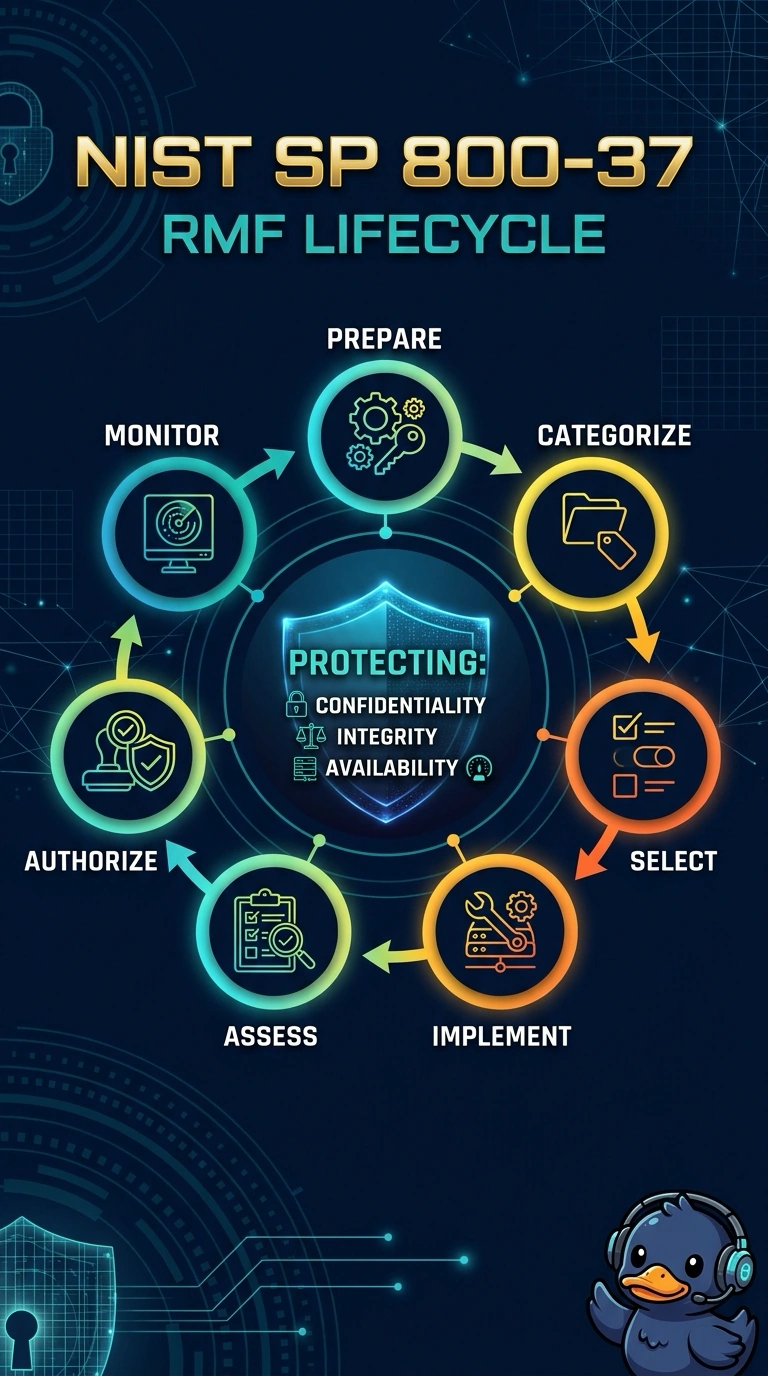
Short Explanation
You are scoring how bad a loss would be before you shop for controls. You use the lifecycle that runs from categorize through authorize and monitor. An attack-pattern catalog, a flow-placement guide, or the control catalog alone does not make that authorization decision.
Full Explanation
The fund is at the categorize step of the risk-management lifecycle: rate impact, then select controls, implement them, assess, authorize, and monitor, which is NIST SP 800-37. An attack-pattern catalog, a placement guide, and the control catalog each serve a later or different job. The catalog is often where selected controls come from, and it does not replace the lifecycle. NIST SP 800-37, from prepare and categorize through assess, authorize, and monitor is the design that meets this requirement. MITRE CAPEC, a catalog of attack patterns for how an abuse of a feature is carried out is the wrong fit because an attack-pattern catalog describes adversary behavior and is not the lifecycle that rates impact and authorizes a system. Cisco SAFE, a guide for placing security capabilities along a business flow is the wrong fit because a placement guide shows where capabilities sit on a flow and does not categorize the system or authorize it. NIST SP 800-53, a catalog of controls you select after the system has been categorized is the wrong fit because the control catalog is what you choose from after impact is known, and it is not the lifecycle itself. Exam caveat: Categorization sets impact so selection has a target, and a control catalog is not a substitute for authorize and monitor just because a product lists features. Operational check: Show the benefits system's impact rating for confidentiality, integrity, and availability, and confirm control selection traces to that rating.