
A port authority's platform raises separate alerts for a late-night VPN login, a new admin account, and a cargo-file download. Analysts rarely connect them. Which addition links those events into one investigation?
Select an answer to reveal the explanation.
Short Explanation
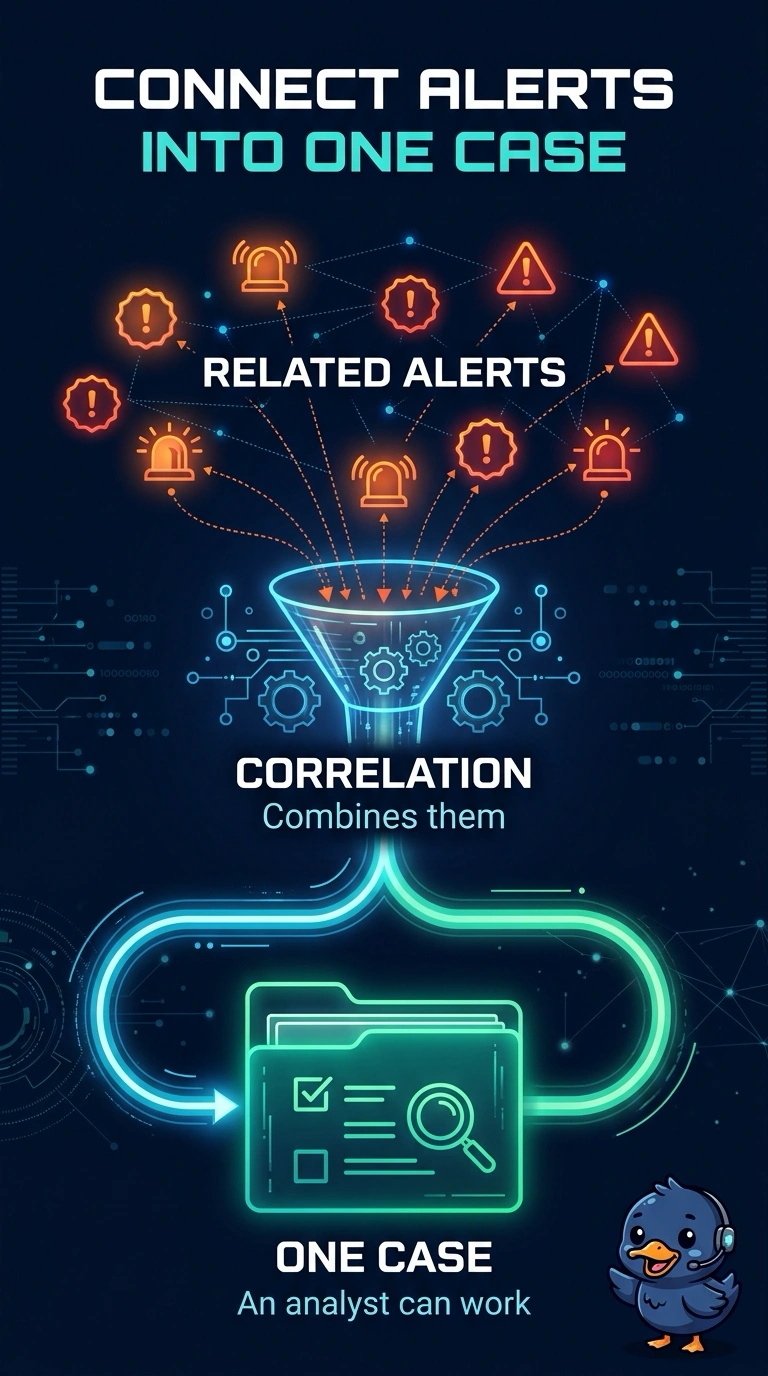
Three smoke alarms are going off in one building, and you need one incident folder. You correlate the login, the new account, and the download into a single case. A bigger wallboard, a playbook that cuts off every VPN user, or a second mailing of the raw alerts never makes that link.
Full Explanation
The platform already has the three signals, and they stay separate. Correlation joins related events into one case so an analyst investigates the login, the new account, and the download together. A larger wallboard and a second mailing repeat the separate alerts, while an isolation playbook that disables every VPN account acts before the relationship is known. Correlation that combines those related alerts into one case an analyst can work is the design that meets this requirement. A larger wallboard that shows the same three alerts as three separate live tiles is the wrong fit because another display of the same three alerts does not combine them into one investigation an analyst can work. An isolation playbook that disables every VPN account before the alerts are linked is the wrong fit because isolating every VPN account is a broad action taken before the events are shown to be one incident. A second copy of each raw alert mailed to the inbox that already receives them is the wrong fit because a second mailing duplicates alerts the platform already has and still leaves the linking to chance. Exam caveat: Correlation proposes that the alerts belong together and does not prove they are malicious, so an analyst still confirms the case before any disruptive containment. Operational check: Replay the three lab events and confirm the platform opens one case that contains all three, and confirm three unrelated test alerts stay in separate cases.