
A seed company must keep sending specimen codes to a lab partner. The board says sending the full participant file is outside appetite, and the feed cannot be turned off this year. Which response fits?
Select an answer to reveal the explanation.
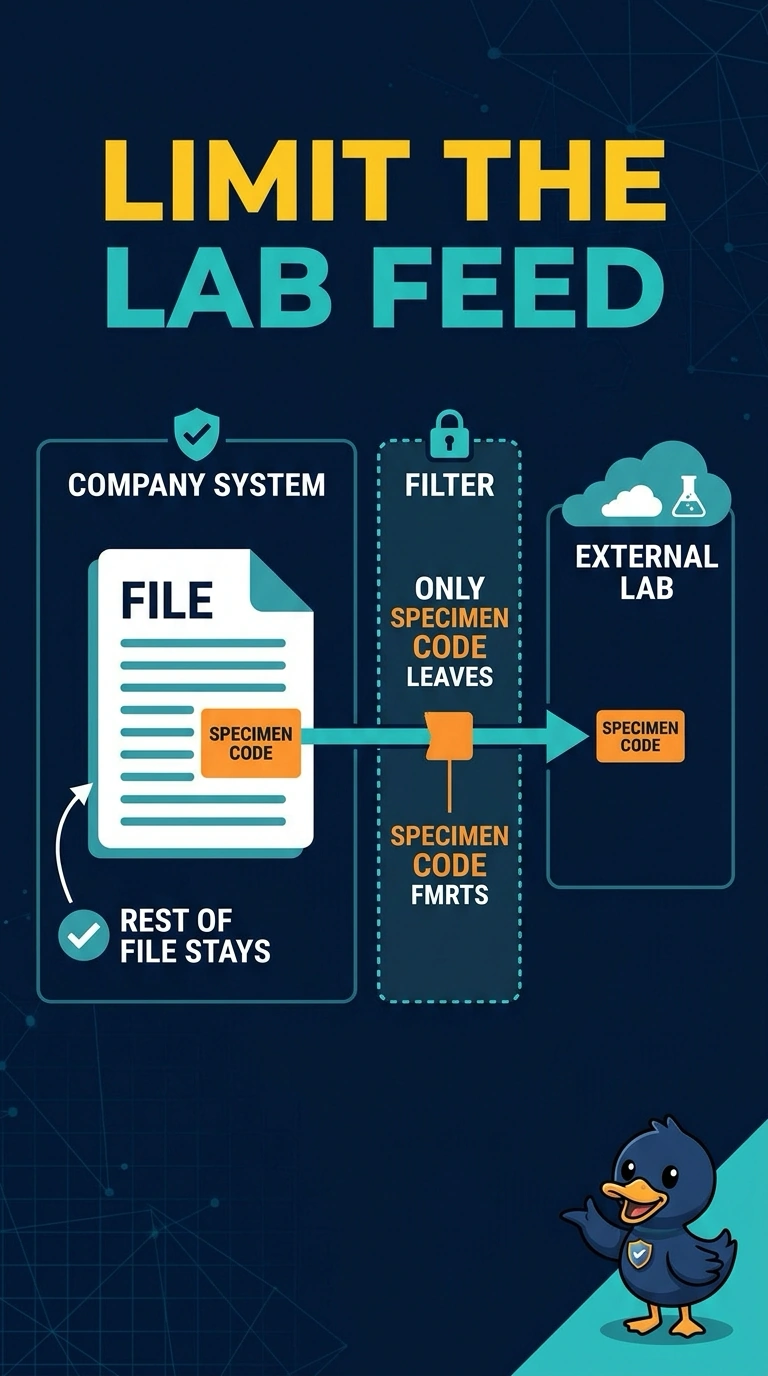
Short Explanation
You don’t need to send the whole filing cabinet when the lab needs just one label. Send the specimen code and keep the rest on your system: data minimization lets you continue the study without sending the full participant file. Accepting or insuring the full-file transfer, or ending the study, doesn’t fit the stated constraints.
Full Explanation
The lab needs a specimen code, while the board has placed sending the full participant file outside the company’s appetite and the feed cannot be stopped this year. Reducing the feed to the specimen code keeps the study moving while limiting what leaves the company system, so it fits both constraints. Accepting the full participant file because the partner contract is already signed would continue a transfer the board has ruled outside appetite; a signed contract does not change that risk decision. Purchasing cyber insurance while continuing to send the unchanged full file may help cover some losses, but it neither reduces the exposure nor prevents the file from leaving on each feed. Ending the breeding study would avoid the transfer only by stopping work the company still has to complete this year, so it does not meet the stated need to keep the feed going. Exam caveat: Do not assume the feed is reduced just because the main export contains only a specimen code; another export or attachment could still include participant details. Practical check: Compare the lab’s received file before and after the change, and verify that it contains the specimen code but no participant names or contact fields.