
A software vendor's support portal showed one customer's ticket files to another customer. It checked only that someone was signed in, and the tickets were then restored on that same portal. Which redesign follows from the incident?
Select an answer to reveal the explanation.
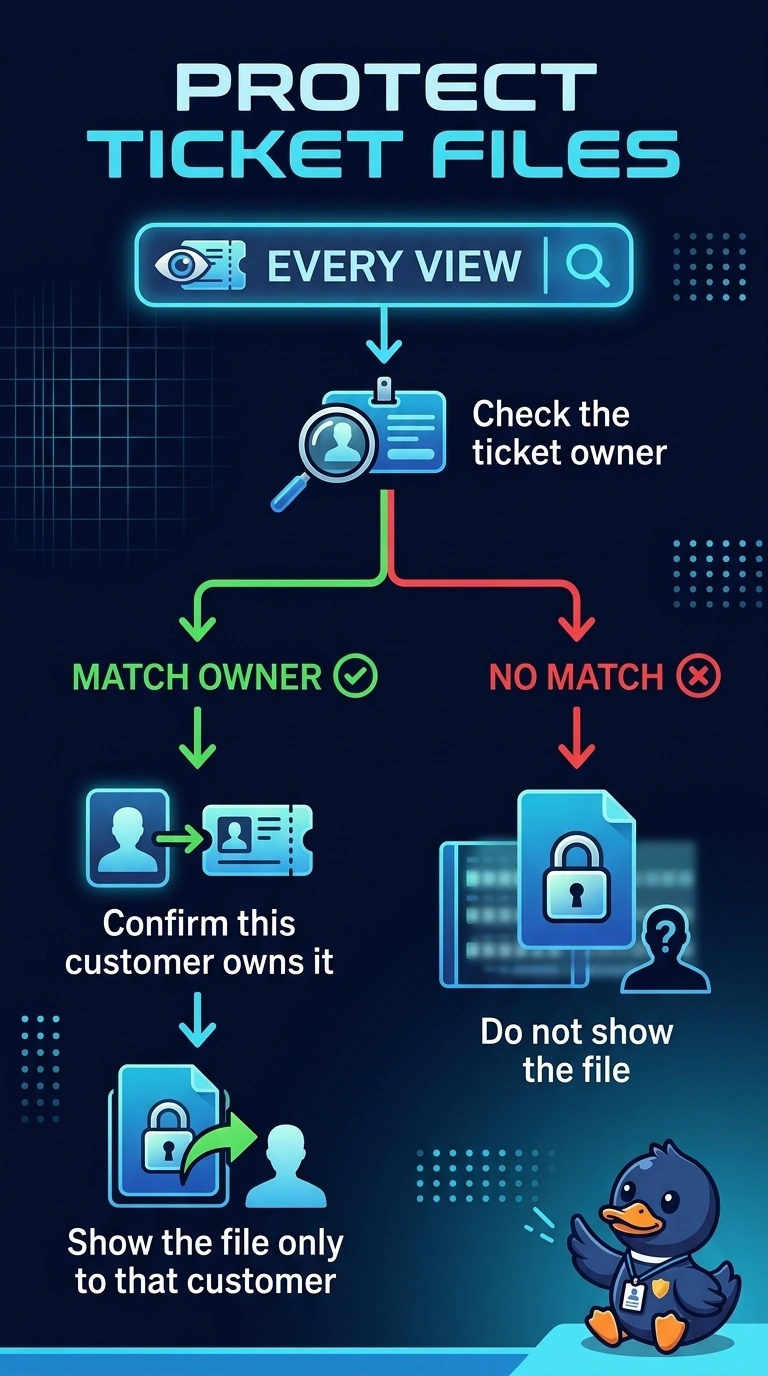
Short Explanation
A badge that opens the building should not open every drawer. You show a ticket only to the customer who owns it. Restoring the same portal, resetting passwords, or adding lobby wireless leaves every drawer unlocked.
Full Explanation
The incident worked because a valid sign-in was treated as permission to read every ticket, not only the customer's own. The redesign checks the ticket owner on each view and refuses every other customer, removing the condition the exposure used. Putting the same portal back, resetting passwords, or adding lobby wireless leaves that check unchanged. Check the ticket owner on every view and show the file only to that customer is the design that meets this requirement. Restore the same portal from backup and keep sign-in as the only authorization check is the wrong fit because restoring the same portal puts the tickets back on the check that already allowed any signed-in customer to read them. Reset every customer password and leave any signed-in user able to open every ticket is the wrong fit because a new password changes the secret and does not change which tickets a signed-in customer is allowed to open. Add a lobby guest wireless network that has no path to the support portal is the wrong fit because lobby wireless was not the path that served the ticket files, so it leaves the portal's check untouched. Exam caveat: Apply the owner check to downloads and to support-staff searches, not only to the first page view, if those paths use a second query that skips the check. Operational check: Sign in as two lab customers, confirm each one can open only that customer's ticket, and confirm a direct link to the other customer's ticket is refused.