
A shipyard is building a drawing vault and has not categorized the system. Staff want to buy controls before they know the impact level. Which framework tells them to categorize before they select controls?
Select an answer to reveal the explanation.
Short Explanation
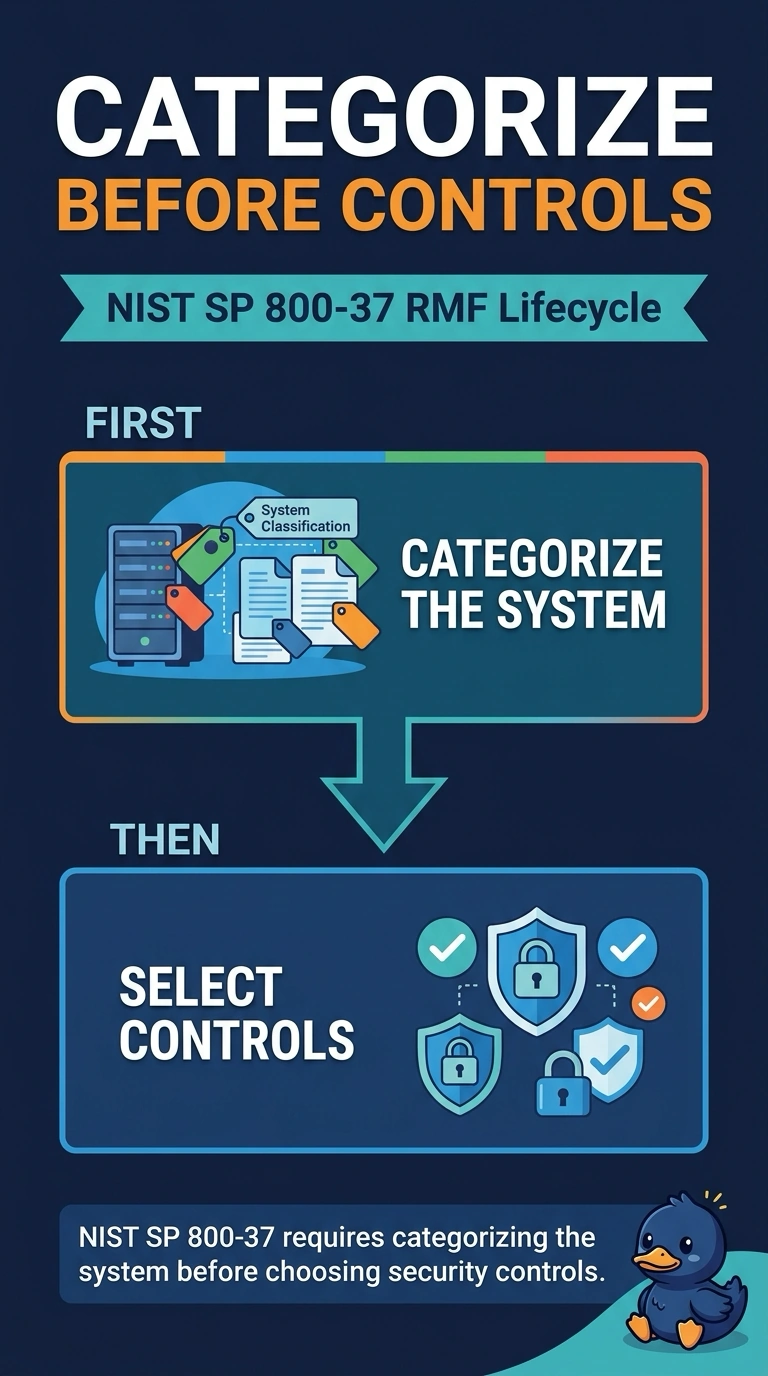
You measure the room before you order the locks. You categorize the vault under the risk-management lifecycle, then you select controls. An attack catalog, a placement reference, or a cardholder standard answers a different question.
Full Explanation
Selecting controls before categorization skips the step that says how severe a loss of the vault would be. NIST SP 800-37 orders the work as categorize, then select, implement, assess, authorize, and monitor, while CAPEC catalogs attack patterns, SAFE places capabilities on flows, and the cardholder standard matches other data. Only that risk-management lifecycle answers the order the shipyard skipped. NIST SP 800-37, whose lifecycle categorizes the system before controls are selected is the design that meets this requirement. MITRE CAPEC, a catalog of attack patterns used to test how a design can be abused is the wrong fit because an attack-pattern catalog helps you test a design and does not set the system's impact category. Cisco SAFE, a reference for placing security capabilities along a business flow is the wrong fit because a placement reference shows where capabilities sit on a flow and is not the categorize-then-select lifecycle. The payment-card standard for cardholder data, a type this drawing vault does not store is the wrong fit because the cardholder standard matches payment data, and a drawing vault is not a cardholder environment. Exam caveat: Categorize from the shipyard's own impact if drawings are lost or altered, since the framework picks no product and leaves placement of a chosen control for a later pass. Operational check: Write the vault's confidentiality, integrity, and availability impact before any control purchase, and confirm the selected controls cite that category.