
A privately held auto lender stores customer income, loan balances, and account numbers. It is not a public-company issuer, it does not sell a cloud service to a civilian agency, and it does not store payment-card numbers. Which document matches this system?
Select an answer to reveal the explanation.
Short Explanation
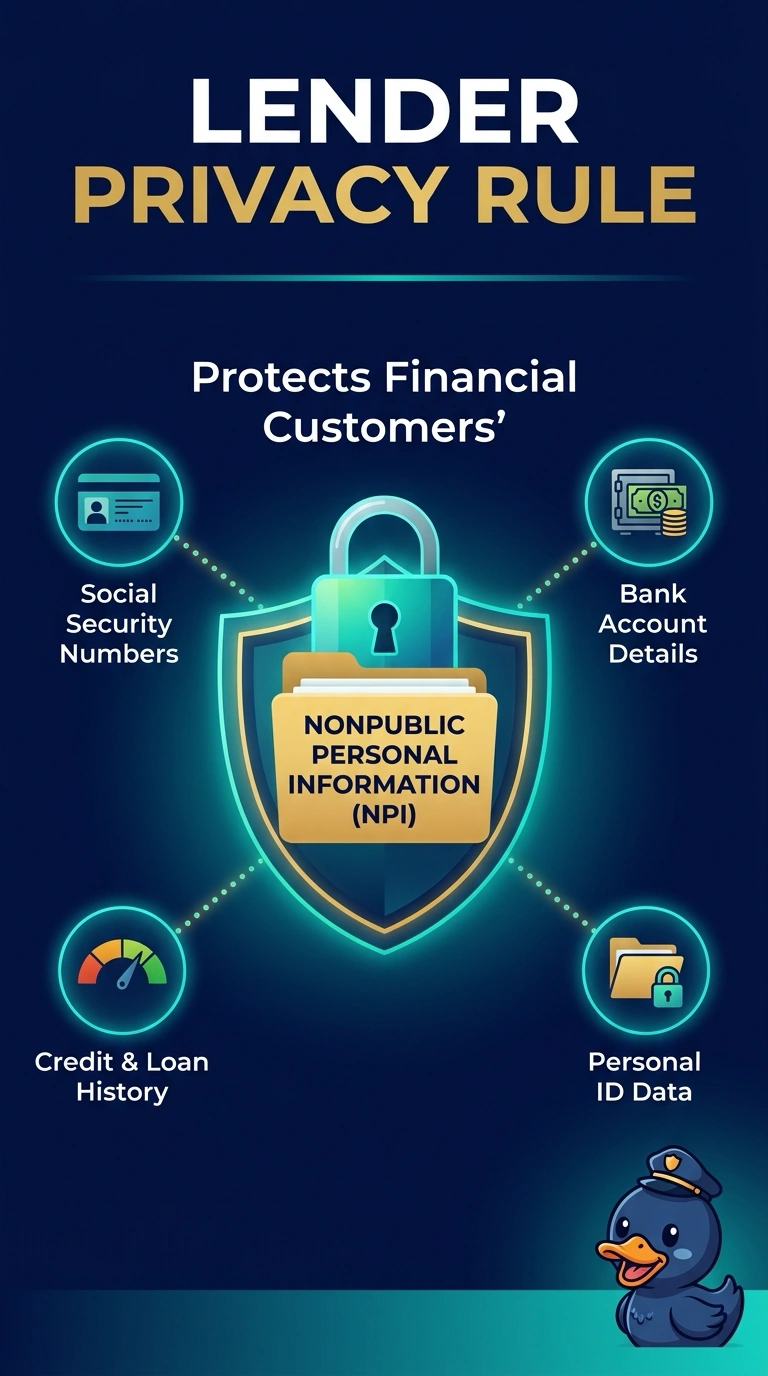
You match the folder to the papers inside it. Customer income and loan balances at a private lender belong to the financial-customer privacy rule. Issuer reporting, a federal cloud program, and the cardholder standard describe other folders.
Full Explanation
The system holds customer income, loan balances, and account numbers, which are nonpublic personal financial information, so the financial-customer privacy rule is the matching document. Public-company reporting, federal cloud authorization, and the cardholder standard each match a different organization or a different data type. Naming that document is the task in front of the team. The financial-customer privacy rule for a lender's nonpublic personal information is the design that meets this requirement. The public-company reporting law for an issuer's controls over financial statements is the wrong fit because public-company reporting applies to an issuer's financial-statement controls, and this lender is not a public issuer. The federal cloud-authorization program for services sold to civilian agencies is the wrong fit because federal cloud authorization applies to a cloud service an agency uses, and this lender is not selling that service. The payment-card standard for systems that store cardholder account numbers is the wrong fit because the payment-card standard applies to cardholder data, and this system stores loan records rather than card numbers. Exam caveat: This match is not a legal opinion, and a payment-card system added later at the same lender would need the cardholder document for that card data. Operational check: List the systems that store customer income and loan balances and confirm they, not the marketing site, are recorded against the financial-privacy document.