
A dairy's vendor support account on the pasteurizer console stays enabled every day, though the vendor needs it only during a monthly visit. The plant rated that standing access outside appetite. Which treatment fits?
Select an answer to reveal the explanation.
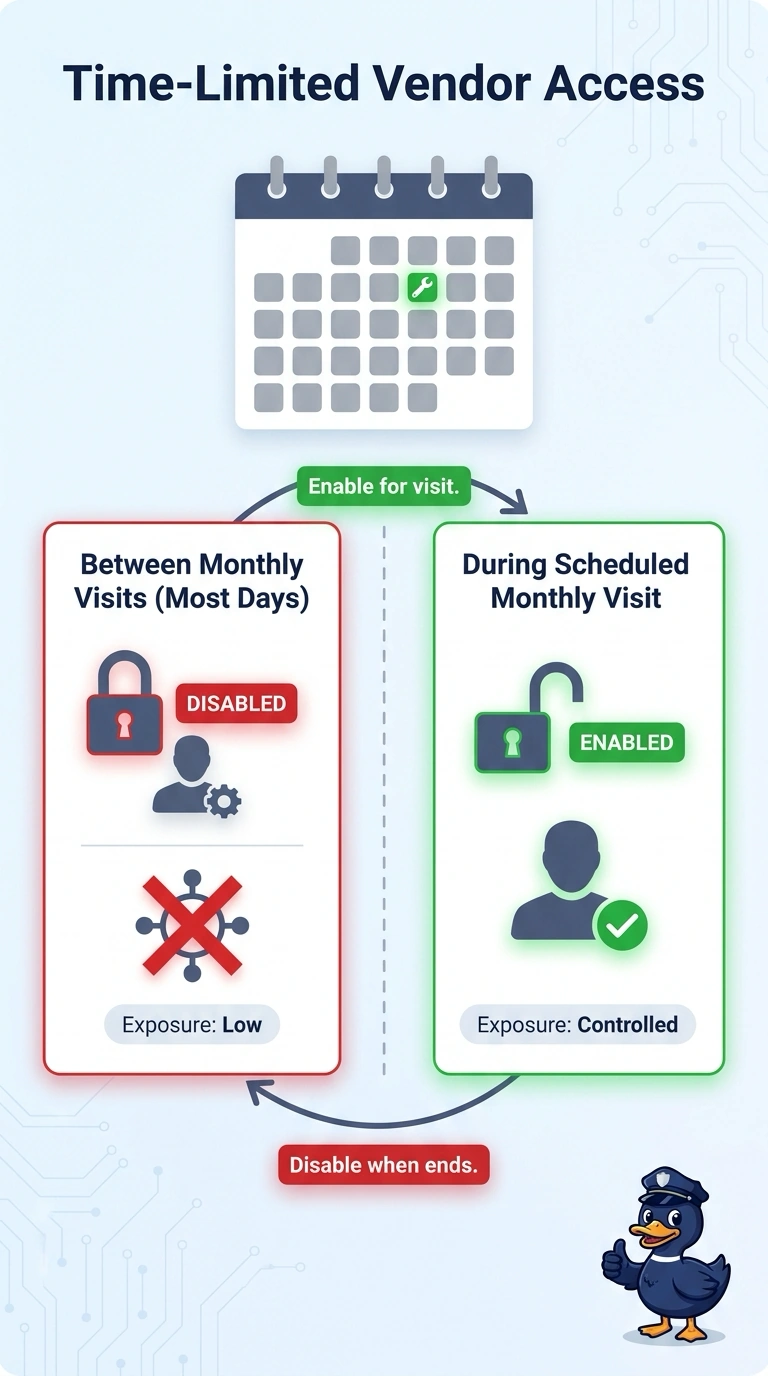
Short Explanation
Leaving a spare key under the mat all month is not fixed by buying insurance. You enable the vendor account only for the visit and you disable it after. Insurance, accepting a risk you already called out of appetite, or unplugging the pasteurizer does not fit.
Full Explanation
The account is still required and the standing access sits outside appetite, so neither removing the pasteurizer nor accepting the exposure fits. Insurance transfers some financial loss and leaves the account enabled between visits. Enabling it only for the visit reduces the hours that access exists, which is the exposure the plant can change this month. Reduce exposure by enabling the vendor account only for the visit and disabling it when the visit ends is the design that meets this requirement. Buy a cyber-insurance policy and leave the vendor account enabled between visits is the wrong fit because insurance may pay after a loss and does not disable the account that is exposed between visits. Accept the standing account with no review date, despite rating it outside appetite is the wrong fit because acceptance is reserved for residual risk inside appetite, and the plant already rated this outside it. Remove the pasteurizer console the dairy still depends on every production day is the wrong fit because removing a console the dairy uses every day avoids a different problem than a standing vendor account. Exam caveat: A visit window needs a named approver and a hard end time, or an enablement nobody turns off becomes standing access again by the next week. Operational check: After a lab visit window closes, confirm the vendor account cannot sign in, and confirm it can sign in again only when a new window is opened.