
A stadium SOC already correlates kiosk alerts, enriches them, and opens a case. Staff then reimage the kiosk before anyone saves memory, so the case has nothing left to examine. Which addition preserves that evidence?
Select an answer to reveal the explanation.
Short Explanation
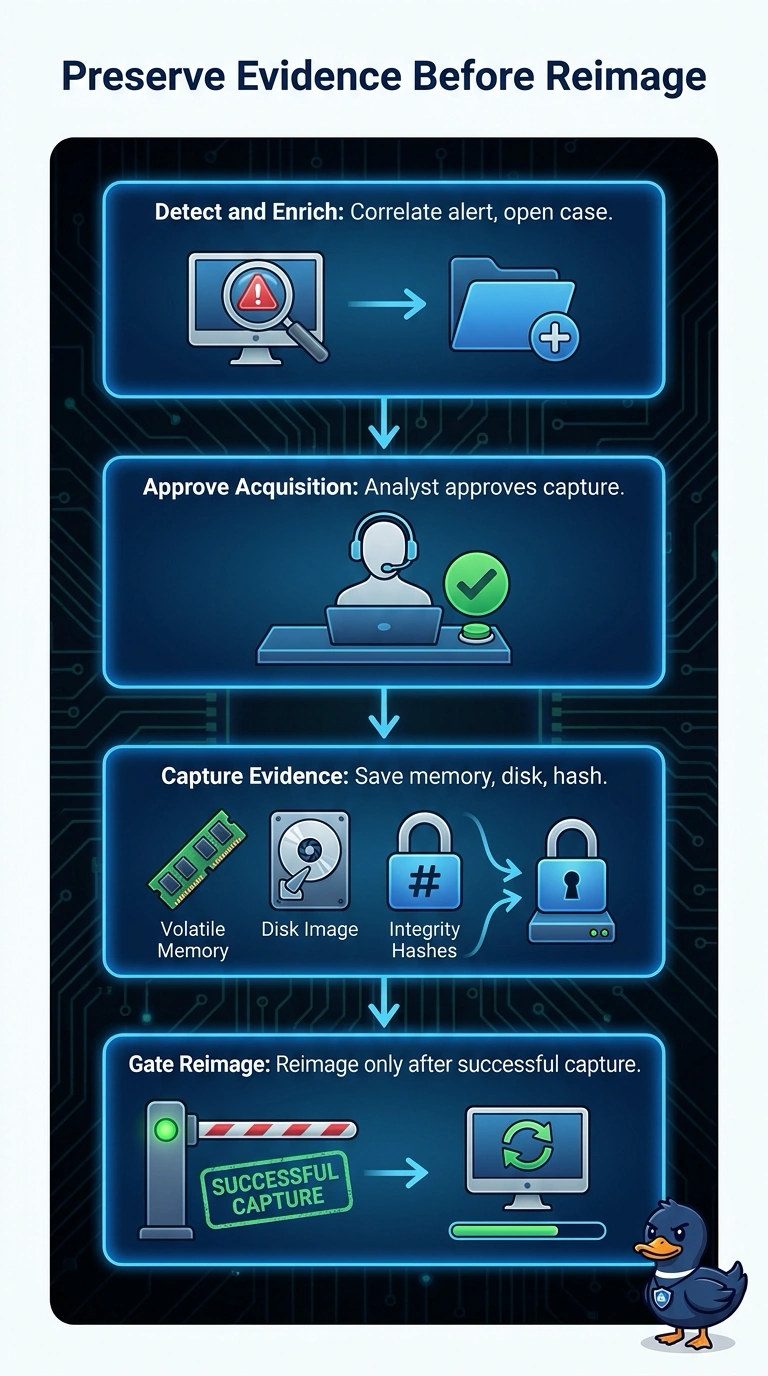
Washing the kiosk before you photograph it leaves you with a clean machine and no story. You can run an approved acquisition playbook that saves volatile memory and the required disk image, records integrity hashes, and holds reimaging until capture succeeds. An uptime tile, enrichment after the wipe, or another rule grouping the same alert still leaves you with nothing to examine.
Full Explanation
Correlation, enrichment, and case creation are already in place, but none preserves volatile memory before the kiosk is reimaged. Run an approved acquisition playbook that preserves volatile memory and the required disk image, records integrity hashes, and gates reimaging on successful capture, retaining those artifacts with the case. A hash verifies the acquired evidence; preserving the image retains the content for analysis. A dashboard tile of kiosk uptime stores neither a memory image nor a disk hash, so showing uptime cannot recover memory destroyed by the reimage. Enrichment of a file hash the reimage has already wiped cannot help because enrichment can add context only if the value was preserved before the wipe destroyed the source. An additional correlation rule that groups the same kiosk alert the SOC already groups merely duplicates existing grouping and captures no volatile data. The acquisition playbook is therefore the addition that addresses the missing preservation step while keeping approval-gated control before the disruptive reimage. Exam caveat: preserve only what the case needs and protect captured memory; placing it on a world-readable share could expose sensitive evidence and create another incident. Practical check: trigger the playbook on a test kiosk and confirm the case receives images and hashes before reimaging proceeds.