
A railroad has segmented its dispatch network, tests restores, and still faces a loss the board says is above cash reserves. No technical hole is left open. Which response matches the remaining concern?
Select an answer to reveal the explanation.
Short Explanation
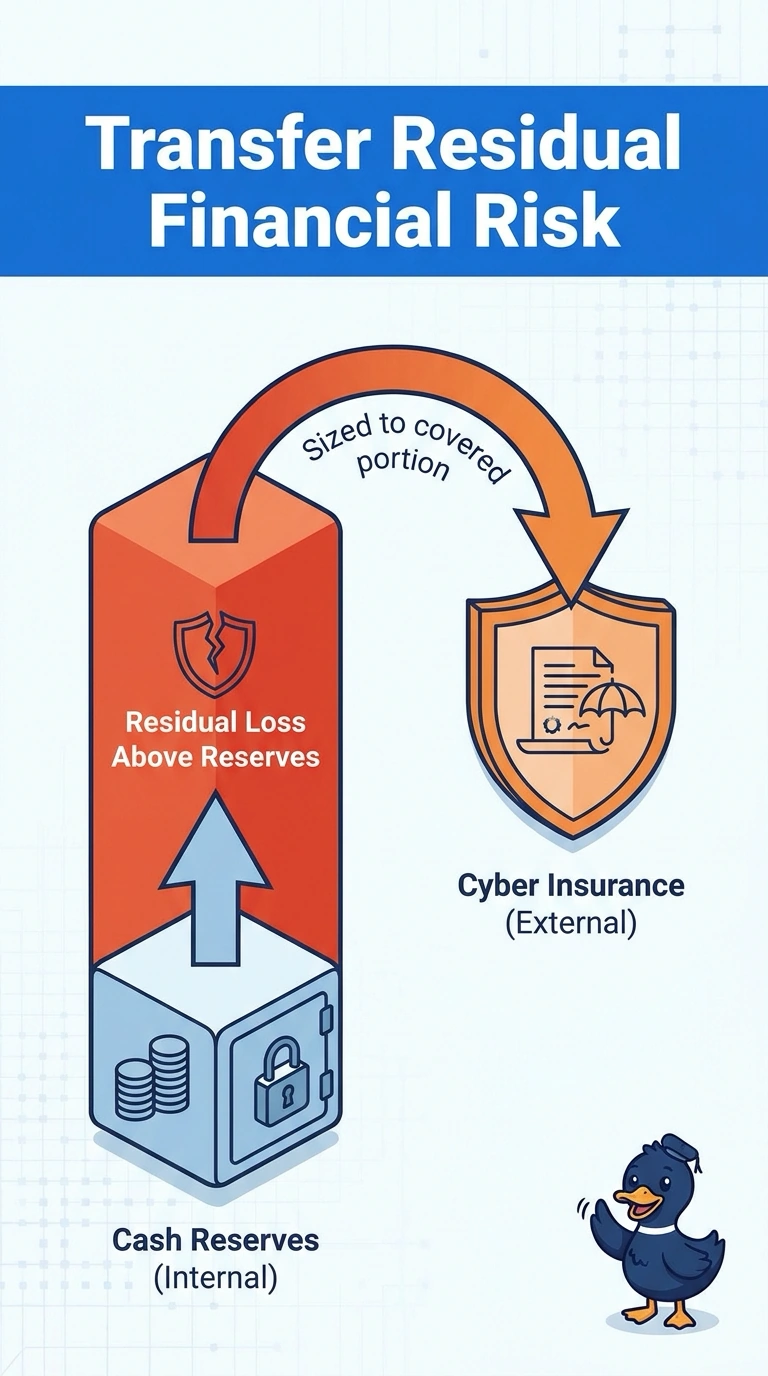
You’ve already addressed the technical exposure; the remaining question is who covers a loss the board won’t carry in cash. Cyber insurance transfers the covered portion of the residual financial loss above reserves. Accepting the full loss, removing needed dispatch, or adding another firewall addresses a different concern.
Full Explanation
The railroad has segmented dispatch and tested restores, so the remaining concern is financial rather than an open technical exposure. Cyber insurance sized to the covered portion of the residual loss above the railroad’s reserves fits because it transfers that covered loss to an insurer instead of leaving the board to fund it from cash. Accepting the full loss with no transfer does not fit because the board says the loss exceeds its appetite, and acceptance provides no coverage for the amount above reserves. Removing the dispatch system does not fit because the railroad still needs it to run trains; stopping that operation is not a suitable way to address the financial exposure. Adding a second firewall does not fit because it addresses a technical concern the scenario says is already addressed, without changing the financial impact or balance sheet. Exam caveat: Insurance does not close an open technical hole, so it fits here because segmentation and restores are already in place. Practical check: Compare the coverage limit, deductible, exclusions, and remaining exposure with the board’s reserve figure to confirm what amount, if any, remains uncovered and must still be accepted or reduced.