
An arts agency has built a grants system and has not decided how severe a breach of that system would be. Leadership wants the step that comes before control selection. Which framework action is that?
Select an answer to reveal the explanation.
Short Explanation
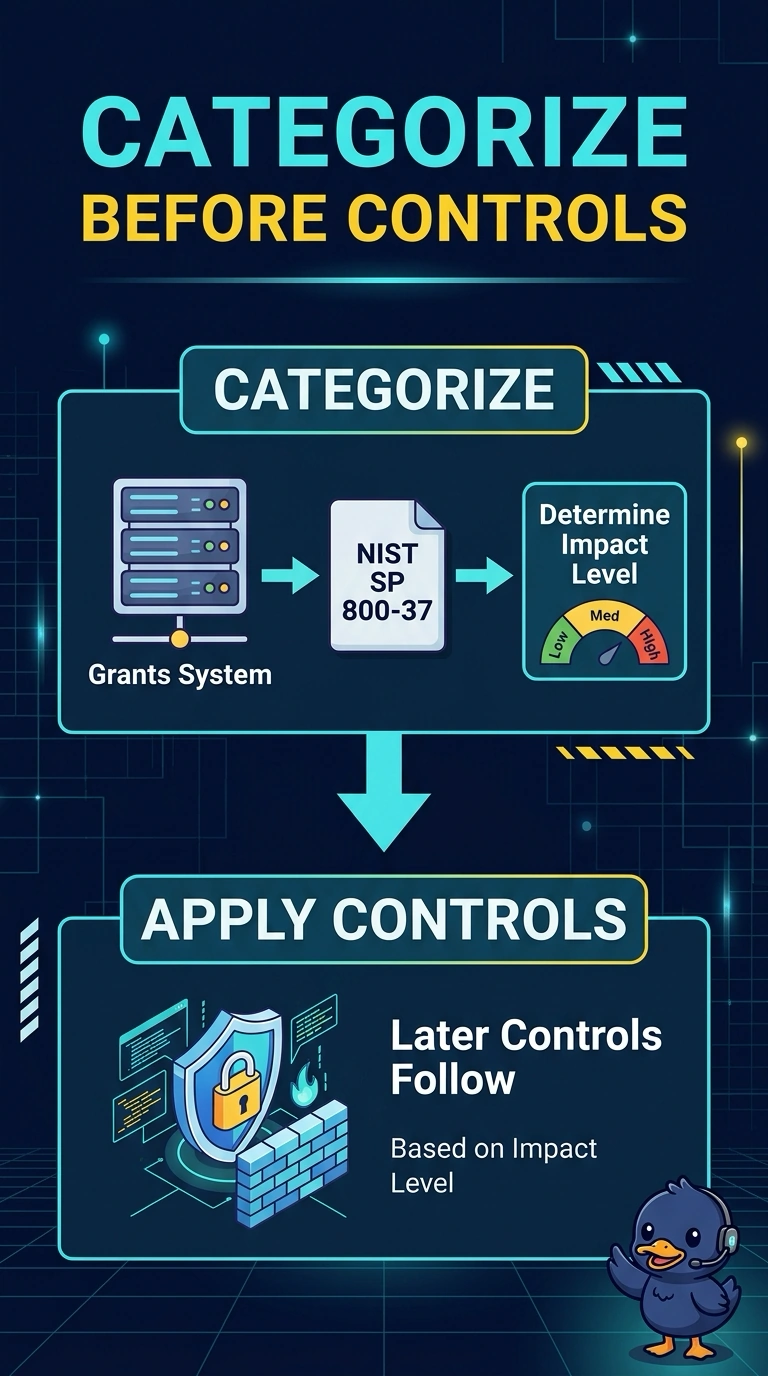
You do not pick the locks until you know what the room is worth. You categorize the grants system so later control choices follow an impact level. An attack-pattern catalog, a SAFE diagram for an unused branch, or a payment-card standard skips that step.
Full Explanation
NIST SP 800-37 orders the work as categorize, then select controls that match that impact, then implement, assess, authorize, and monitor. The agency has not categorized the grants system yet, so control selection has no impact level to follow. CAPEC, a SAFE diagram for an unused branch, and a cardholder standard each cover a different job. Categorize the grants system under NIST SP 800-37 so later controls follow an impact level is the design that meets this requirement. Select attack patterns from MITRE CAPEC and stop before any authorization lifecycle is the wrong fit because an attack-pattern catalog can inspire tests and is not the step that sets impact before controls are selected. Redraw a Cisco SAFE diagram for a branch office the grants system does not use is the wrong fit because a SAFE diagram places capabilities on a flow and this request is for the system's impact category. Adopt the payment-card standard even though the agency does not take card payments is the wrong fit because a payment-card document is a control set for card data, and this agency does not process card payments. Exam caveat: Categorize is not the authorization to operate. The agency still has to select, implement, assess, and authorize after the impact level is set. Operational check: Write the impact level for the grants system in the system record and confirm control selection cites that level rather than a blank category.