
A cooperative's payroll integration must keep running, and the residual risk is above the written appetite. Insurance has been quoted. Which treatment fits?
Select an answer to reveal the explanation.
Short Explanation
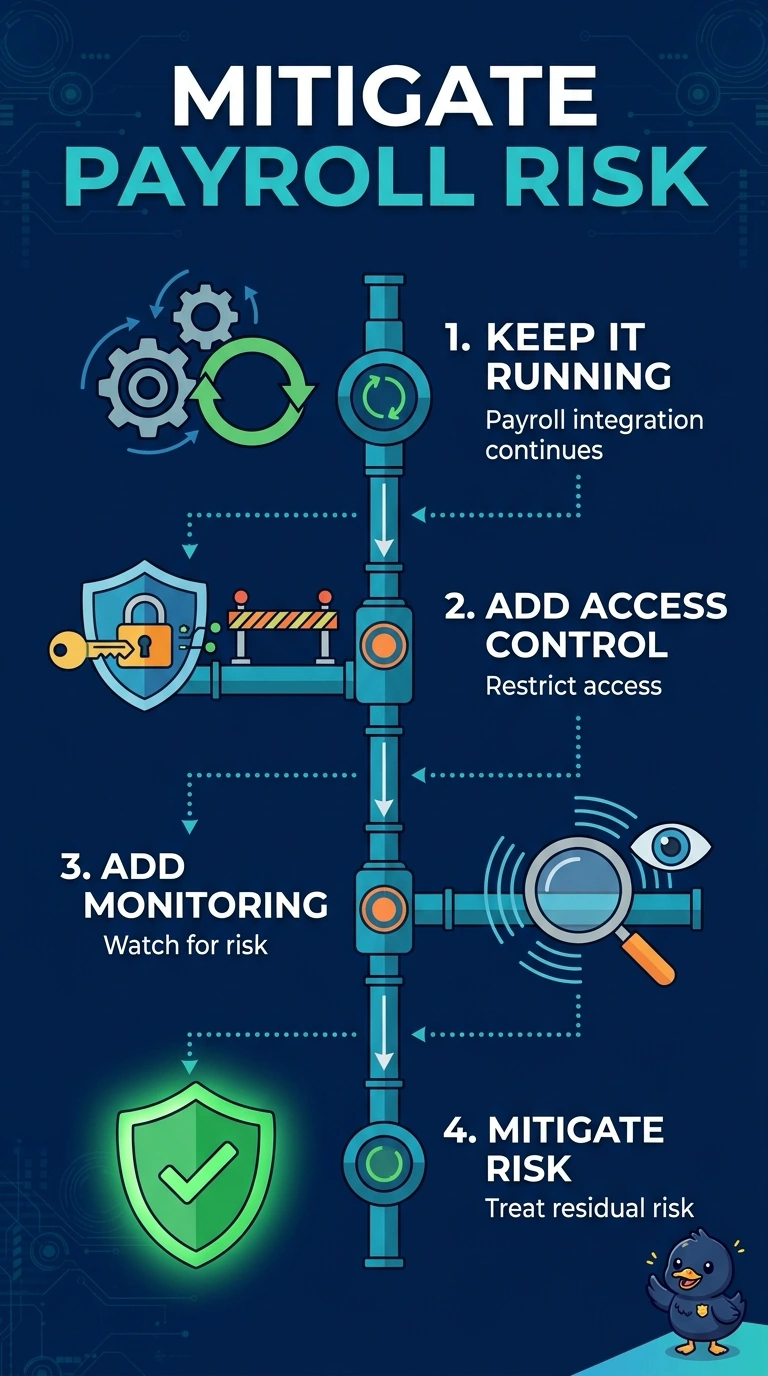
Payroll is a door the cooperative has to keep open. You mitigate with access control and monitoring on that integration. Shutting payroll off, buying insurance alone, or accepting a risk above appetite misses the treatment.
Full Explanation
A required payroll process cannot be avoided by turning it off, and risk above the written appetite cannot be accepted as it stands. Insurance transfers money after an incident and leaves the integration's control gap unchanged. Mitigation is the treatment that fits: add access control and monitoring so the exposure comes down while payroll keeps running, and the quote for insurance does not do that work. Mitigate by adding access control and monitoring on the payroll integration is the design that meets this requirement. Avoid the risk by shutting payroll off when the cooperative must still pay its people is the wrong fit because avoidance would remove a payroll process the cooperative must run in order to pay its people. Transfer the risk by buying the quoted insurance and leaving the integration unchanged is the wrong fit because insurance may pay after a loss and does not add the control the payroll integration is missing. Accept the risk and record no change, even though it sits above the written appetite is the wrong fit because acceptance is for residual risk inside appetite, and this residual risk is stated to be above it. Exam caveat: After the new control, re-score the residual risk, because a control that does not bring the risk inside appetite is not finished mitigation. Operational check: Confirm the payroll integration still completes a test pay run, and confirm access outside the approved payroll roles is denied and visible in the monitoring log.