
A hotel's building panel is on the internet with a default login, and leadership bought cyber insurance to cover an outage. Which treatment reduces the chance of compromise?
Select an answer to reveal the explanation.
Short Explanation
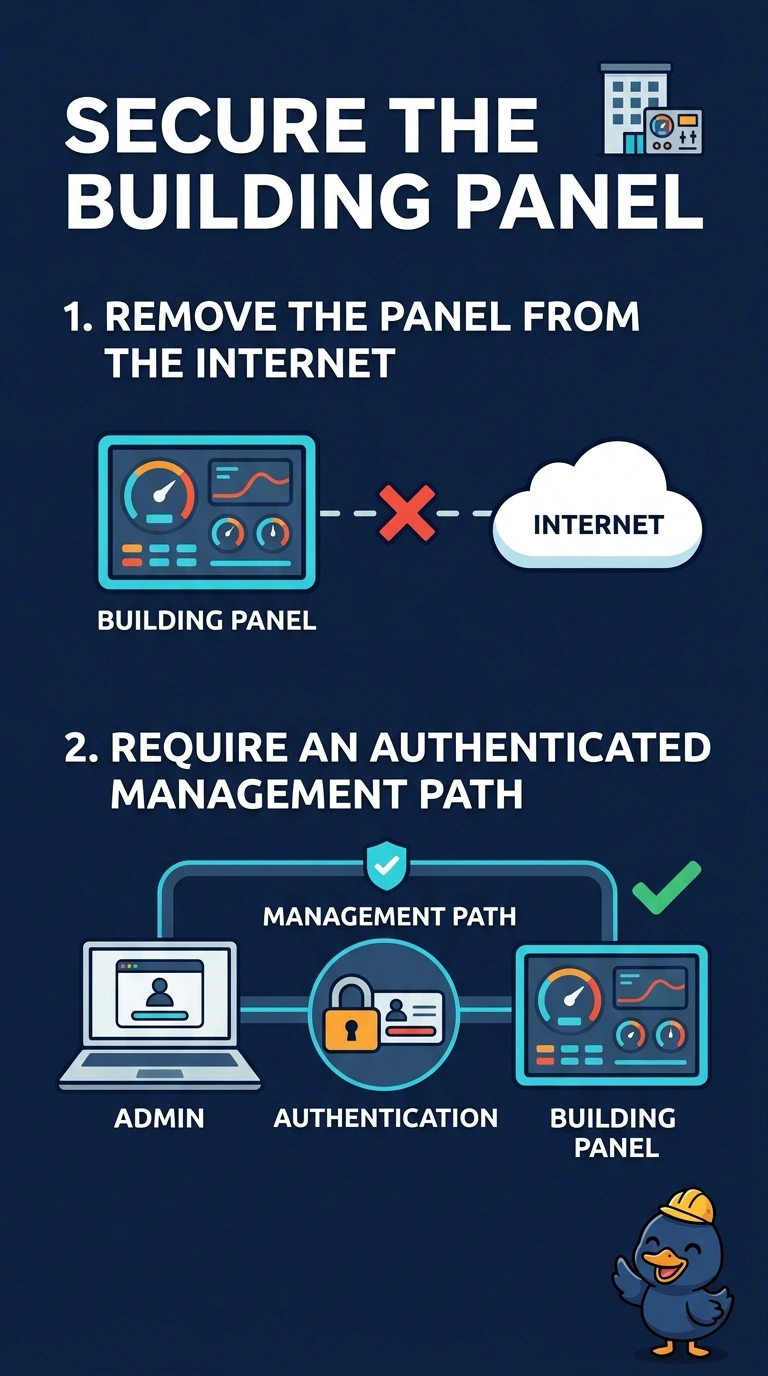
A payout after a fire does not move the open window off the street. You take the building panel off the internet and put administration on an authenticated path. An insurance policy, accepting the paid exposure, or closing reservations leaves the panel where it is.
Full Explanation
Insurance transfers some financial impact after an incident, and it does not change the default login or remove the panel from the internet, so the chance of compromise stays where it was. Taking the panel off the public internet and requiring an authenticated management path is the treatment that reduces exposure. Closing reservations does not touch the panel, and a paid premium is not a decision that the exposure is acceptable. Remove the panel from the internet and require an authenticated management path is the design that meets this requirement. Treat the insurance policy as the control and leave the default login on the internet is the wrong fit because insurance pays after a loss and does not close the default login or the internet path to the panel. Accept the exposure on the strength of a paid premium and record no technical change is the wrong fit because acceptance leaves a risk in place, and a paid premium is not evidence the risk fits appetite. Shut down guest reservations despite that choice leaving the building panel untouched is the wrong fit because reservations are a different system, so closing them does not reach the building panel or its login. Exam caveat: If facilities still need remote adjustments, put that path behind the hotel's authenticated access instead of publishing the panel, or the internet path returns under another name. Operational check: From an outside network, confirm the panel address no longer answers, then confirm an authorized facilities account can still reach it on the management path.