
A museum SOC already correlates alerts into cases, and analysts cannot tell which cases sit on systems that store donor data. Which addition supplies that missing context?
Select an answer to reveal the explanation.
Short Explanation
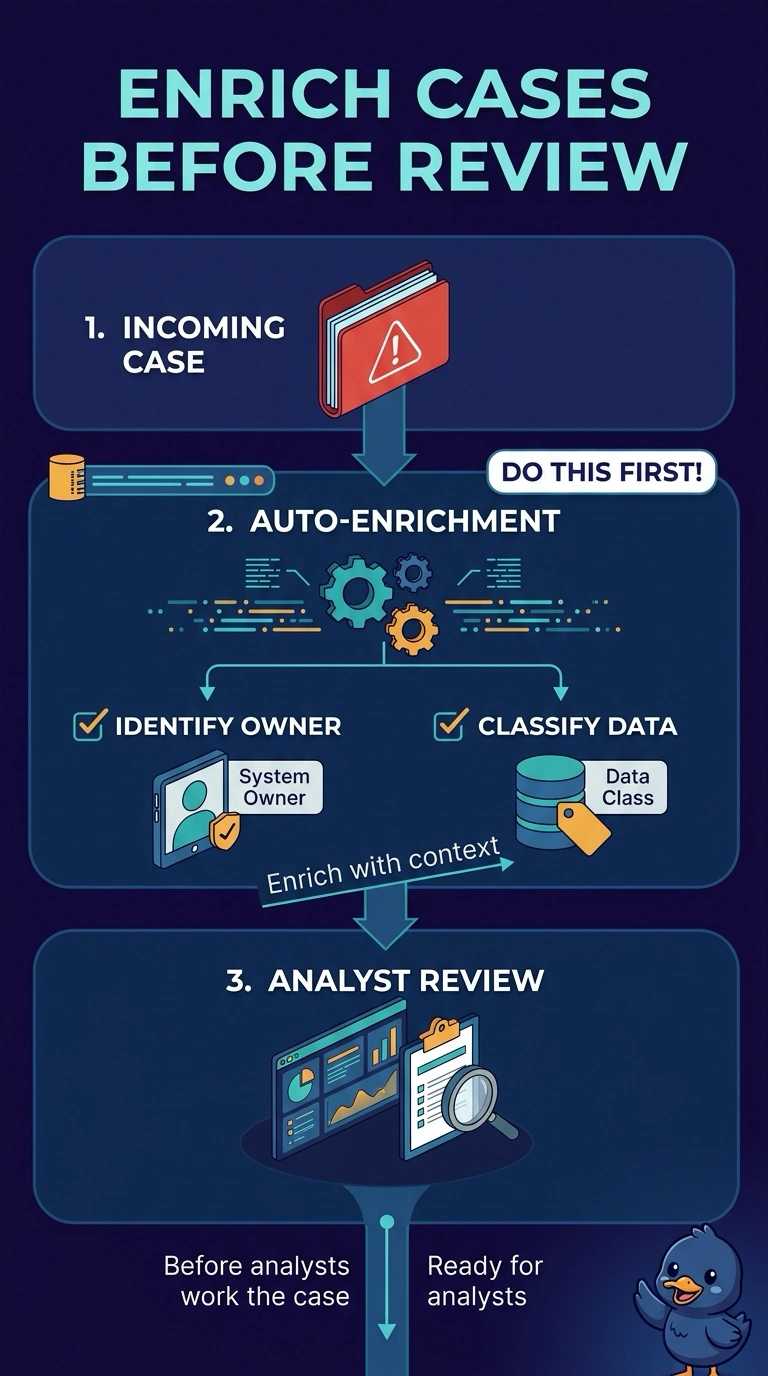
A pile of case folders helps only if you can see which ones hold the donor list. You enrich each case with the system owner and the data class. A count on a wall tile, a duplicate case, or isolating every gallery computer adds none of that context.
Full Explanation
Correlation has already turned alerts into cases, and the missing context is properties of the asset: who owns it and what class of data it holds. Enrichment writes those fields onto the case so a donor-data system is visible in the queue. A tile that counts cases, a second correlation pass that duplicates them, and a playbook that isolates every gallery computer do not add that context. Enrichment that adds the system owner and the data class to each case before analysts work it is the design that meets this requirement. A dashboard tile that counts open cases and adds no owner and no data class is the wrong fit because a count of cases does not say who owns the system or whether donor data is stored on that system. A second correlation rule that creates a duplicate case for every alert already grouped is the wrong fit because a duplicate case repeats work the correlation already did and still lacks owner and data class. A playbook that isolates every gallery computer whenever any case is opened is the wrong fit because isolating every gallery computer is a response, not the context analysts need to sort cases. Exam caveat: Enrichment that uses a stale inventory will label a donor system as ordinary, so the feed has to be the same inventory the museum trusts for asset ownership. Operational check: Open a lab case on a system tagged as donor data and confirm the case shows that class and the owner's name, then confirm a public-website case does not receive the donor tag.