
A theater's staging server holds a full copy of live payroll, including bank details, so developers can debug. Leadership says that copy is outside risk appetite. Which treatment fits?
Select an answer to reveal the explanation.
Short Explanation
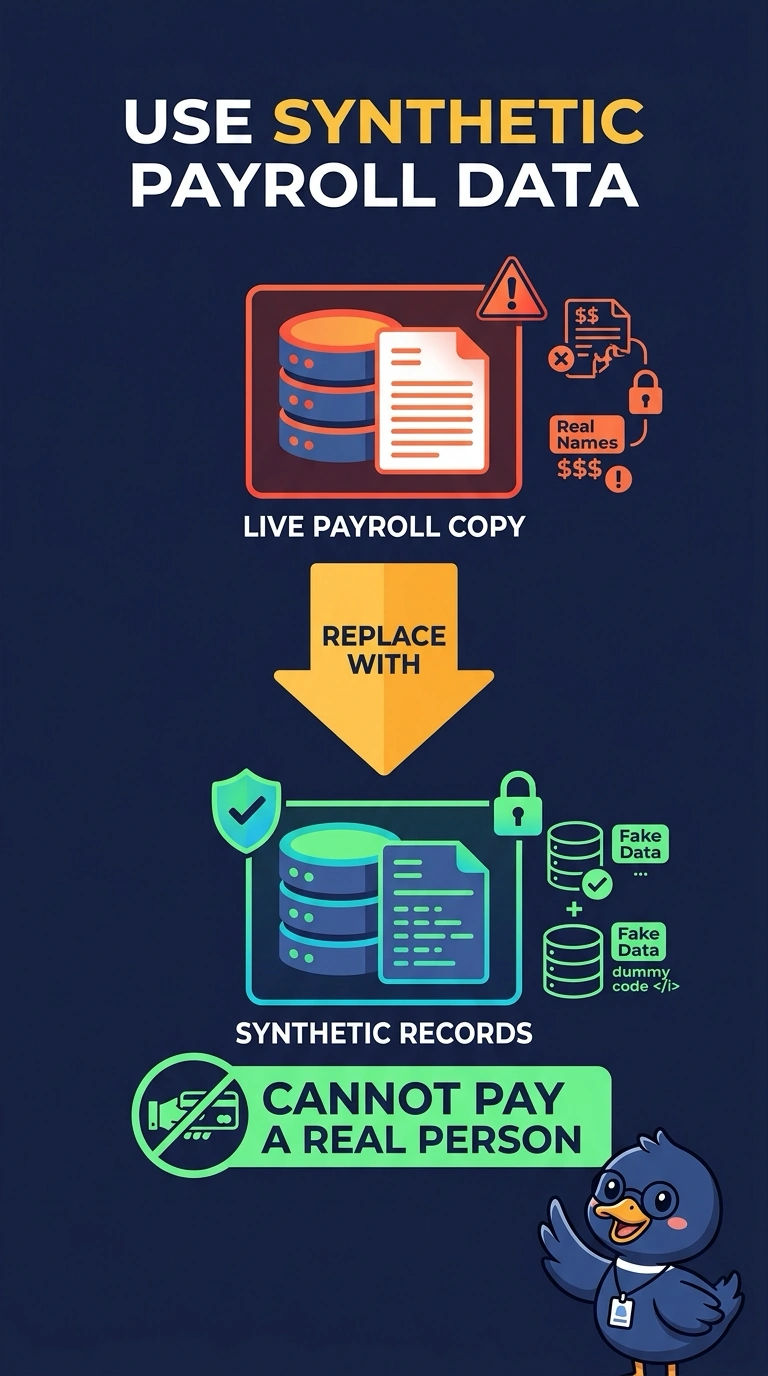
A practice safe should not hold the real payroll. You replace the live copy with synthetic records so staging cannot pay a real person. Unrecorded acceptance, insurance that leaves the file in place, or shutting down production payroll misses the exposure leadership named.
Full Explanation
Leadership has already said the live payroll copy is outside appetite, so acceptance is the wrong treatment, and insurance would pay a loss while leaving the bank file on staging. Synthetic records reduce that exposure and still give developers rows to debug. Shutting down production payroll avoids a different system, the one the theater still uses to pay people. Replace the live payroll copy with synthetic records that cannot pay a real person is the design that meets this requirement. Accept the staging copy with no review, treating a non-production server as harmless is the wrong fit because leadership already said the copy is outside appetite, so accepting it contradicts the decision they made. Buy insurance for a payroll leak and leave the live bank file on the staging server is the wrong fit because insurance may pay after a leak and does not remove the live bank details from the staging server. Shut down production payroll so the staging server no longer has a source to copy is the wrong fit because shutting down production payroll stops pay for people the theater still employs on staff each week. Exam caveat: Synthetic records have to be generated rather than renamed, because a file that still holds real bank details under a new name is the same exposure. Operational check: Scan the staging payroll store after the swap and confirm no live bank numbers remain, while a developer job still runs against the synthetic rows.