
A state pension agency has categorized a new payroll system and must choose the control baseline before anyone builds it. Which framework is that step?
Select an answer to reveal the explanation.
Short Explanation
Choosing the locks comes after you decide what the building is for, and before you pour the walls. You follow the lifecycle that selects the payroll control baseline after categorization. An attack-pattern catalog, a flow-placement guide, or an after-outage writeup does not select that baseline.
Full Explanation
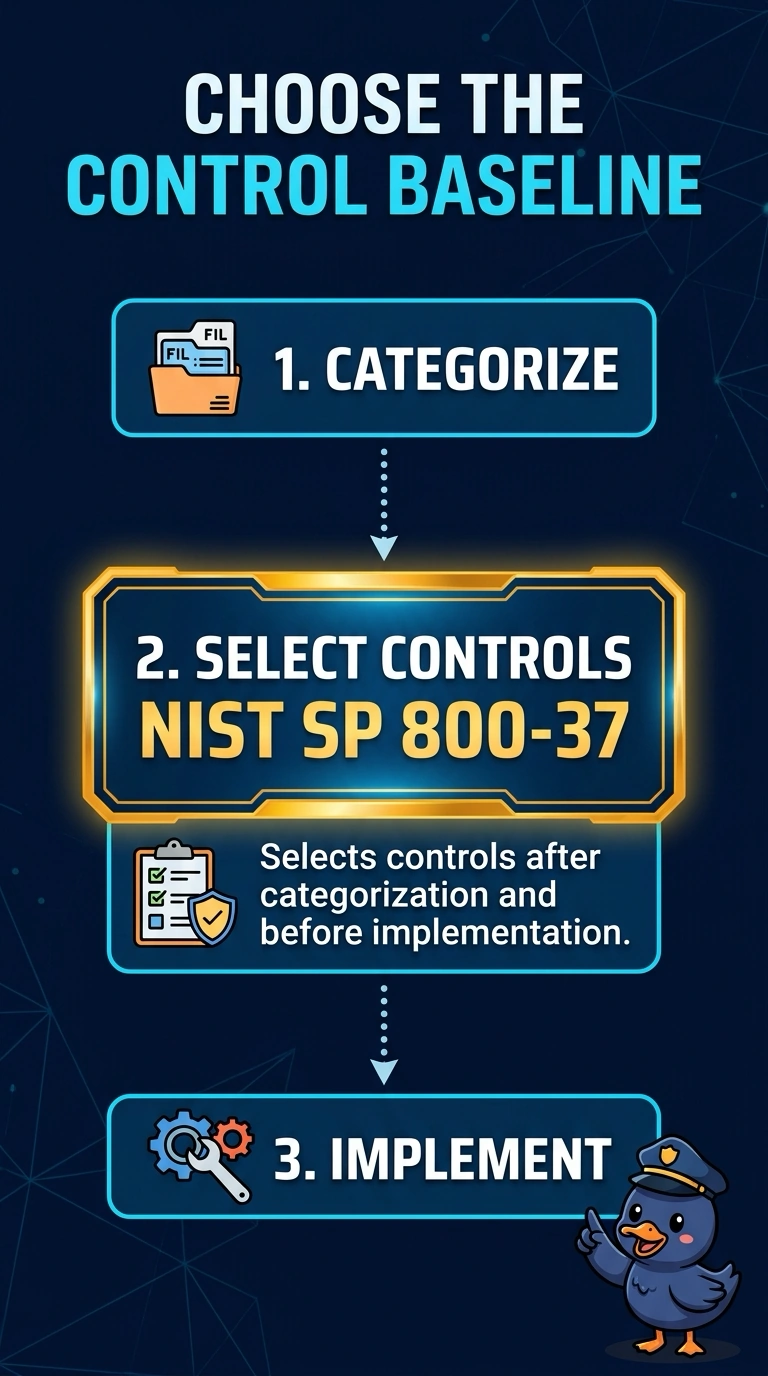
The agency is between categorization and implementation, which is the select step of the risk-management lifecycle in NIST SP 800-37. That lifecycle is prepare, categorize, select, implement, assess, authorize, and monitor. An attack-pattern catalog, a business-flow placement guide, and a post-outage writeup do not choose the baseline that builders have not started yet. NIST SP 800-37, the lifecycle that selects controls after categorization and before implementation is the design that meets this requirement. MITRE CAPEC, the catalog of attack patterns that describes how attacks are carried out is the wrong fit because an attack-pattern catalog describes how attacks are carried out and does not select the control baseline. Cisco SAFE, the reference for placing security capabilities along a business flow is the wrong fit because a flow-placement reference shows where capabilities sit and does not choose the pre-build baseline. An after-outage writeup that records what failed once the payroll system is already live is the wrong fit because a writeup after an outage looks backward and is not the select step that happens before the system is built. Exam caveat: The select step names the baseline, and a later assessment can still find that the built payroll system does not actually meet what was selected. Operational check: Show the payroll category decision and the chosen control baseline side by side, and confirm both records exist before any build work starts.