
At a city library, the mail gateway, the identity log, and the endpoint tool each opened a ticket for the same librarian within ten minutes. Which SOC step fits before anyone contains that account?
Select an answer to reveal the explanation.
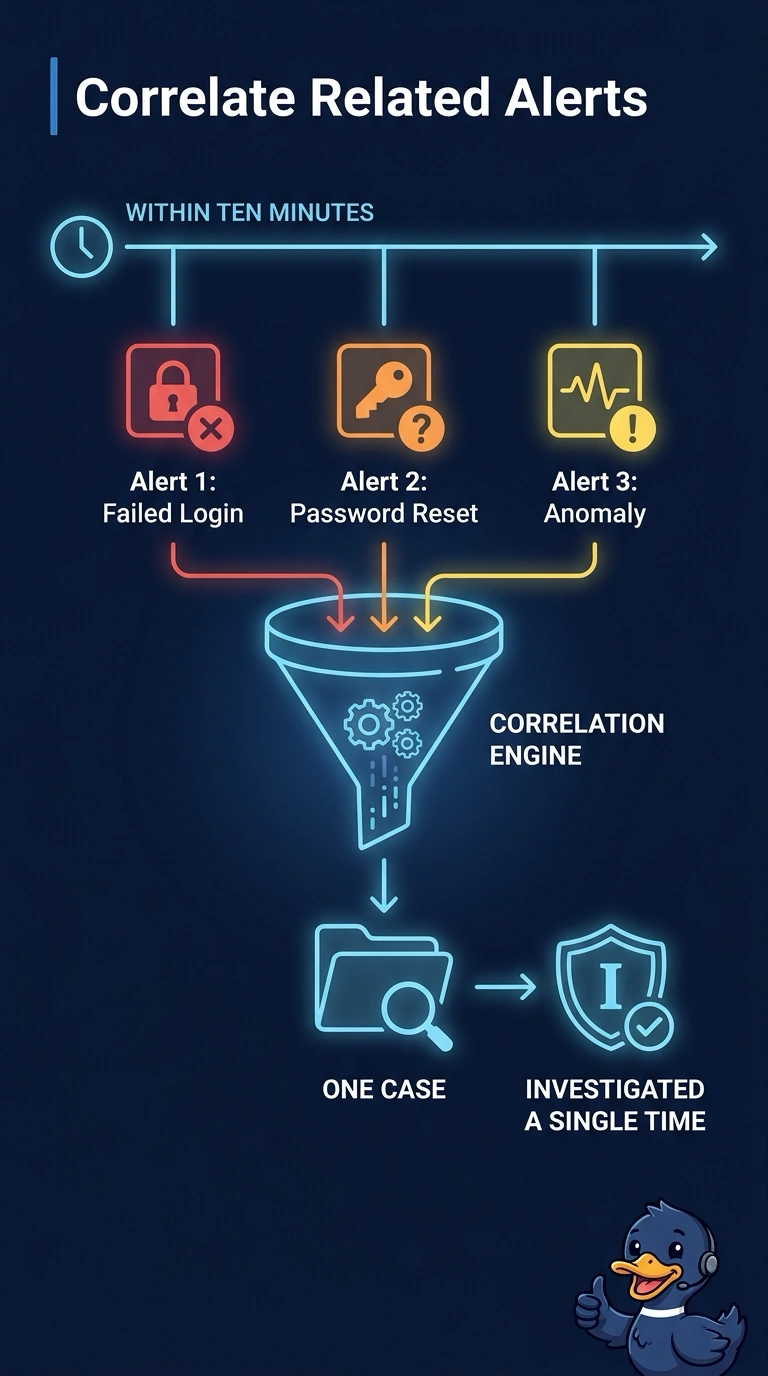
Short Explanation
Three alarms for one broken window should become one work order. You correlate the mail, identity, and endpoint alerts into a single case before anyone contains the librarian. A bigger tile, enrichment of only the mail alert, or a playbook that disables every named account scatters or overreaches the work.
Full Explanation
Three sensors described one librarian, and three tickets will make three people act. Correlate the three alerts using the verified account, overlapping timeline, and shared indicators, then investigate the resulting case before deciding on containment. A larger tile only displays the split, and enriching the mail alert alone leaves the other tickets open. A playbook that disables every named account uses the wrong scope and can lock people who are outside this incident. Correlate the three alerts into one case so the account is investigated a single time is the design that meets this requirement. A new dashboard tile that reprints the same three alerts in a larger typeface is the wrong fit because a larger tile displays the alerts and does not merge the work or give the incident one owner. Threat-intel enrichment on the mail alert alone, leaving the other two tickets open is the wrong fit because enriching only the mail alert leaves two other tickets that can send the next shift chasing duplicates. A containment playbook that disables every account named in any one of the alerts is the wrong fit because disabling every account named in any alert treats unrelated noise as if it were this librarian. Exam caveat: Correlation does not by itself contain the account, so after the case exists a person still chooses the containment step the library procedure allows. Operational check: Replay the three lab alerts for one test account and confirm a single case is opened, with the other two alerts attached rather than assigned to new owners.