
Over one week, plants at a seed company each sent a few DNS queries to the same newly registered domain. No single query alarmed the on-call analyst. Which SOC capability ties that pattern together?
Select an answer to reveal the explanation.
Short Explanation
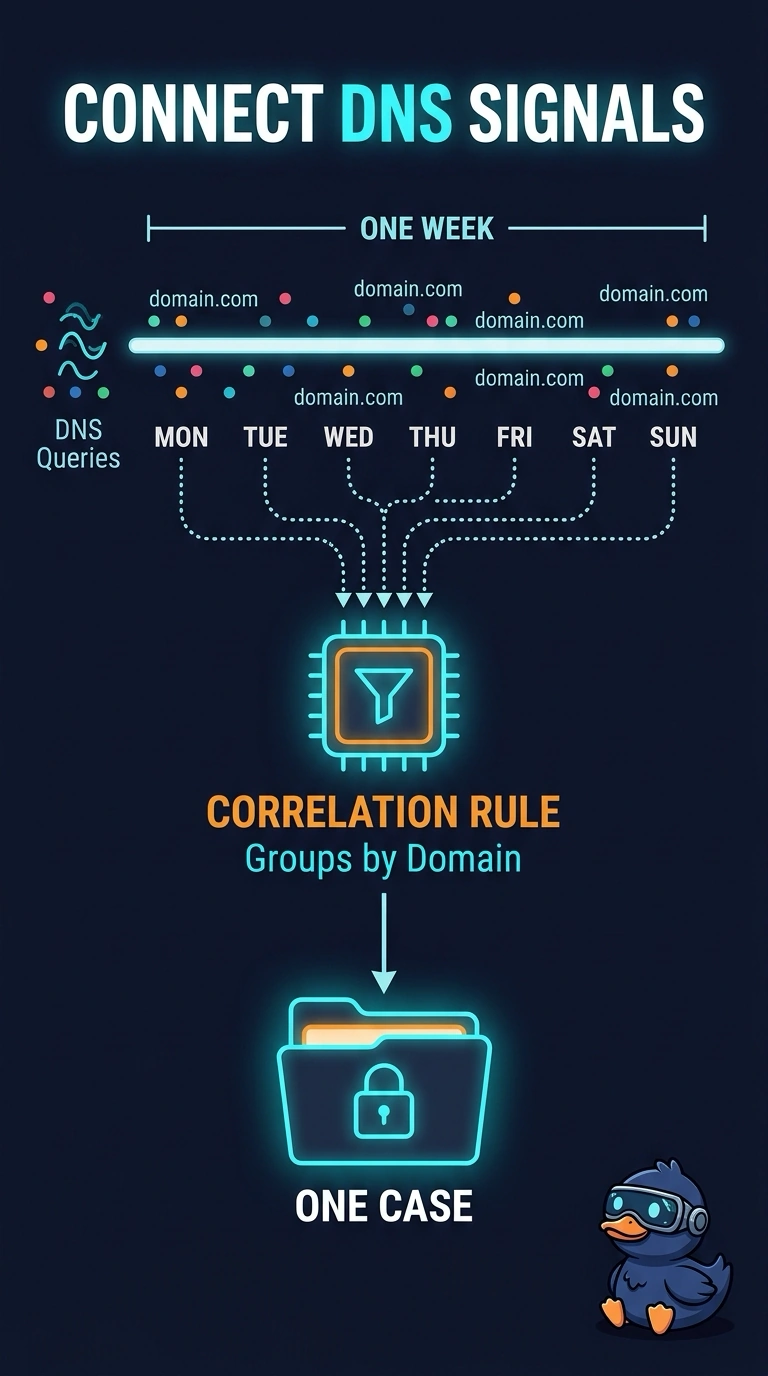
One drip is weather, and a week of drips from the same pipe is a leak. You correlate the queries to that new domain across the week into one case. A raw count tile, enrichment of a single lookup, or isolation after one ordinary query misses the pattern or hits the wrong target.
Full Explanation
Each DNS query is too small to alarm the on-call, and the signal is the same new domain repeating across plants for a week, so correlation should group those queries into one case. A dashboard count and enrichment of a single lookup do not assemble that pattern for an owner. Isolating a computer after one ordinary query uses the wrong threshold and can interrupt normal resolution. A correlation rule that groups those queries by domain across the week into one case is the design that meets this requirement. A dashboard tile that counts DNS queries without grouping that newly registered domain is the wrong fit because a count tile shows volume and does not assemble one domain's weak queries into a case someone owns. Enrichment of one query that still looks like an ordinary name lookup by itself is the wrong fit because enriching a single ordinary lookup adds detail to an event that is still benign on its own. A containment playbook that isolates a computer after a single ordinary DNS query is the wrong fit because isolating a computer for one ordinary query punishes normal resolution and ignores the week-long pattern. Exam caveat: Make the correlation window long enough to see the week and tight enough to name one domain, or every repeated resolver will page the analyst all day. Operational check: Replay a week of lab DNS queries to one new test domain from several plants and confirm one case opens, and confirm a single query does not isolate a host.