
A harbor authority is building a tide-gauge system and must rate confidentiality, integrity, and availability impact before it selects controls. Which framework is that lifecycle?
Select an answer to reveal the explanation.
Short Explanation
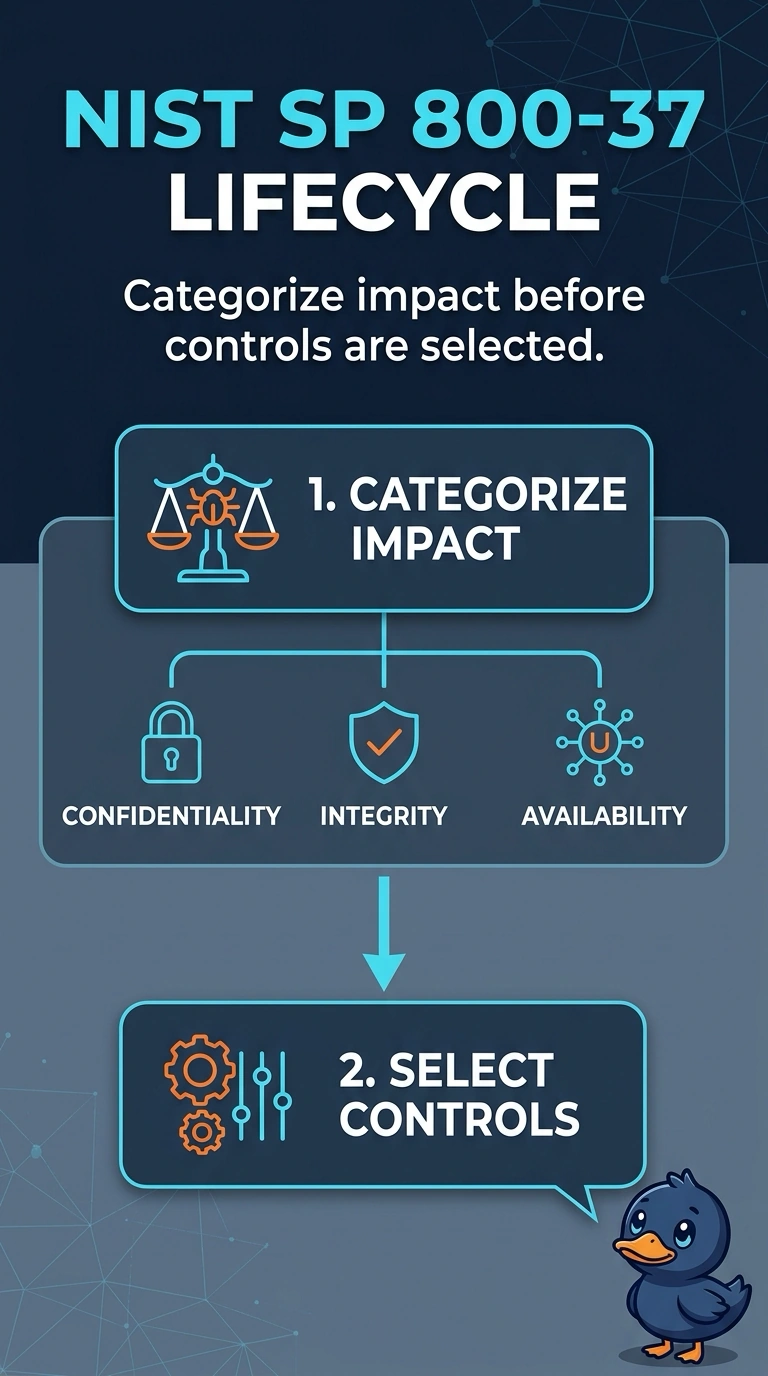
You size the ship before you pick the locks for its doors. You use the risk-management lifecycle that categorizes impact before control selection. An attack-pattern catalog, a flow-placement reference, or a student-record rule answers a different question.
Full Explanation
The harbor team must rate confidentiality, integrity, and availability impact before selecting controls, which is the categorize step in the NIST SP 800-37 lifecycle. CAPEC catalogs attack patterns, and SAFE places capabilities on business flows, so neither rates this system. The student education-records rule matches school files and is not a lifecycle for impact or control selection. NIST SP 800-37, the lifecycle that categorizes impact before controls are selected is the design that meets this requirement. MITRE CAPEC, a catalog of attack patterns a tester can imitate against a design is the wrong fit because an attack-pattern catalog describes adversary techniques and does not rate the impact of a system. Cisco SAFE, a reference for placing security capabilities along a business flow is the wrong fit because a placement reference says where capabilities sit on a flow and does not categorize the tide-gauge system. The student education-records rule, a match for school files rather than an impact rating is the wrong fit because a student-record rule matches education files and is not a lifecycle for rating impact or selecting controls. Exam caveat: Categorize is the step they are in rather than the later decision to authorize operation, and they still owe assessment and authorization after controls exist. Operational check: Write the tide-gauge impact rating for confidentiality, integrity, and availability, and confirm the control set is chosen from that rating rather than from an attack-pattern list.