
A state college stores grades, class schedules, and disciplinary notes in its student information system. Card payments stay on a separate bookstore system. Which document fits the student system?
Select an answer to reveal the explanation.
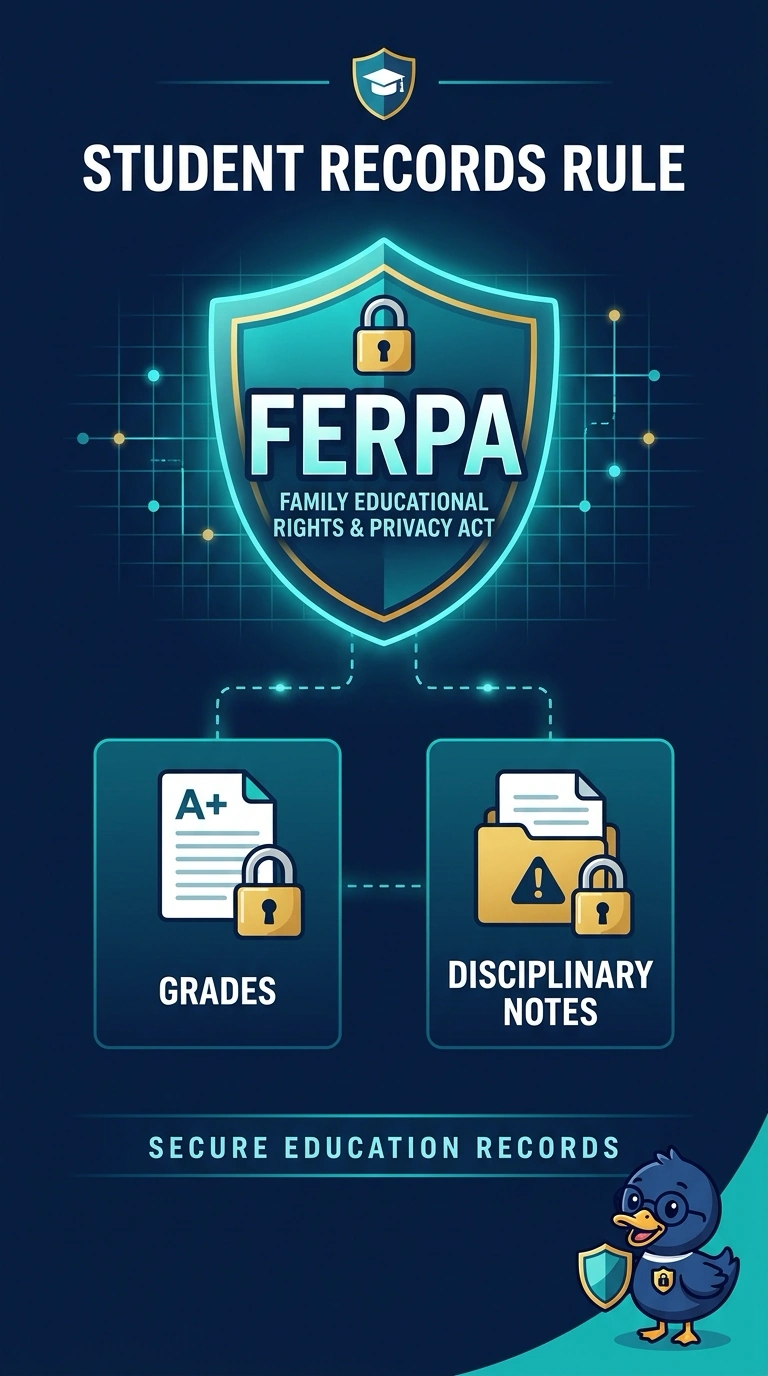
Short Explanation
You match the rulebook to the folder in your hand. Grades and disciplinary notes belong to the student education-records rule. Health charts, cardholder data, and public-company financial disclosures are other folders with other documents.
Full Explanation
The system stores grades, class schedules, and disciplinary notes tied to students, which is what the student education-records rule is written to cover. Patient charts, cardholder data, and public-company financial disclosures each match a different document and a different system. The task is to match the document to this student system, not to decide a particular dispute. The student education-records rule that covers grades and disciplinary notes is the design that meets this requirement. The health-information security rule that covers a clinic's patient charts is the wrong fit because health rules match patient charts, and this system holds education records rather than records of clinical care. The payment-card standard that covers cardholder data on a merchant system is the wrong fit because card payments live on the bookstore system, so the cardholder standard is not the document for the grade book. The public-company financial-reporting law that covers issuer financial disclosures is the wrong fit because a state-college student system is not an issuer and does not file public-company financial reports. Exam caveat: A campus clinic or the bookstore can bring a second document into scope, and this match covers only the student information system rather than those other systems. Operational check: List the data stores that hold grades and disciplinary notes and confirm they, not the bookstore payment stack, are the ones matched to the student-record document.