
A software firm found customer exports in a storage account that had been public for weeks. The files are deleted from the public view and the account is still set to allow public reads. Which redesign follows the incident?
Select an answer to reveal the explanation.
Short Explanation
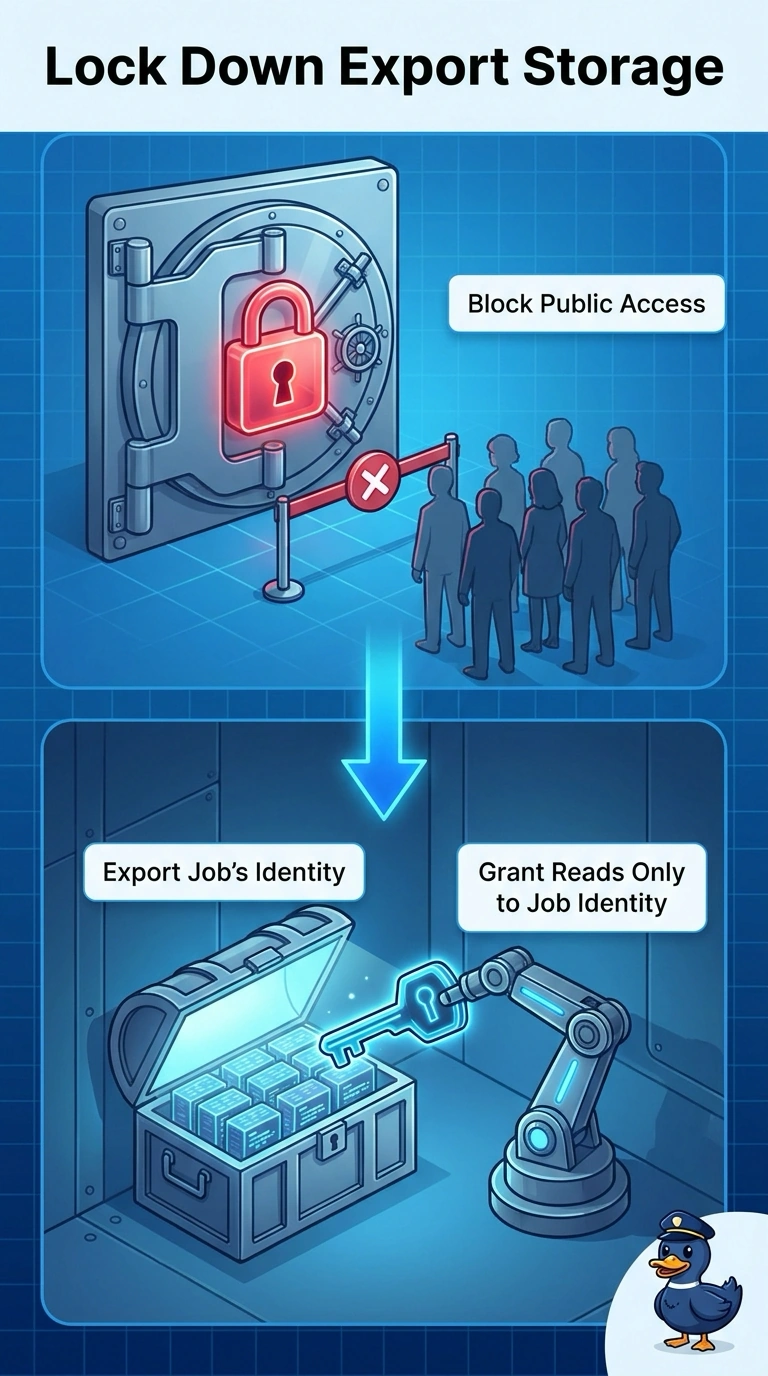
You’ve removed the files, but the public window is still open. Block public access on the account and grant reads only to the export job’s identity. Turning public access back on for identity-free partner browsing, moving the same public account to a faster storage tier, or adding guest wireless at headquarters while leaving the account public will not secure your storage account.
Full Explanation
Deleting the visible files without changing the permission leaves the next export public. Blocking public access on the account and granting reads only to the export job’s identity prevents anonymous access while allowing the job that produces exports to read them. Turning the public setting back on so partners can browse without an identity does not address the incident: identity-free browsing is the exposure that must be prevented. Moving the same public account to a faster storage tier changes performance, not the public-read permission that was abused. Adding a guest wireless network at headquarters while leaving the account public does not change the storage account’s permissions; headquarters wireless is unrelated to whether its contents are publicly readable. The redesign is to block public access on the account and grant reads only to the export job’s identity. Exam caveat: Partners who truly need a file still need an access path, so use an authenticated, expiring link rather than an anonymous container. Practical check: From an outside network, request the old public URL and confirm it fails, then verify that the export job’s identity can still read the object.