
A cannery's authorizing official already signed permission to run the new labeling system. Nobody checks whether the selected controls still operate. Which framework activity is missing?
Select an answer to reveal the explanation.
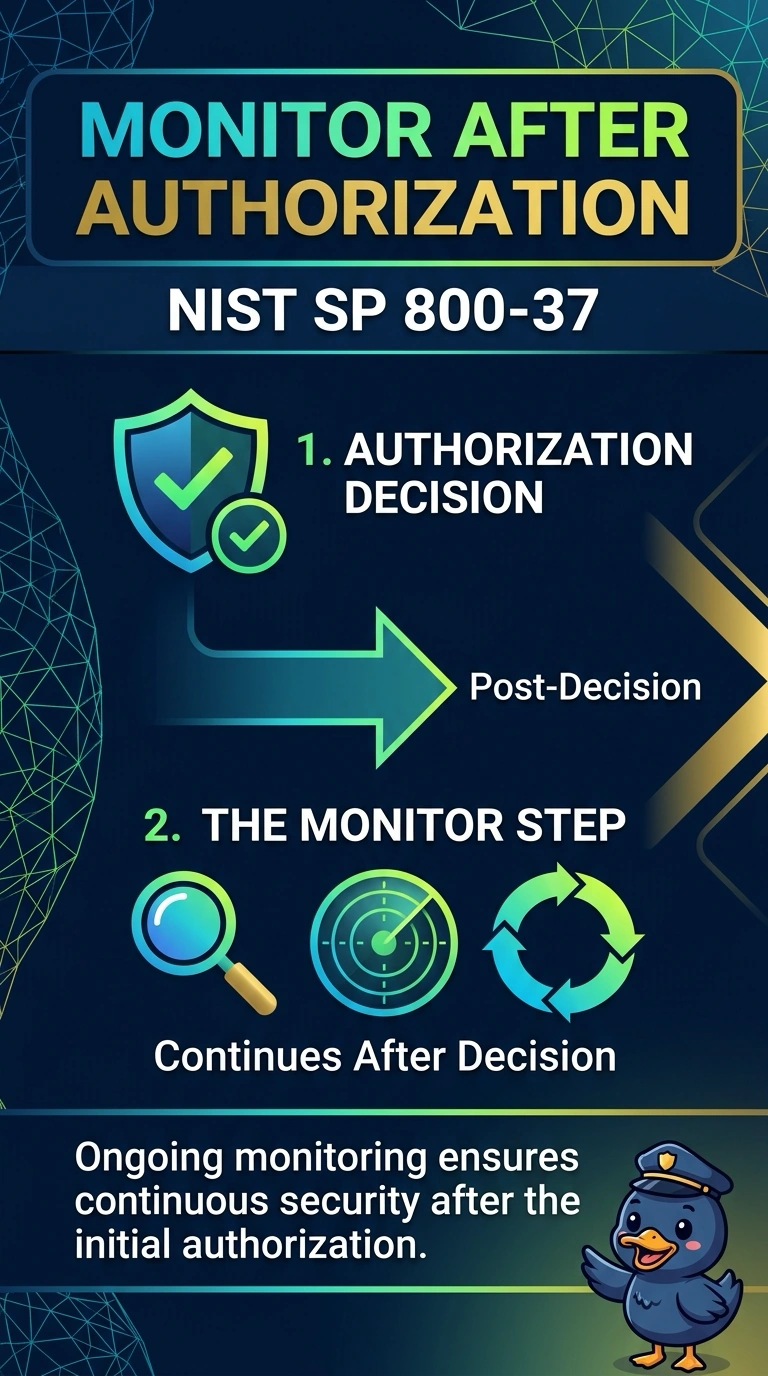
Short Explanation
Signing the permit is not the same as walking the floor later. You use the monitor step that continues after authorization. An attack-pattern catalog, a placement drawing, or a fresh categorization does not show whether the controls still operate.
Full Explanation
Authorization is a decision at a point in time. The lifecycle that produced it, NIST SP 800-37, still includes monitoring so the cannery learns whether those controls keep working after the official signs. CAPEC catalogs attack patterns. SAFE places capabilities on flows. Categorization already happened before this system was authorized. None of those is the missing watch on control health. The monitor step in NIST SP 800-37 that continues after the authorization decision is the design that meets this requirement. A MITRE CAPEC workshop that catalogs attack patterns for the labeling line is the wrong fit because an attack-pattern catalog describes adversary techniques and does not measure whether the selected controls still operate. A Cisco SAFE drawing that places security capabilities along the plant flow is the wrong fit because a placement drawing shows where capabilities sit on a flow and is not the ongoing check after authorization. A fresh categorization of a labeling system that is already authorized to operate is the wrong fit because categorization rates impact before controls are chosen, and this system already has an authorization decision. Exam caveat: A monitor result that nobody reviews is only a log. The activity includes someone comparing control health to the authorization and recording what they found. Operational check: Open the labeling system's authorization package and confirm it names a monitor cadence, an owner, and the last date the selected controls were checked.