
An online shop in the United States sells to customers in the European Union and stores their names, addresses, and order history. Which document should those privacy requirements be matched to?
Select an answer to reveal the explanation.
Short Explanation
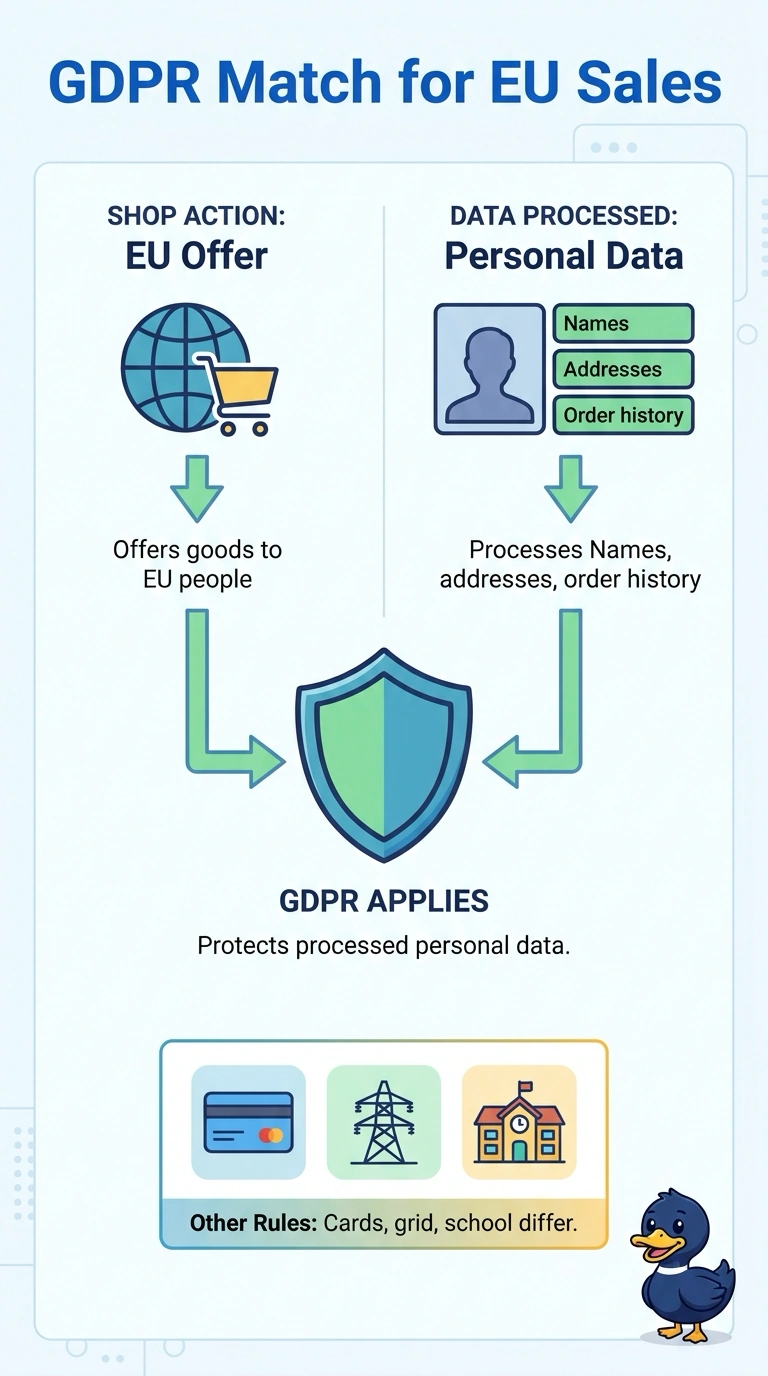
You match the file to the people it describes. Names and addresses of people in the European Union belong to that privacy regulation. Card data, the power grid, and student files are different matches.
Full Explanation
The shop stores personal data of people in the European Union and sells to them. The privacy regulation written for that data is the matching document, even though the shop itself is in the United States. The cardholder standard matches payment-card data, which this question did not make the scope. Grid and student documents match other sectors. This is a document match, not legal advice. The GDPR, because the shop offers goods to people in the EU and processes their personal data in connection with those sales, is the design that meets this requirement. The payment-card standard, matched here even though the question is about names and addresses is the wrong fit because the question is about customer personal data, and the cardholder standard is a different document for card data. The bulk-electric standard for grid control systems is the wrong fit because a retail order history is not a grid control system. The student-record rule for a school's education files is the wrong fit because shoppers are not student education records. Exam caveat: If the same shop also stores card numbers, the payment system has its own document. Do not use the privacy regulation as a substitute for that one. Operational check: Find the order database that holds the EU customer fields and confirm the privacy document is the one recorded against that system.