
A credit union's legacy loan portal cannot be patched this quarter, and the vendor still requires it to stay online for members. The portal is reachable from the whole internet and holds member data. Which design change reduces that risk?
Select an answer to reveal the explanation.
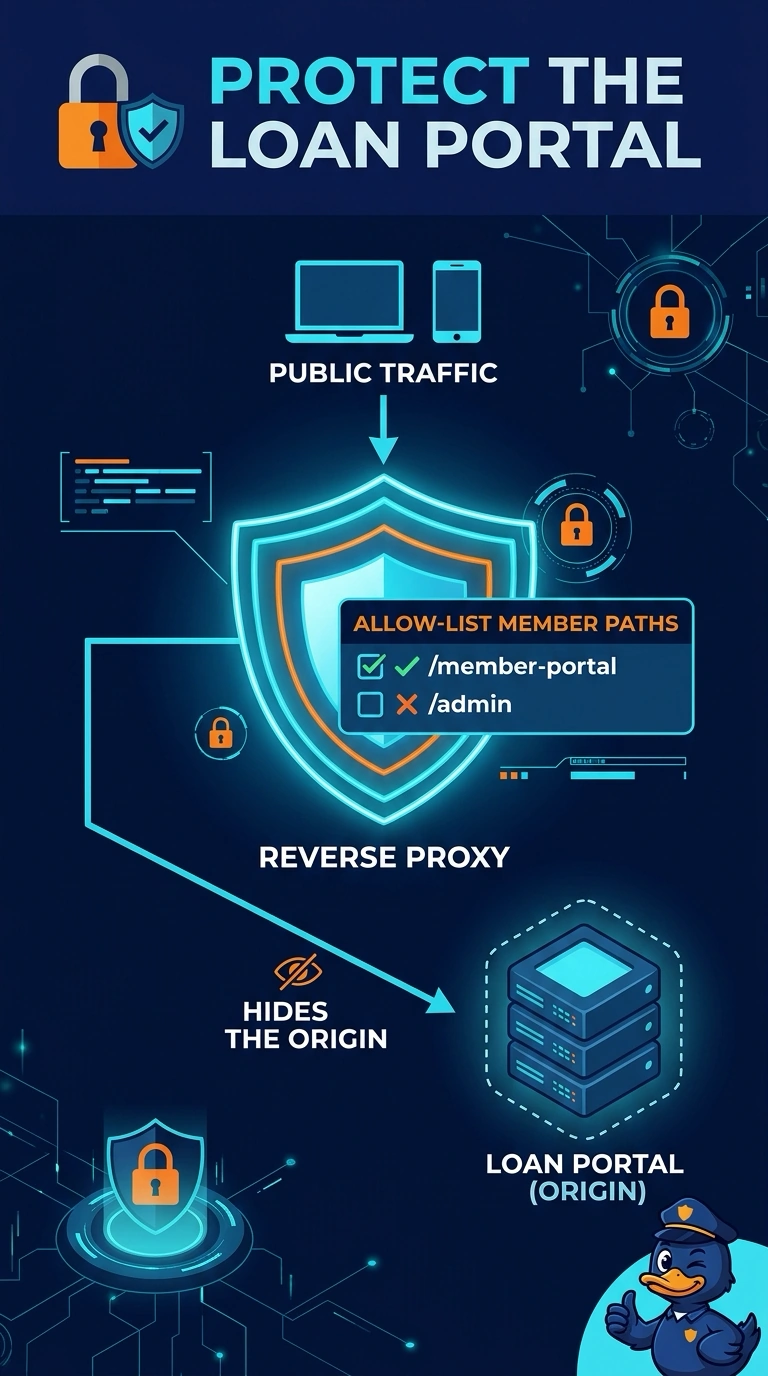
Short Explanation
You cannot replace the lock this quarter, so you stop handing strangers the key to the back door. You publish only the member paths through a proxy and you take the origin off the internet. Accepting the risk, insuring it, or speeding up the same public server leaves the hole where it is.
Full Explanation
The constraint is time: a patch is not available this quarter, but the exposure can still shrink. Placing a reverse proxy in front, allow-listing the member URLs that must work, and removing the origin's public address cuts the paths an internet scanner can hit. That is a likelihood reduction the credit union can do while the vendor works on a patch. Publish the portal only through a reverse proxy that allow-lists member paths and hides the origin is the design that meets this requirement. Leave the origin on the internet and record a formal acceptance of the unpatched risk is the wrong fit because acceptance leaves the unpatched origin on the internet, which is the exposure the credit union can still reduce. Buy a cyber-insurance policy and leave the portal's internet path unchanged is the wrong fit because insurance transfers money after a loss and does not change the internet path to the member data. Move the portal to a faster server on the same public address with no new control is the wrong fit because a faster server on the same public address keeps the same unpatched service exposed. Exam caveat: An allow-list proxy is not a patch. Track the vendor date, and do not treat the proxy as permission to skip the eventual upgrade. Operational check: Scan the old public address and confirm it no longer answers, then confirm a member path succeeds through the proxy and an unused admin path does not.