
Ransomware encrypted a law firm's file server after moving from one compromised workstation across a flat user network. Backups will restore the files. Which design change follows from that incident?
Select an answer to reveal the explanation.
Short Explanation
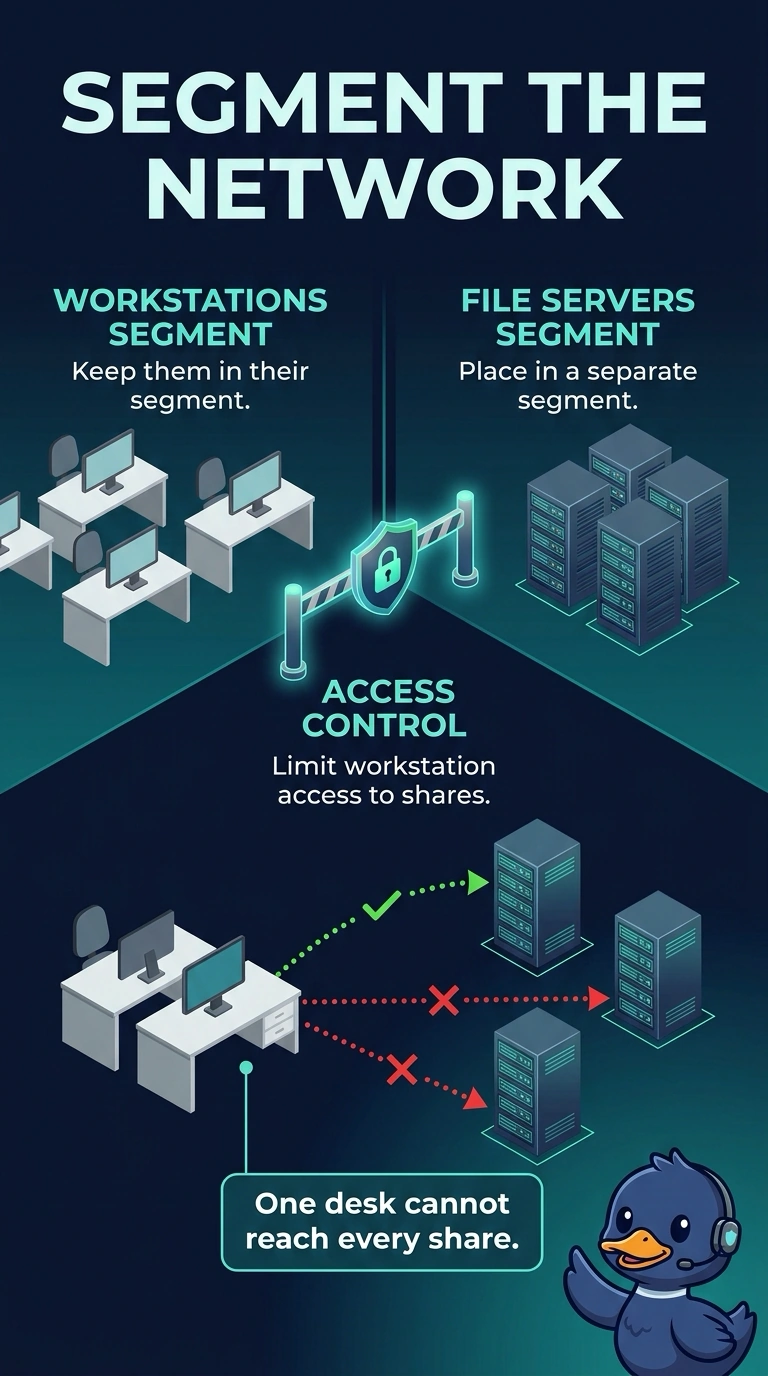
Putting the furniture back after a burglary does not fix the inside door that was never locked. You segment desks from the file servers before you call the job done. A restore onto the same flat network, guest Wi-Fi, or a larger disk leaves that inside door open.
Full Explanation
The incident's lesson is lateral movement: one workstation could open the file server because the network treated every user host as trusted. Restoring files is necessary and is not the redesign. Segmentation places an enforcement point between workstations and servers, allowing only the file protocols and identities that belong there, so the next compromised desk has a smaller blast radius. Segment user workstations from file servers so one desk cannot reach every share is the design that meets this requirement. Restore the files onto the same flat network and leave the paths unchanged is the wrong fit because a restore puts the data back on the network that just allowed the spread. Add a guest Wi-Fi network for visitors and leave the user-to-server path as it is is the wrong fit because guest Wi-Fi was not the path this incident used, so it leaves workstation-to-server movement in place. Increase the file server's disk size so the next encryption has more free space is the wrong fit because more disk space gives the encryption more room and does not limit which hosts can reach the shares. Exam caveat: Segmentation should follow the shares people actually need. A rule that blocks the backup server from the files will fail the next restore. Operational check: From a lab workstation VLAN, confirm the file server is reachable only on the approved protocol and that a second workstation VLAN cannot mount the same share.