
A national retailer stores primary account numbers on a payment system that clerks use at the register. An auditor asks which compliance document the security requirements should be matched to. Which document fits this system?
Select an answer to reveal the explanation.
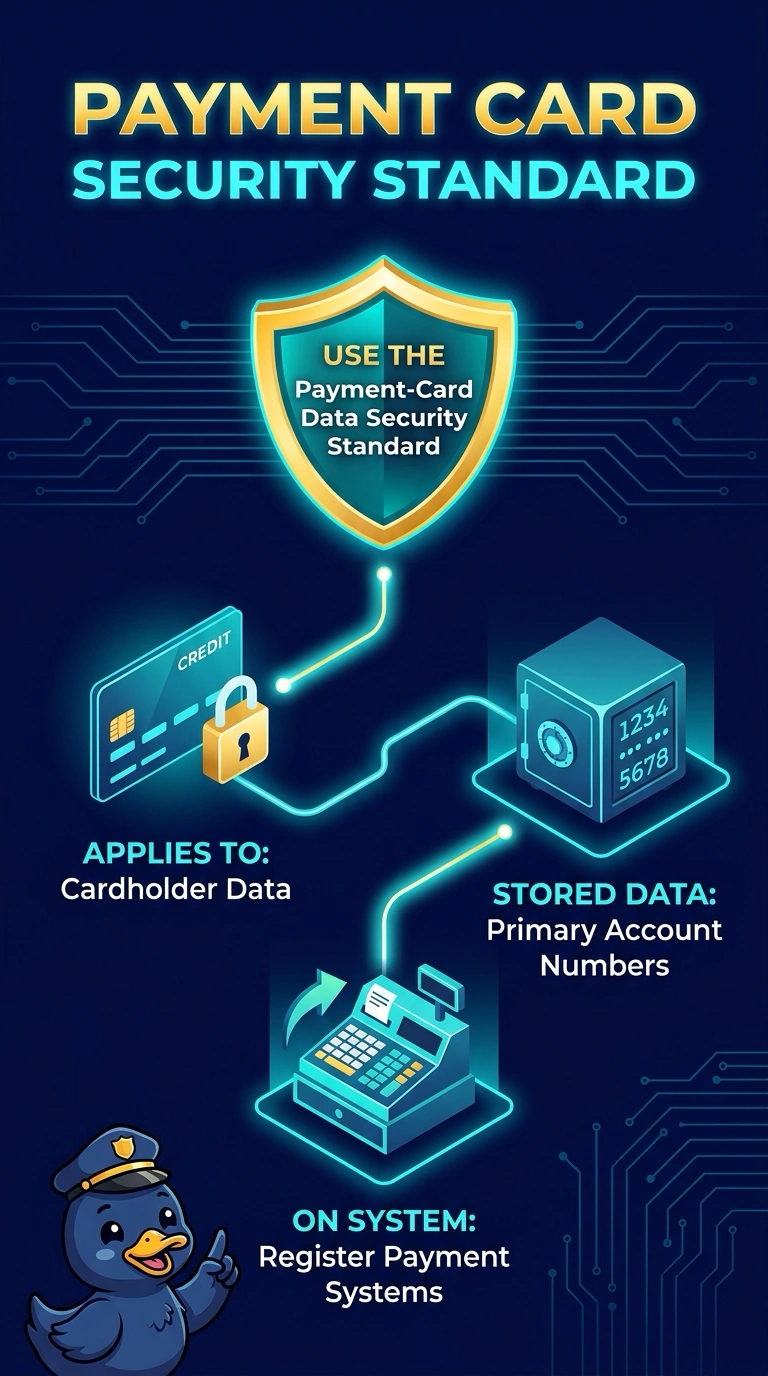
Short Explanation
You match the rulebook to the thing on the shelf. Card numbers on a register belong to the payment-card standard. Health records, student files, and the power grid are different shelves, and their documents do not govern this system.
Full Explanation
The system stores primary account numbers and is part of taking card payments. The document that states security requirements for cardholder data is the payment-card standard the brands require of merchants. Health, student, and bulk-electric documents each match a different industry and a different kind of data. Matching the document is the task; interpreting a legal duty is not. The payment-card data security standard that applies to cardholder data is the design that meets this requirement. The health-information rule that applies to a clinic's patient records is the wrong fit because health-information rules apply to patient records, and this system stores payment cards, not clinical charts. The student-record rule that applies to a school's education files is the wrong fit because student-record rules apply to education files, and a register is not a school. The bulk-electric reliability standard that applies to power-grid control systems is the wrong fit because bulk-electric standards apply to grid operations, and a retail payment system is not a control center. Exam caveat: A retailer can have more than one document in scope if it also runs a clinic or a fuel-control network. This question is only about the payment system. Operational check: List the systems that store, process, or transmit the primary account number and confirm they, not the store's HR file share, are the ones matched to the cardholder document.