
A city SOC already collects firewall, identity, and endpoint logs in its correlation platform. Analysts still isolate infected hosts by hand, and the steps differ by shift. Which addition gives the SOC a repeatable incident-response action?
Select an answer to reveal the explanation.
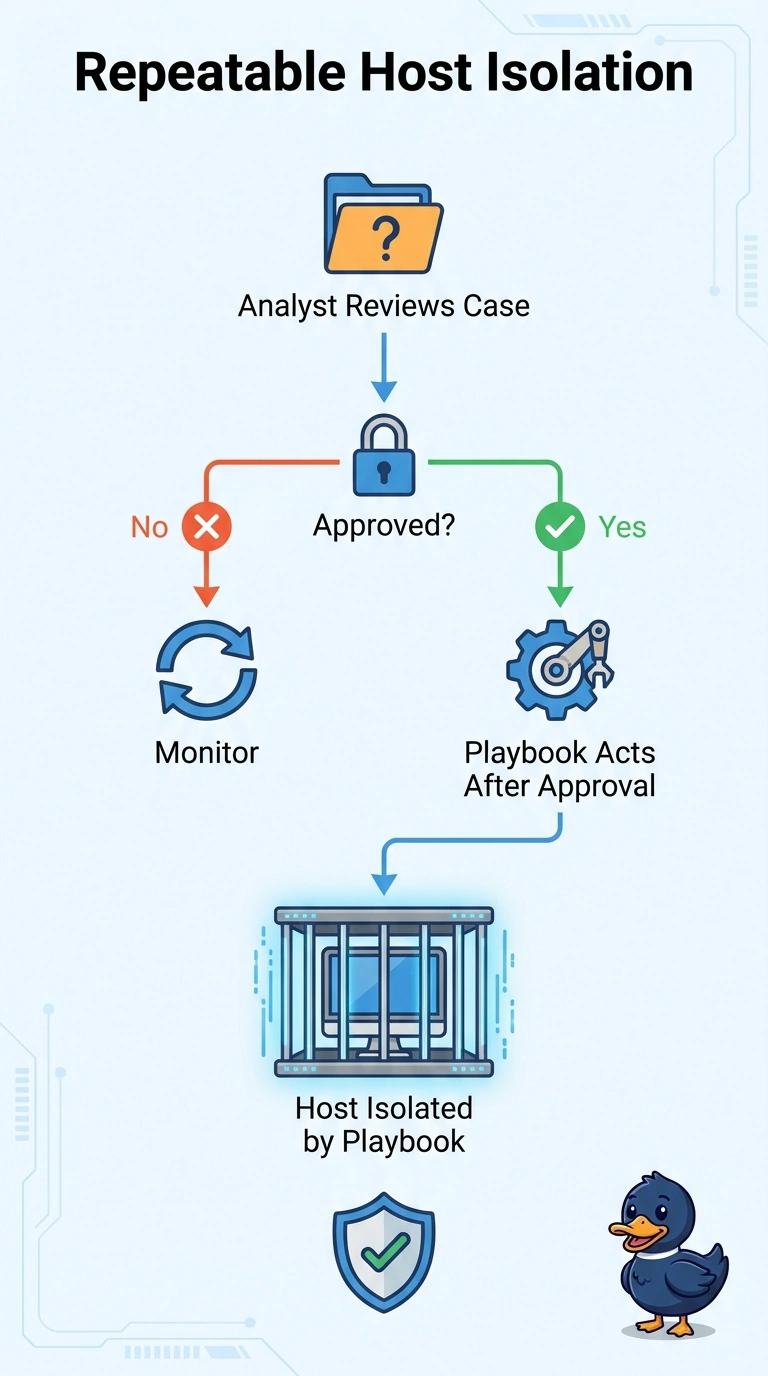
Short Explanation
You already own the smoke alarm, and what you lack is a drill that everyone runs the same way. You add a playbook that isolates the host after an analyst approves the case. A second chart, a deny digest, or a website uptime screen does not contain anything.
Full Explanation
The correlation platform already holds the evidence. What the SOC lacks is a response path that does the same containment every time a case is approved. An orchestration playbook takes the approved case, calls the endpoint tool's isolation action, and records the result on the case. The analyst still decides; the playbook removes the shift-to-shift variation. An orchestration playbook that isolates a host after an analyst approves the case is the design that meets this requirement. A second dashboard that charts the same logs the correlation platform already stores is the wrong fit because another view of the same logs does not perform the isolation or make the steps the same on every shift. A nightly email of the top ten firewall deny entries to the whole IT list is the wrong fit because a deny digest is a report, not a response action against a host that is already infected. A wall display that rotates the city's public website availability is the wrong fit because website uptime is an operations metric and does not contain an endpoint. Exam caveat: Automate the action you have rehearsed, and keep a human approval on a disruptive step until the SOC has measured false positives on that exact playbook. Operational check: Run the playbook against a lab host, confirm the host is isolated, and confirm the case record shows who approved the action and when the isolation completed.