
A transit agency's fare model answers some prompts with real account numbers that were in the training rows. The model file was not stolen and the rows were not poisoned. Which control fits?
Select an answer to reveal the explanation.
Short Explanation
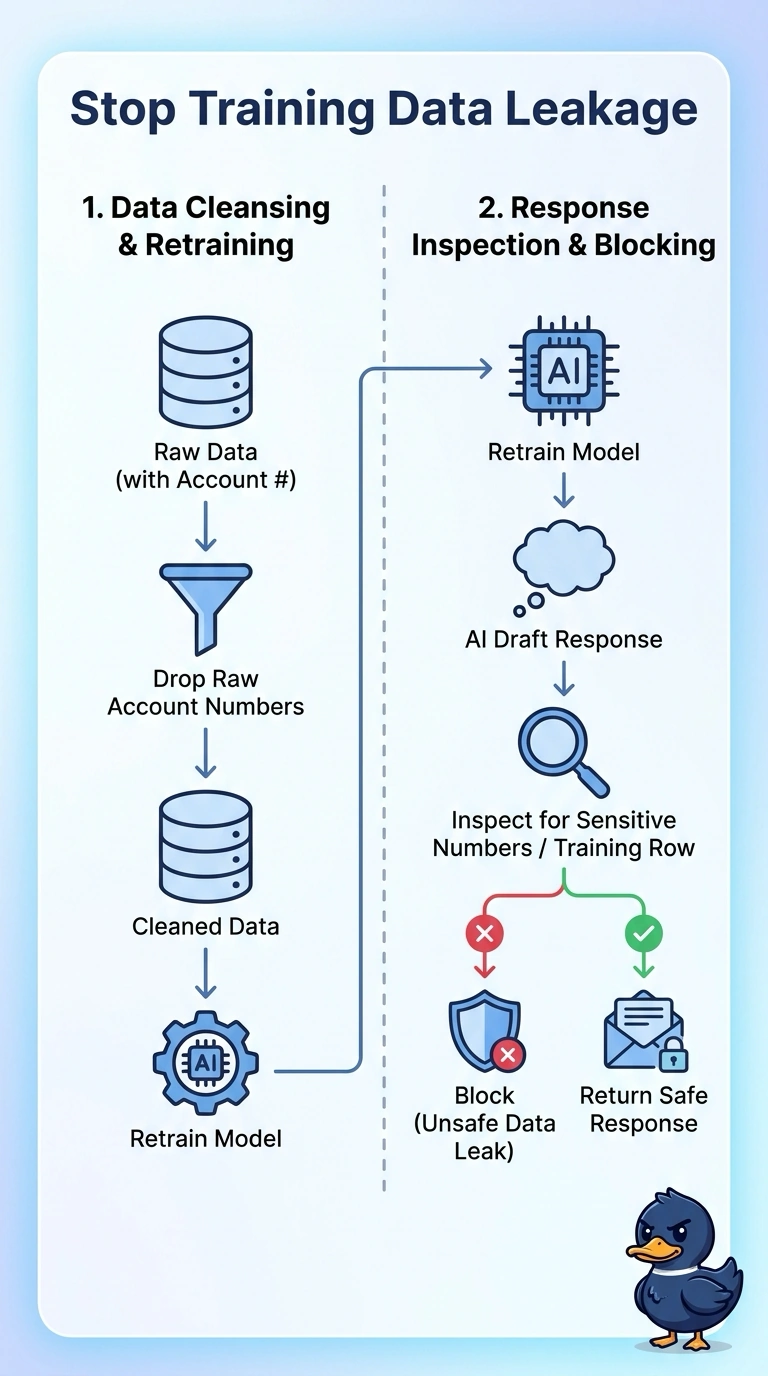
The model memorized the index cards and will read them if you ask. You keep raw account numbers out of training and you block answers that repeat a training row. A poison scan, a chatbot contract, or a future cipher plan does not stop that readout.
Full Explanation
The model memorized training rows and will say them back, which is a training-data exposure at answer time rather than a stolen file or poisoned input. Remove raw account numbers from what gets trained, and block answers that reproduce a training row. A poison scan, a chatbot contract, and a future cipher plan do not stop that readout of stored account numbers. Drop raw account numbers from training and block answers that reproduce a training row is the design that meets this requirement. A poison scan of training rows that this readout incident did not alter is the wrong fit because a poison scan looks for corrupted training input, and these rows were genuine account numbers the model stored. A no-training contract for a public chatbot the fare gates do not call is the wrong fit because a chatbot contract does not stop the fare model from repeating account numbers it has already memorized. A cipher swap planned for a future break of the encryption used in production today is the wrong fit because cipher agility prepares for a future break of encryption and does not filter the answers this model gives. Exam caveat: Blocking answers is not a substitute for cleaning the next training run, because a model that already memorized numbers can still leak through a prompt you did not list. Operational check: Prompt a lab model that was trained on a marked fake number and confirm the answer is blocked, then confirm a retrained model without that number does not emit it.