
A fashion retailer returns detailed scores from its recommendation API, and a competitor queries it all day to imitate the model. Which control protects that live model?
Select an answer to reveal the explanation.
Short Explanation
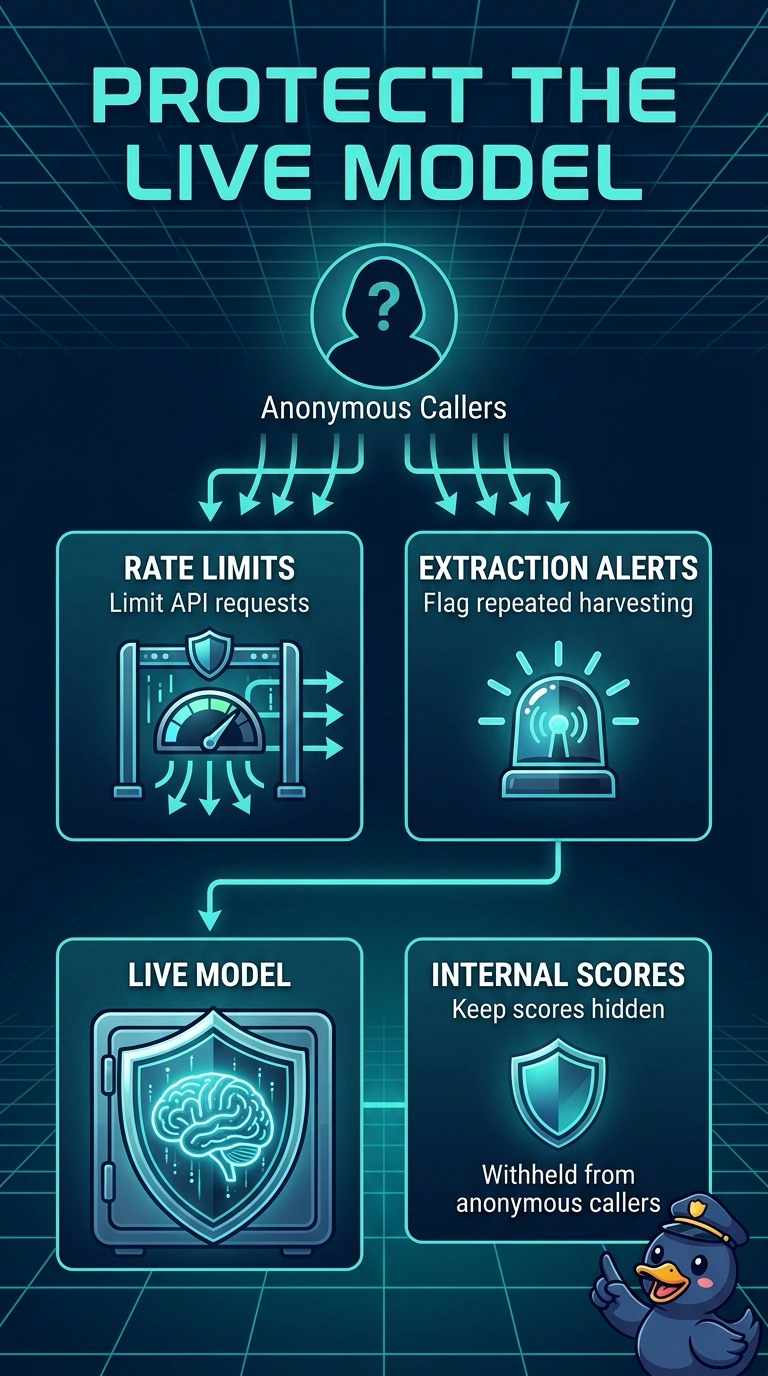
You can make it harder for a competitor to copy the live model by limiting extraction queries and withholding internal scores from anonymous callers. Rate limits and extraction alerts address this API risk; disk encryption on the order warehouse, a no-training clause that does not monitor live queries, and permissions on a document assistant do not.
Full Explanation
A competitor can imitate the recommendation model by querying it repeatedly, and detailed scores make that easier. Disk encryption on the order warehouse the competitor is not copying from does not observe or limit requests to the live scoring API. Rate limits and extraction alerts that withhold internal scores from anonymous callers protect the model where copying occurs: limits can constrain suspicious query patterns, alerts can surface extraction attempts, and withholding scores reduces the information exposed. A no-training clause that does not watch how the live scoring API is queried does not detect or stop high-volume extraction; it concerns permitted data use, not behavior at the live API. Permission checks on a document assistant that does not serve this model govern access to a different system and cannot monitor recommendation API queries. Exam caveat: Keep the storefront usable for legitimate shoppers by basing limits on caller identity and query shape rather than imposing one global cap. Practical check: From an unauthenticated lab client, verify that internal scores are absent and that a high-volume script triggers an extraction alert in the API security log.