
An airline stored its fare-model weights in a bucket the internet could list, and a competitor downloaded them. The bucket permitted public reads of the weights in addition to listing. The training set was not changed. Which protection fits the model?
Select an answer to reveal the explanation.
Short Explanation
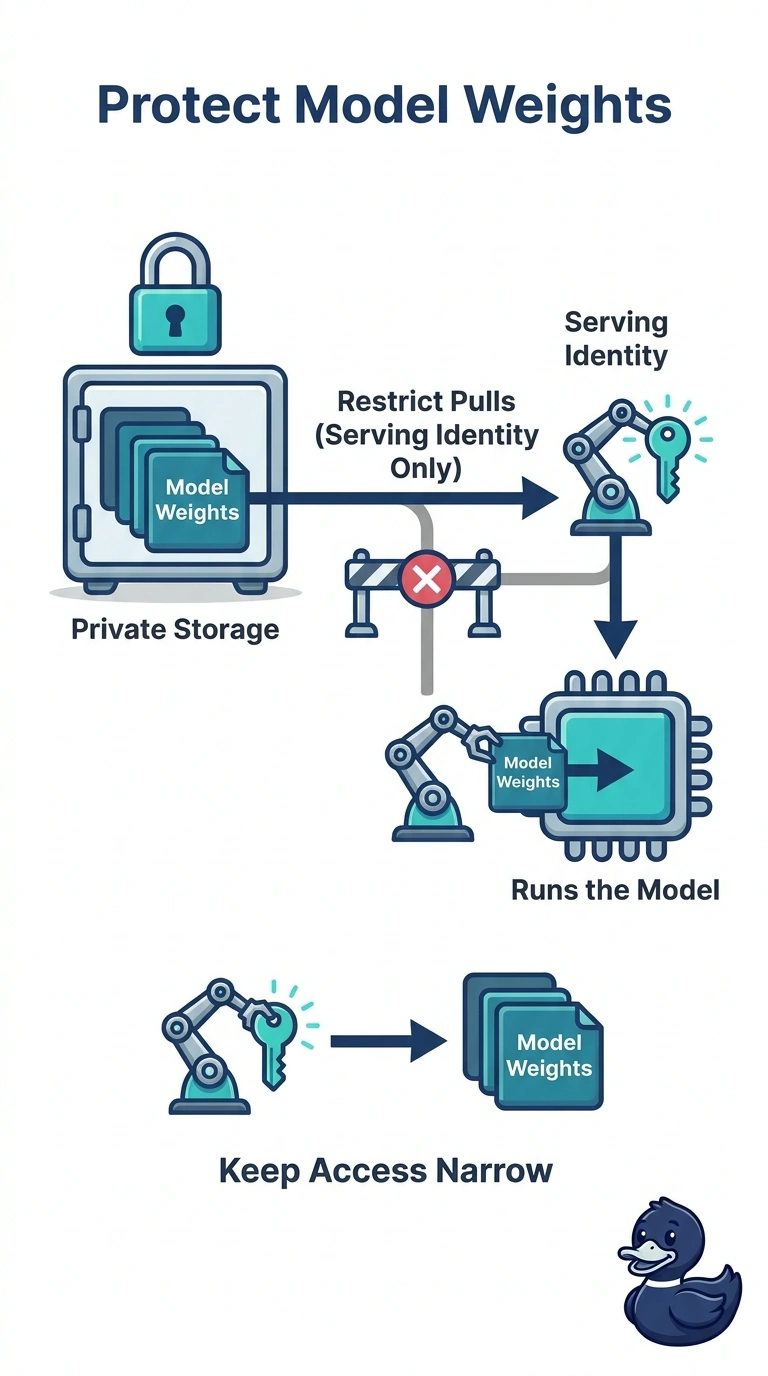
You can think of the weights as a recipe box: keep it in private storage and let only the serving identity retrieve it. A training-set checksum, a chatbot prompt boundary, or a crypto-agility plan for old archives does not secure the bucket holding those weights.
Full Explanation
The airline’s model weights left an internet-listable bucket; the training set was not changed, and no chat prompt or archive cipher is implicated. Keep the weight file in private storage and allow pulls only by the serving identity that runs the model. This limits access to the stored model itself. A checksum of the training set does not fit because that file stayed put, so checking it neither protects nor restricts access to the weights. A prompt boundary on a customer chatbot separates instructions in a chat; it has no effect on a stored bucket of model weights. A crypto-agility plan for old archives prepares for a later algorithm change, but it does not lock down the fare-model bucket. Exam caveat: the competitor’s downloaded copy is still out, so treat the weights as compromised and rotate any secret baked into the file, as well as closing the bucket. Practical check: Verify both listing and direct object reads are denied from an unauthenticated client; then confirm the serving identity can still pull the current weights while a test user identity cannot.