
A city wants a chatbot so residents can file pothole reports that include names and phone numbers. The vendor default lets it train a shared model on customer text. Which design fits?
Select an answer to reveal the explanation.
Short Explanation
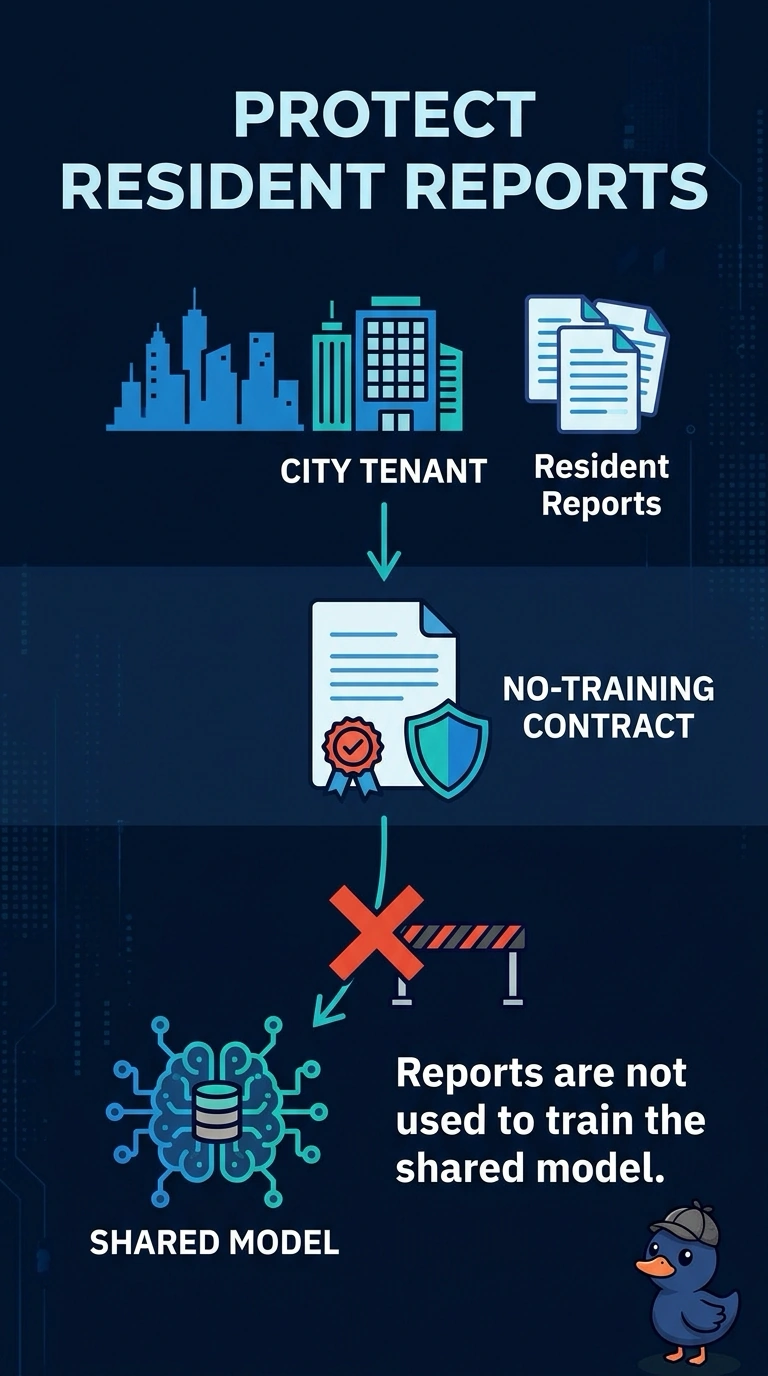
You would not hand a diary to a printer who keeps a copy for the next book. You put the reports in a city tenant the vendor is not allowed to train on. The public bot, laptop disk encryption, or a larger model on the same terms still feeds that book.
Full Explanation
The data leaving the city are resident reports that include names and phone numbers, and the vendor default would fold that text into a model shared with other customers. A tenant bound by a no-training contract keeps the reports for the city's assistant and out of foundation-model training. Laptop encryption and a bigger model do not change the vendor's right to learn from the text. A city tenant under a no-training contract so reports are not used to train the shared model is the design that meets this requirement. The vendor public chatbot, left on the default terms that train on customer text is the wrong fit because the public chatbot keeps the training terms that let resident names and numbers enter the shared model. Disk encryption on city laptops that leaves the vendor free to train on the reports is the wrong fit because disk encryption protects a laptop drive and does not govern how the vendor retains or trains on the reports. A larger shared model kept on the same default terms that absorb customer text is the wrong fit because a larger model on the same terms still absorbs the reports, and size does not change that use. Exam caveat: Read the contract for support staff and subprocessors too, because a no-training line that skips people who can export chats does not cover the same text. Operational check: In a test tenant, submit a labeled report and confirm the vendor setting and the contract both exclude customer content from model training.