
A game studio's deploy bot can execute commands in every namespace through the cluster control-plane API, even though pod network policy is already in place. Which segmentation fits?
Select an answer to reveal the explanation.
Short Explanation
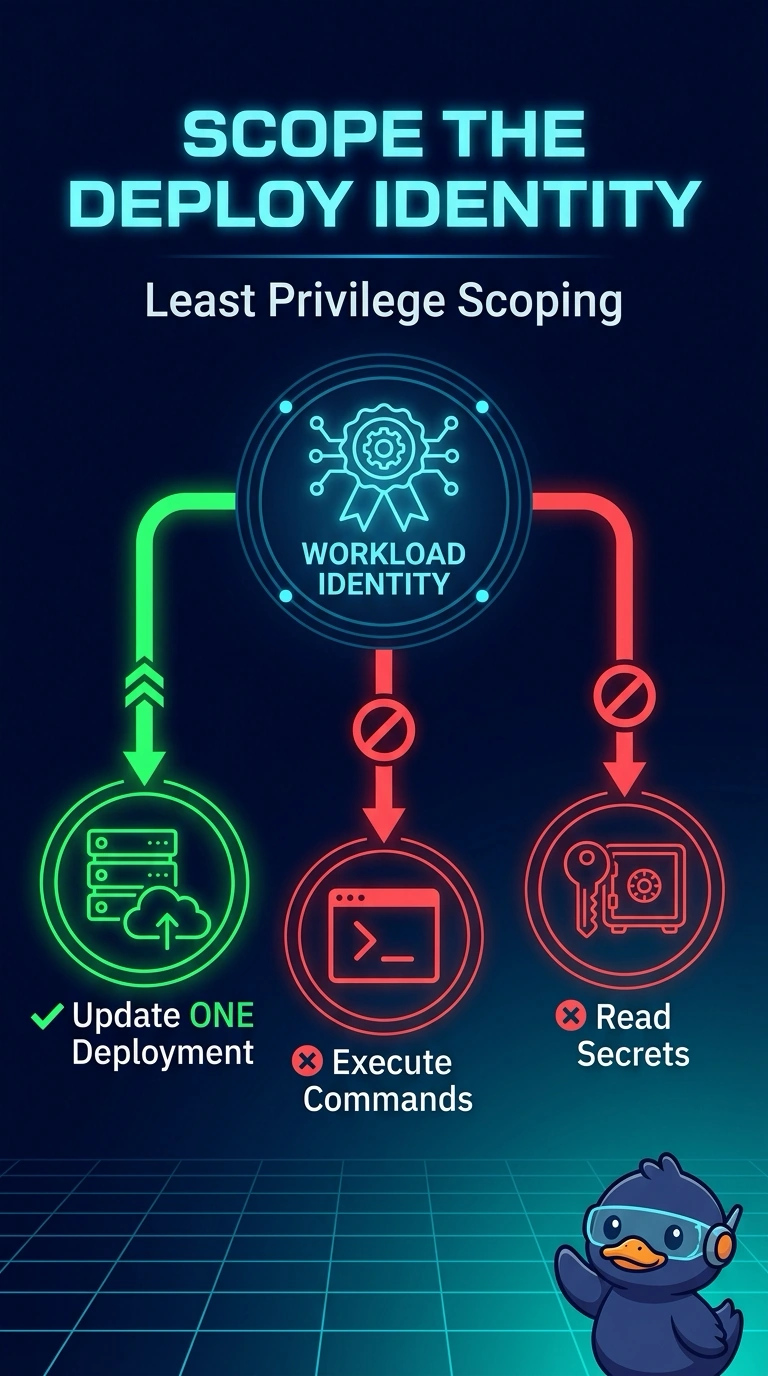
You can think of the deploy bot’s broad access as a master key: locking the hallway between rooms does not take it away. Give the bot a workload identity that can update one deployment but cannot execute commands or read secrets. The studio perimeter firewall, node security group, and mutual TLS between application pods do not remove that control-plane permission.
Full Explanation
Execute-in-namespace is an API call made with the bot’s cluster identity, not a packet traveling between pods, so pod network policy and mutual TLS can still leave an identity able to execute commands across namespaces. Limit the deployment patch or update to the named resource and remove pods/exec and secrets access. Restrict what the bot can deploy and which service account the deployment can use, since workload changes can otherwise grant indirect access. The studio perimeter firewall is not the right fit because these control-plane calls do not cross that perimeter; they remain on the cluster’s management path. A node security group is not the right fit because it can still allow the bot identity to call the control plane and execute commands. Mutual TLS between application pods is not the right fit because it governs a pod-to-pod hop that the execute call does not use, and it does not authorize or deny that control-plane call. Exam caveat: a narrowly scoped deploy identity still needs an audited break-glass path, or an outage may lead someone to recreate a cluster-admin token. Practical check: use a lab identity with the narrowed role to attempt execution in another namespace and confirm the API denies it, then verify that the permitted deployment update succeeds.