
Design contractors at a shipyard use unmanaged laptops the yard will not put an agent on. Browsers are forced through the yard proxy, and they upload client drawings to a personal cloud drive over HTTPS. The contractors’ browsers trust the approved inspection CA and the cloud-drive client supports TLS inspection. Which control can see the drawings?
Select an answer to reveal the explanation.
Short Explanation
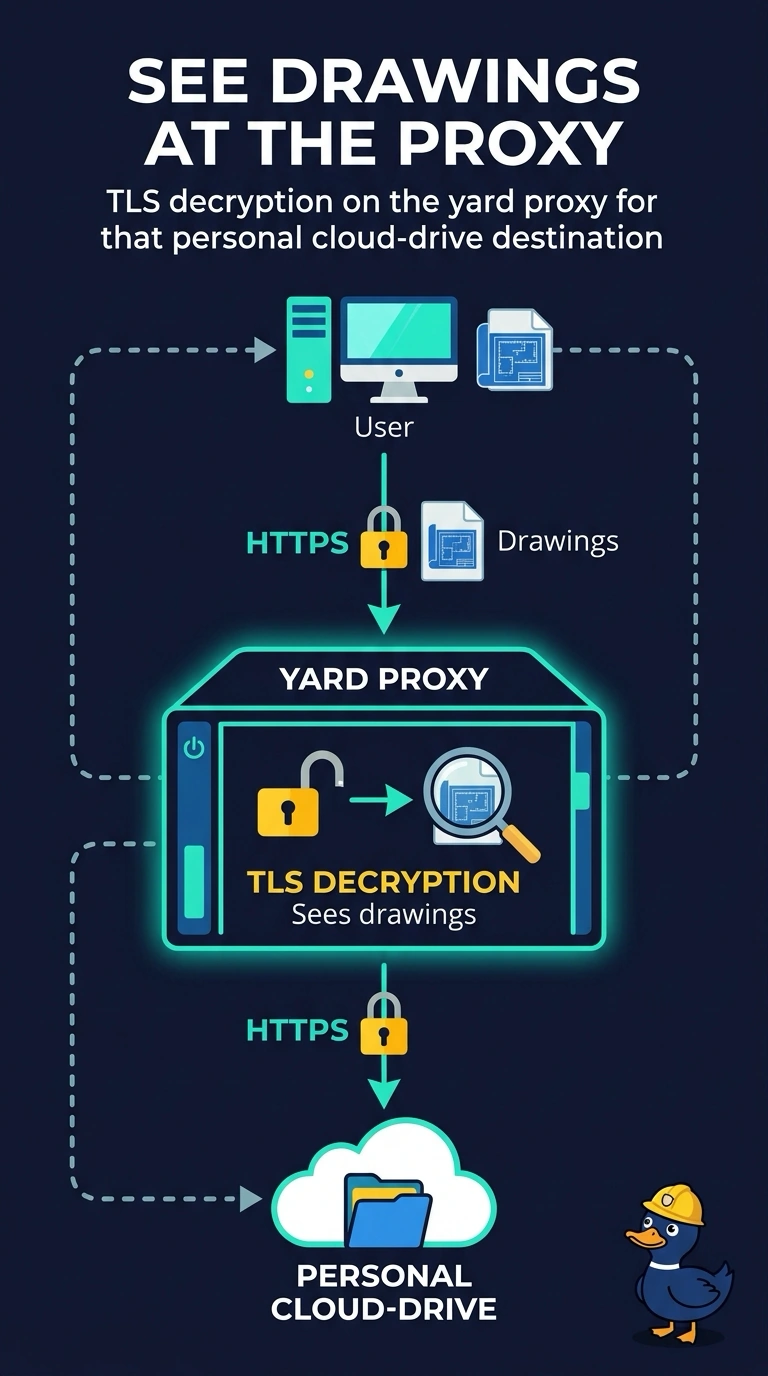
Think of HTTPS as a sealed envelope: you need to open it at a point on the path that you control. You can decrypt the personal cloud-drive session on the proxy the laptops must use, so the proxy can see the drawings. An agent the yard will not install, TLS offload for its public website, or a rule that only allows TCP 443 cannot reveal the drawing.
Full Explanation
The drawings travel inside HTTPS from laptops the yard cannot instrument, and the proxy is the point on that path the yard controls. TLS decryption on the proxy for the personal cloud-drive destination lets it inspect the upload and see the file, so this control meets the requirement. An endpoint agent on laptops the yard has said it will not manage is not a workable fit: the yard will not install the agent, so that endpoint control is unavailable on this flow. TLS offload on the yard public website applies to connections to that website, not to outbound uploads to the personal cloud drive. A firewall rule allowing TCP 443 to the drive only permits the connection; it does not read the drawing inside the HTTPS session. Exam caveat: Decrypt only the destinations named by policy; blanket decryption of personal sites is a different decision and can break certificate-pinned connections you did not intend to affect. Practical check: From an unmanaged lab laptop forced through the proxy, upload a marked test drawing. Verify a test content match in the uploaded file, not just visibility of its filename.