
A crop cooperative downloaded a public disease model it did not train and plans to point that file at member photos. Which design fits before the model runs?
Select an answer to reveal the explanation.
Short Explanation
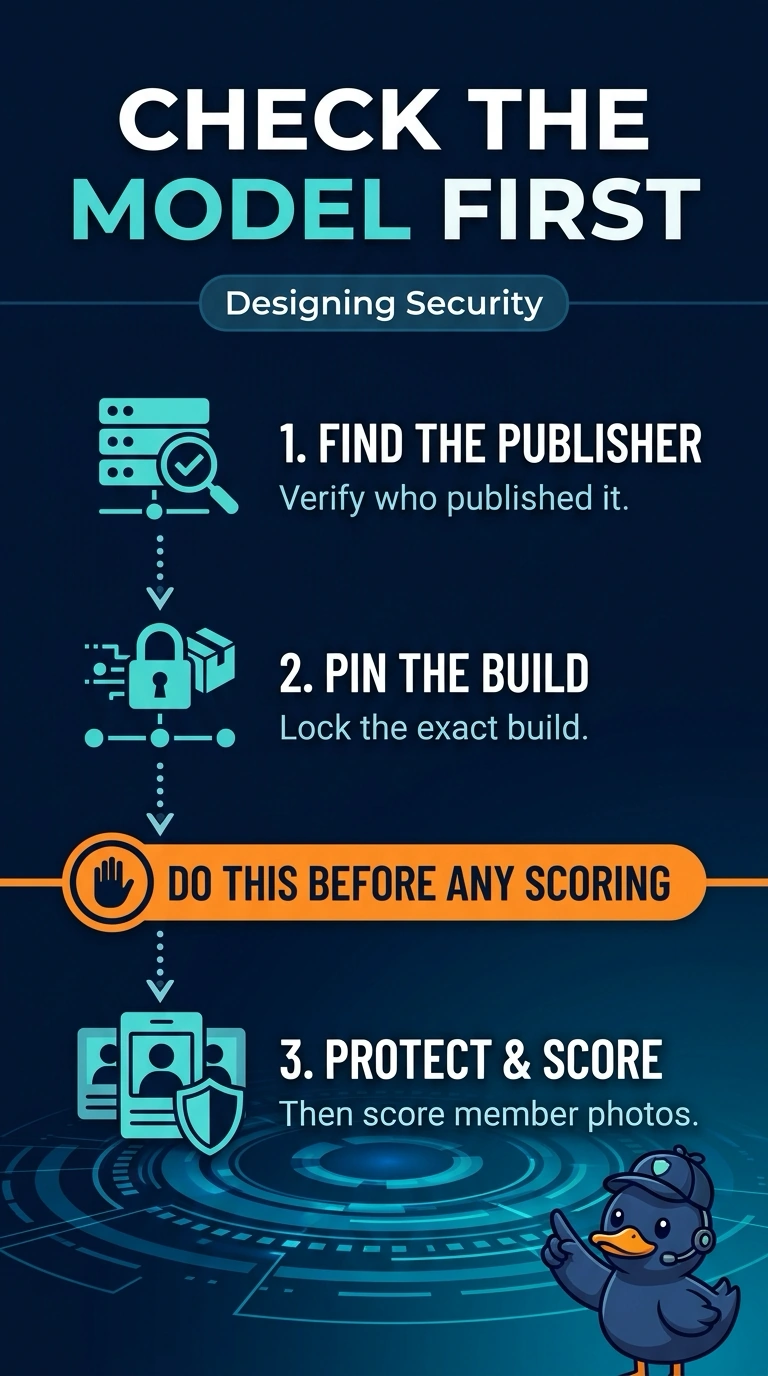
A recipe from a stranger's kitchen needs a label before you serve it. You verify the publisher and you pin that exact model build before member photos are scored. A chatbot no-training clause, soil-archive agility, or a clerk prompt boundary does not identify this file.
Full Explanation
The cooperative is about to trust an imported model, not a model it trained and not a chatbot. Provenance checks tie the file to a publisher the cooperative accepts, and pinning that build stops a later swap from silently changing what scores member photos. A chatbot contract, archive agility, and a prompt boundary sit on other systems and do not inspect this file. Verify the model's publisher and pin that exact build before any member photo is scored is the design that meets this requirement. A no-training clause with a chatbot vendor the cooperative does not use for scoring is the wrong fit because a chatbot contract does not prove the downloaded file is the model the cooperative reviewed. Crypto agility for archived soil tests that this scoring path does not read is the wrong fit because agility for old soil archives does not identify which model file is about to score member photos. A prompt boundary on a clerk chatbot that is not part of the photo-scoring path is the wrong fit because a chatbot boundary does not check the provenance of a separate scoring model the cooperative downloaded. Exam caveat: Pinning a build does not by itself prove the model was trained fairly, so keep member photos out of any retraining set the publisher controls. Operational check: In a lab, score one member photo with the pinned build and confirm a substituted file with a different checksum is refused before the scorer loads it.