
A credit bureau's fraud model is a file any analyst can copy to a laptop. The training data already sits in a locked project the analysts cannot export. Which design protects the model itself?
Select an answer to reveal the explanation.
Short Explanation
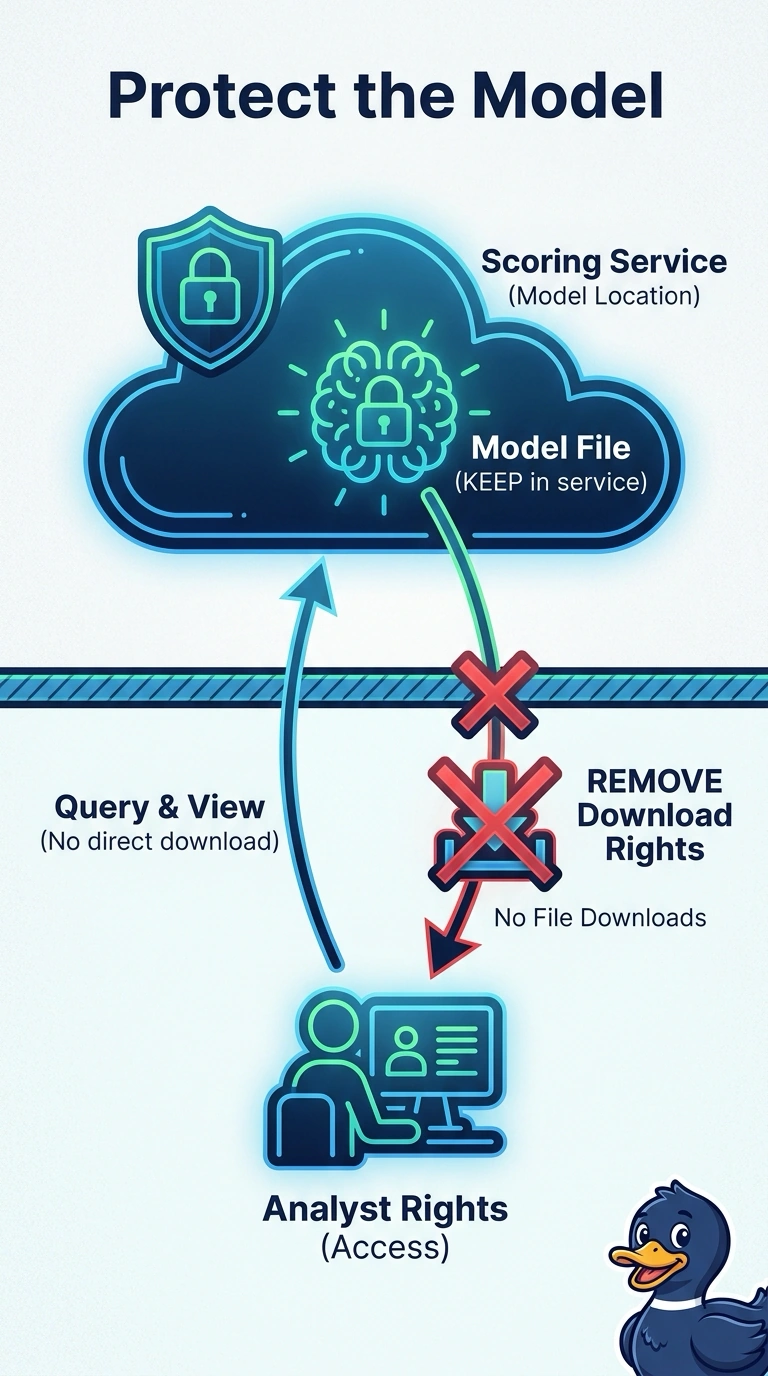
The recipe box is already locked, and the cooks are walking out with the finished dish. You keep the model in the scoring service and you take away the download. A poison check, crypto agility, or a chatbot boundary protects something else.
Full Explanation
The thing leaving the building is the model file, not the training rows. Keeping the model inside the scoring service and removing download rights means an analyst can request a score without receiving the artifact. Poison detection on an already locked training set, agility for long-lived secrets, and a chatbot boundary each protect a different object. Keep the model only in the scoring service and remove analyst rights to download that file is the design that meets this requirement. A poison check aimed at the training set that is already locked against export is the wrong fit because a poison check guards how the training set is changed, and the training set is already locked against export. Crypto agility for long-lived archives that leaves today's model file free for analysts to copy is the wrong fit because crypto agility plans for future decryption of stored secrets and does not control who can copy the model file today. A prompt boundary on a chatbot the bureau has not deployed for this scoring path is the wrong fit because a prompt boundary separates instructions in a chat product the bureau is not using on this path. Exam caveat: Scores can still leak information about the model under unlimited queries, so pair the download ban with a rate and purpose limit on the scoring API. Operational check: Sign in as an analyst in a lab, confirm the model file cannot be downloaded, and confirm a scoring call from that analyst still returns a result.