
A city assistant answers residents from an approved policy manual. Testers hid new instructions inside an uploaded complaint letter, and the assistant followed them. Which design closes that gap?
Select an answer to reveal the explanation.
Short Explanation
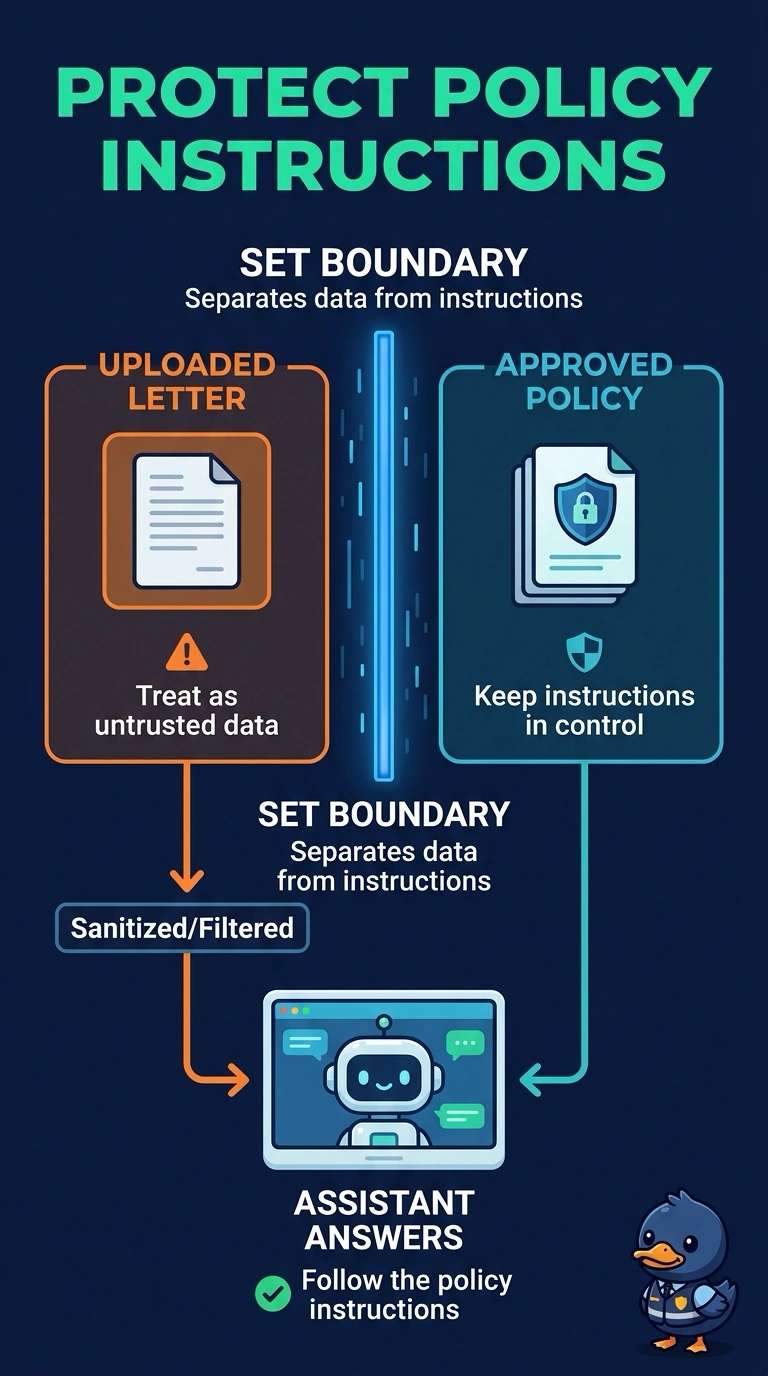
A note slipped into the suggestion box must not become the boss of the clerk. You keep a prompt boundary so the letter stays data and the policy instructions stay in charge. A public chatbot, crypto agility for archives, or a fraud-model training set does not fix this assistant.
Full Explanation
The letter is user content, and the policy manual is the instruction. Separate policy instructions from the uploaded letter, inspect the letter as untrusted input, and test injection defenses. A public chatbot, a crypto program for archives, and a training-set cleanup for a different model do not put that boundary on this assistant. A prompt boundary that treats the uploaded letter as untrusted data and keeps the policy instructions in control is the design that meets this requirement. A public chatbot with no contract, where residents would paste these same complaint letters is the wrong fit because a public chatbot is a different channel and still has no boundary between the letter and the instructions. A crypto-agility program for municipal archives the assistant does not store or transmit is the wrong fit because crypto agility protects long-lived secrets and does not stop a letter from overriding the prompt. A cleaner training set for a fraud model this resident help desk does not build is the wrong fit because training-set hygiene protects a model this desk does not train and leaves the live prompt unchanged. Exam caveat: Restrict retrieval and any tool actions outside the model. The assistant should still open only the policy pages that resident is allowed to see. Operational check: Submit a lab letter that tells the assistant to ignore the manual, and confirm the reply still quotes the approved policy rather than the hidden instruction.