
Two grain mills replicate a historian across a private link. An engineer is trying to inspect that replication on the employee web proxy, which only sees browser traffic. Which control can see this flow?
Select an answer to reveal the explanation.
Short Explanation
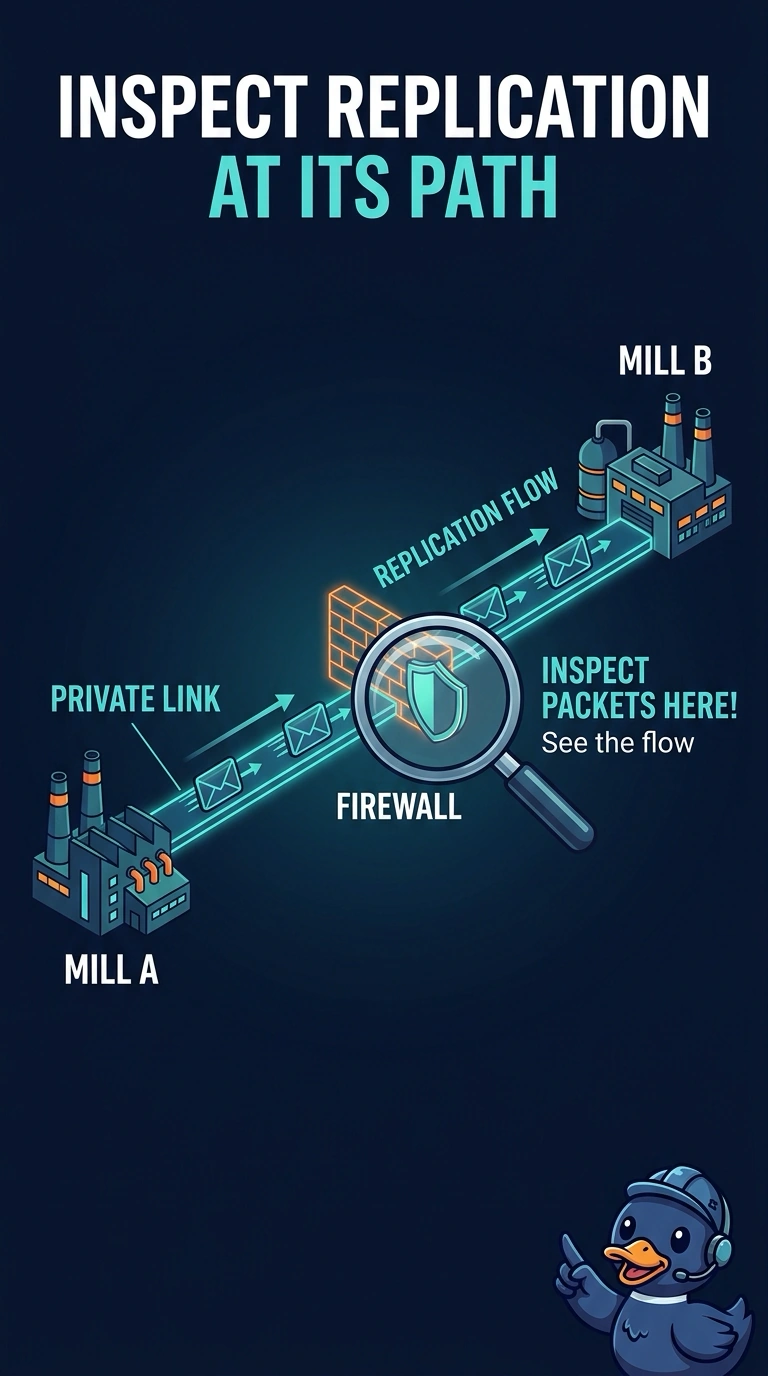
You cannot inspect a freight train from the ticket window of a different station. You use the firewall on the private link the historian actually crosses. Web-proxy decryption, a laptop agent, or brochure-site offload never sees those packets.
Full Explanation
A control can inspect only a flow that passes through it. The replication crosses the private link, so the firewall on that link is the one that can see those packets. The employee proxy, laptop agents, and the brochure-site offload sit on human web paths, and aiming those controls at a server flow they do not carry does not create any visibility. The firewall on the private link between the mills, where the replication packets actually pass is the design that meets this requirement. TLS decryption on the employee web proxy, a path the historian replication does not use is the wrong fit because the web proxy sees browsers, and the historian sessions are server-to-server on a different link. An endpoint agent on office laptops that do not send the historian replication is the wrong fit because office laptops are not the endpoints of the replication, so an agent there has no packets to read. TLS offload on the mill public brochure site, a visitor flow separate from replication is the wrong fit because offload on the brochure site terminates visitor traffic and does not sit on the mill-to-mill link. Exam caveat: Seeing the flow is not decrypting it, so an encrypted replication yields metadata unless this firewall is also a party to that session. Operational check: During a lab replication, confirm the private-link firewall logs the historian ports and the employee web proxy log shows no matching session at all.