
A lender stores a fraud model in a registry any analyst can overwrite, so a different model could be swapped in before the next scoring run. Which design protects the model?
Select an answer to reveal the explanation.
Short Explanation
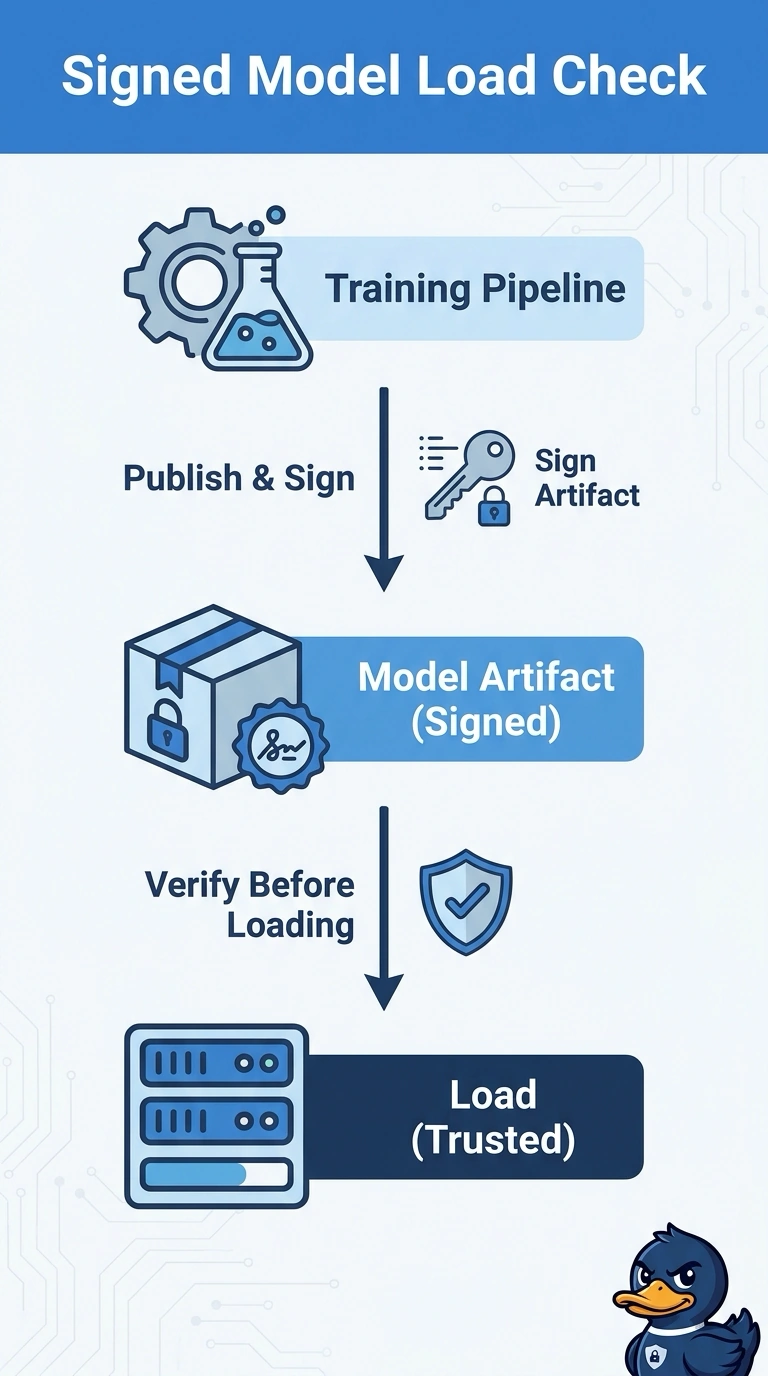
Think of your scoring job checking a sealed tape before it plays it. You restrict publishing to the training pipeline, sign the artifact, and have scoring verify the trusted signature before loading. That way you block a swapped file, which chat limits and document crypto work cannot do.
Full Explanation
The asset at risk is the model artifact the scoring job will load, so an overwrite in the registry becomes the next scoring model. Restricting publishing to the training pipeline stops ad hoc overwrites, signing the model artifact binds the authorized build to an identity, and verifying its trusted signature before loading lets scoring refuse anything else. A prompt boundary for a chatbot the scoring job does not use when it loads the model is the wrong fit because it separates chat instructions from user input and cannot authenticate a model file. A no-training clause in a chatbot contract this scoring run does not rely on is the wrong fit because it limits vendor reuse of chat text and does not control registry writes. Crypto agility for stored documents that the fraud model does not encrypt or archive is the wrong fit because swapping document ciphers does not block a different model file. Exam caveat: verification must run in the scoring job at load time, not only in the registry view. Operational check: confirm an unsigned file is refused and only the pipeline-signed verified version loads.