
Two grocery brands share one container platform. Brand A's checkout must not call brand B's inventory, even on the same node. Which design enforces that split?
Select an answer to reveal the explanation.
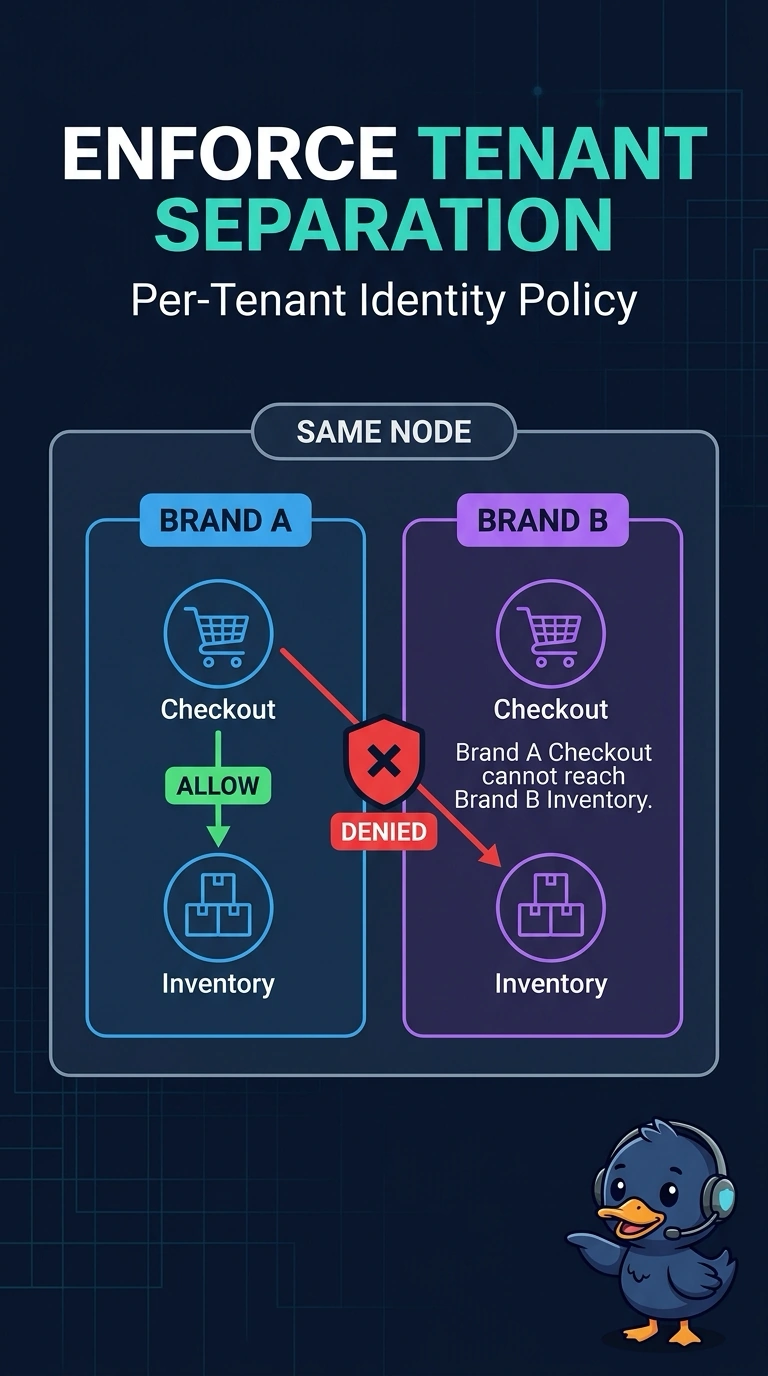
Short Explanation
Two shops in one building still need separate stockrooms. You deny brand A's checkout from reaching brand B by tenant identity, even on a shared node. A same-node allow, a perimeter rule, or a virtual-machine security group cannot see that tenant split.
Full Explanation
Colocation is normal on a shared platform, so a node-wide allow collapses the two brands whenever their pods land together. Tenant identity stays with each brand, and a policy can deny brand A's checkout from calling brand B regardless of the node. The inventory call is east-west inside the platform, and these containers do not expose a guest interface for a virtual-machine security group. A per-tenant identity policy that denies brand A's checkout from reaching brand B is the design that meets this requirement. A node policy that allows every pod on a worker to talk to every other pod there is the wrong fit because a same-node allow treats both brands as one trust zone the moment the scheduler colocates them. A perimeter firewall in front of the platform's public checkout page only is the wrong fit because the inventory call stays inside the platform, so the public checkout firewall does not see it. A virtual-machine security group on a guest interface these containers do not present is the wrong fit because containers on this platform do not present the guest interface that group is built to filter. Exam caveat: Tenant identity has to be attested by the platform, or a pod that is free to claim the other brand's name will walk through the allow on that node. Operational check: Place both brands' pods on one lab node, confirm brand A's checkout is denied when it calls brand B, and confirm brand B's own inventory service still succeeds.