
A law firm wants a generative assistant to draft memos, and client text must not be used to train the vendor model. Which design meets that constraint?
Select an answer to reveal the explanation.
Short Explanation
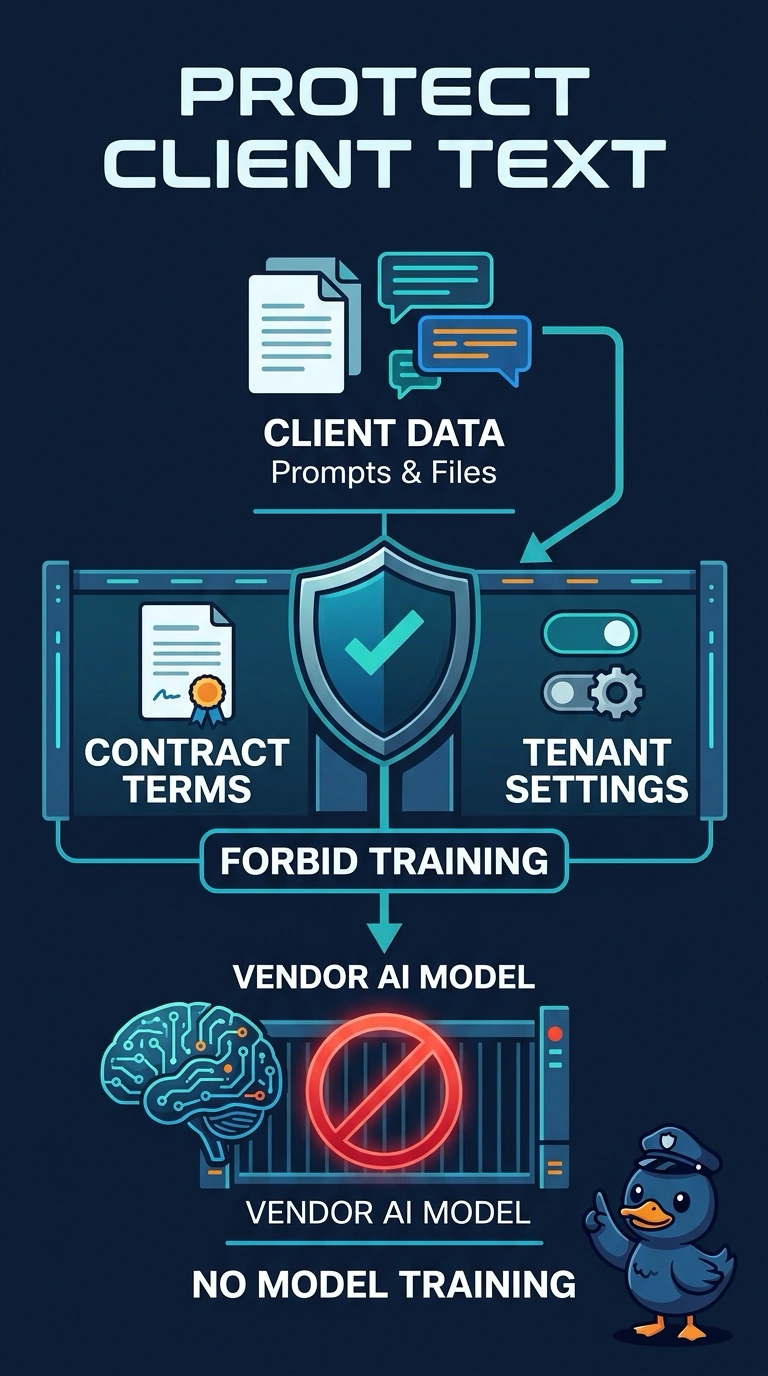
You can protect client text by requiring contract terms and tenant settings that forbid the vendor from training on the firm's prompts and files. Vendor-side training on memos, a matter-permission filter, and a crypto-agility project address different concerns and do not prevent that training.
Full Explanation
The constraint is about learning, not about which matter an attorney can open or about future cryptanalysis. Contract terms and tenant settings that forbid the vendor from training on the firm's prompts and files keep client prompts and files out of the vendor model; vendor-side training turned on so the assistant improves itself on client memos does the opposite. A retrieval filter that only checks whether an attorney may open a given matter controls matter access, not the vendor's training set. A crypto-agility project for archives that must stay confidential for many decades addresses the protection of stored ciphertext, not whether today's memo text becomes training data. The design that meets the requirement is contract terms and tenant settings forbidding training on the firm's prompts and files. Exam caveat: A no-training term does not stop a user from pasting a memo into a different public tool that has no such term, so block that tool if it has no contract. Practical check: Review the tenant setting and contract clause, then send a lab prompt and confirm that the vendor account shows training on customer content is disabled.