
A nightly job on a sealed dairy-coop appliance posts a customer extract over TLS to one partner. The appliance cannot run an endpoint agent, and the firewall log shows only the encrypted session. The appliance trusts the inspection CA, and the partner session supports proxy decryption. Which control can see the extract?
Select an answer to reveal the explanation.
Short Explanation
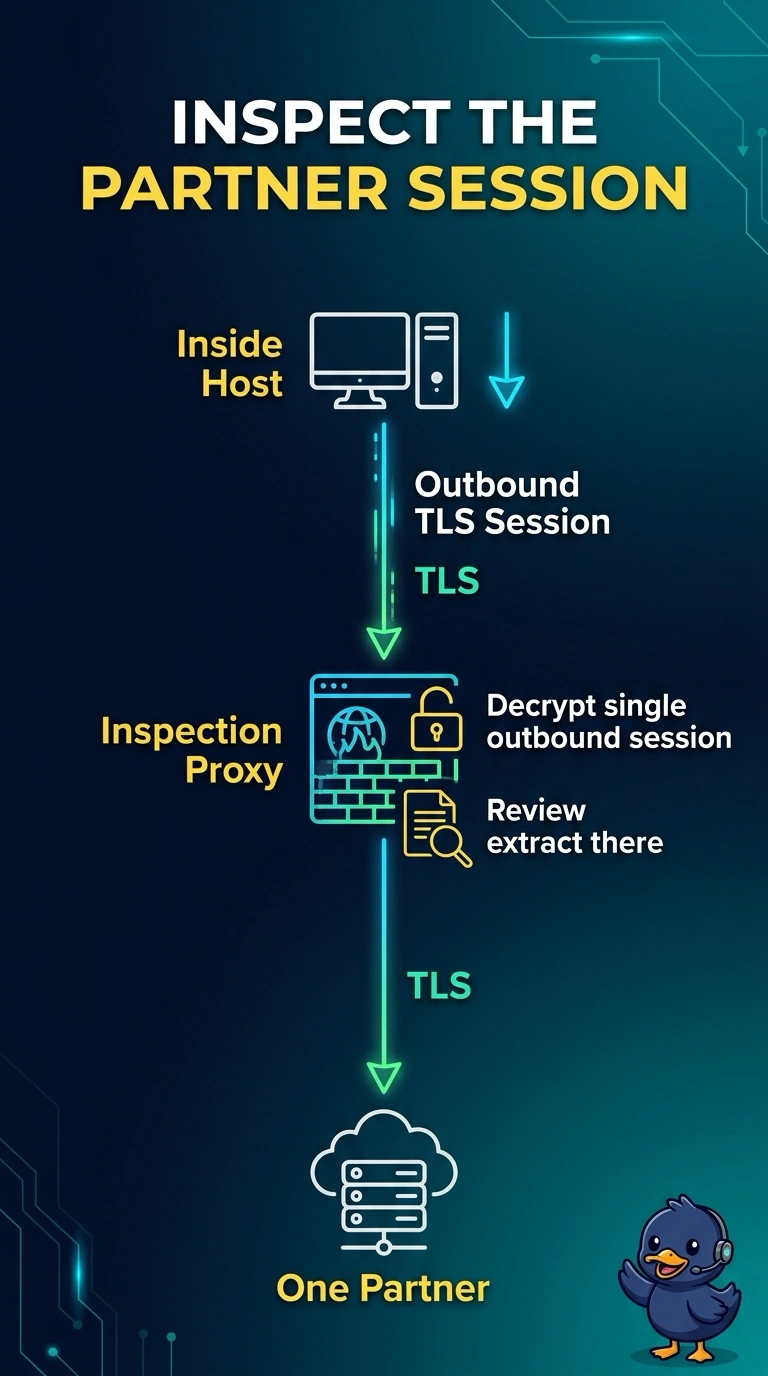
You can see the extract by decrypting that single outbound partner session at the inspection proxy, where its contents become readable. Decryption is needed because the sealed appliance cannot run an agent and the firewall records only the encrypted session. Tablet agents, an address-only firewall allow, and TLS offload on the shopper-facing public store do not see this job.
Full Explanation
The extract travels inside one encrypted session from the sealed appliance to its partner, and the appliance cannot run an endpoint agent. Decrypting that single outbound session at the inspection proxy lets you read and review the extract. An endpoint agent on tanker-truck tablets cannot see the job because those tablets do not run it, and the sealed appliance cannot host an agent. A firewall allow for the partner address records that the session exists but does not reveal its encrypted body. TLS offload on the public farm store handles inbound shopper sessions, not this outbound partner session, so it cannot expose the extract. Decrypting the specific partner session is therefore the control that meets the requirement without relying on a device or traffic path that does not carry the job. Exam caveat: Limit decryption to the partner destination used by this job; decrypting unrelated staff browsing is a separate decision and is not needed to inspect the extract. Practical check: Run the lab job and confirm that the proxy log contains a sample row from the extract, while a firewall packet capture still shows only TLS traffic to the partner. Confirm the proxy produces a test content match without retaining the customer extract in general logs.