
A newsroom built a generative assistant that retrieves old stories from an index. The index was built with a service account that can read every desk, including stories under legal hold. Reporters can ask the assistant for those stories. Which design policy fixes the impact?
Select an answer to reveal the explanation.
Short Explanation
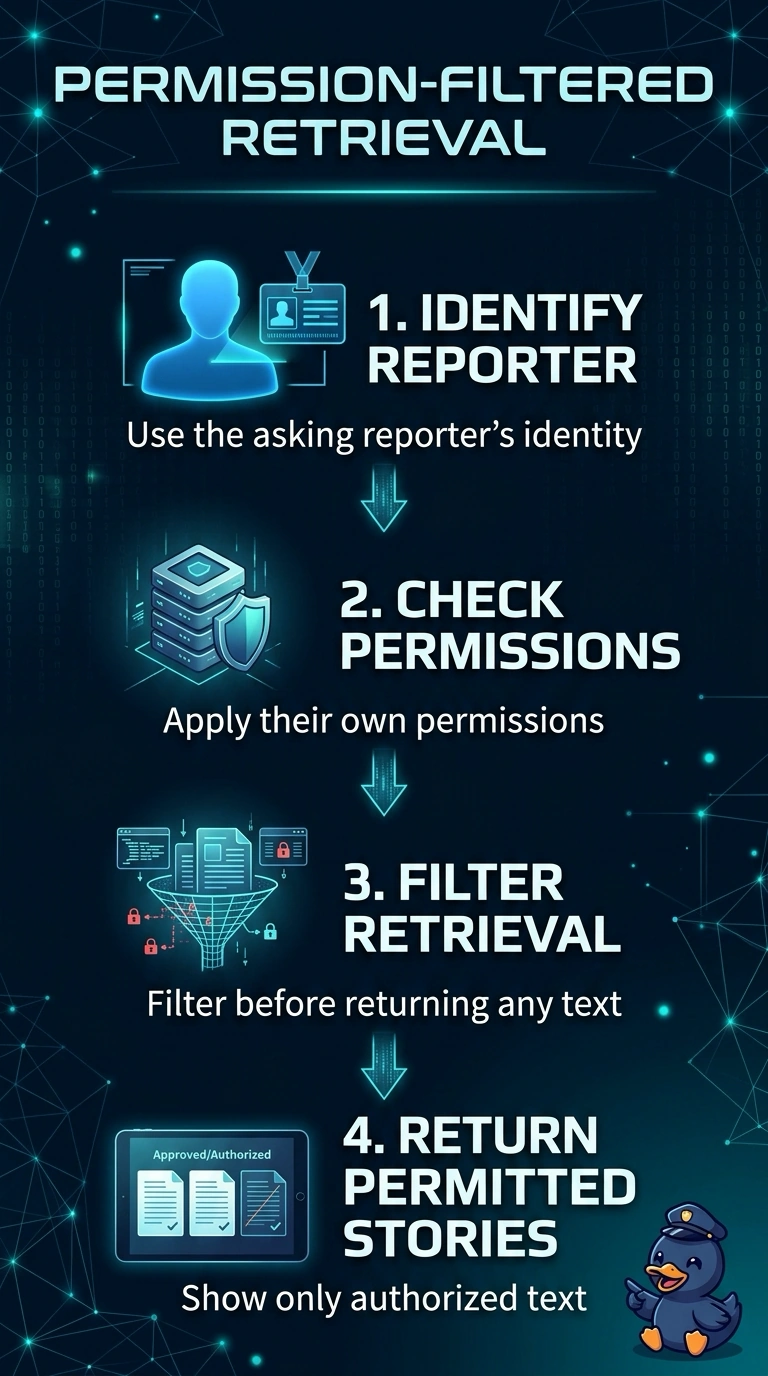
The assistant is a runner with a master key. You make the runner use the reporter's own key and you withhold stories that key cannot open. A poster, a firewall on the public site, or a longer password leaves the master key in the runner's hand.
Full Explanation
The model is not the boundary; the retrieval is. If the index is queried as an all-reading service account, every user inherits that account's access. The design has to drop any story the asking reporter could not open directly, before the text goes into the answer. A poster, a homepage firewall, and a longer password leave the over-broad read in the path. Filter retrieval with the asking reporter's own permissions before any text is returned is the design that meets this requirement. Leave the service account in place and rely on a poster that says not to ask is the wrong fit because a poster does not stop a prompt, and the service account can still read the held stories. A web application firewall in front of the newsroom's public homepage is the wrong fit because the public homepage is not the retrieval path that returned held stories to a reporter. A longer password on the assistant with no check of story permissions is the wrong fit because password length does not decide whether this reporter may see a story under legal hold. Exam caveat: Filtering at answer time is late if the model has already been trained on the held stories. This control fixes retrieval. Training data is a separate inventory. Operational check: As a reporter who cannot open a held story in the normal library, ask the assistant for it and confirm the answer is refused and the attempt is logged.