
A pharmacy benefit model states a member's home address when staff ask an odd question. It was trained on raw case notes. Which design keeps the next model from learning those addresses?
Select an answer to reveal the explanation.
Short Explanation
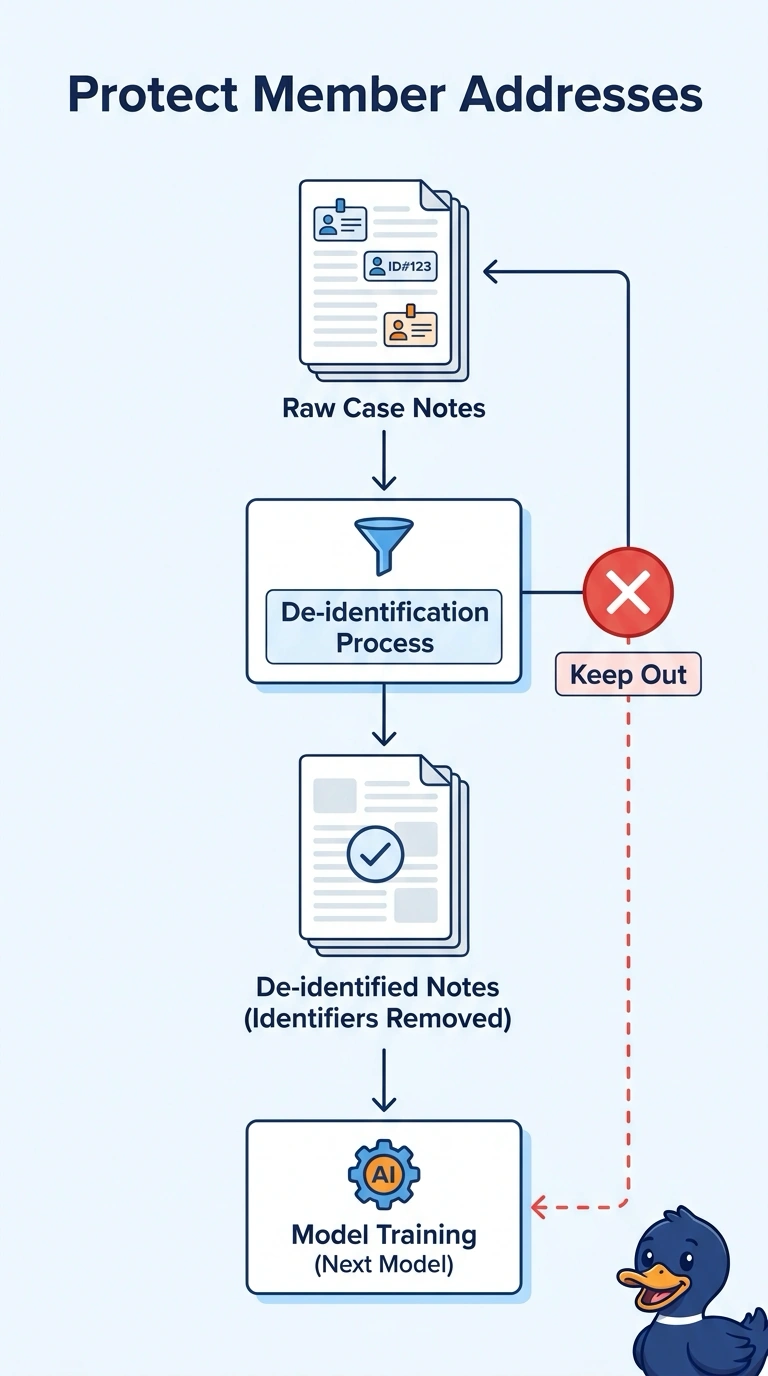
The model is repeating a secret it was allowed to study, and you can prevent that in the next model by removing member identifiers from the case notes and keeping raw notes out. A vendor no-training contract, a chatbot prompt boundary, or a crypto-agility plan does not scrub those notes.
Full Explanation
The address comes back because it was in the training set and the model memorized it. Remove direct and indirect identifying details, including home addresses, from the case notes before retraining, keep the raw notes out of the set, and the next model will not have that secret to store. A no-training contract with a chat vendor for a model the pharmacy trains on its own notes does not rewrite a model trained on raw notes. A prompt boundary on a support chatbot may constrain a live chat session, but it does not remove an address already stored in trained weights. A crypto-agility plan for long-lived archives prepares secrets for a future algorithm change; it does not scrub a training set. Training the next model on notes with member identifiers removed, while keeping raw notes out, is the design that meets the requirement. Exam caveat: deleting an address from an operational database does not erase it from weights that have already memorized it; the corrected set must be used in the next training run. Practical check: ask a lab model for a known test member address, confirm that it answers, then retrain on scrubbed notes and confirm that the address does not come back.