
A bank decrypts outbound HTTPS for data-loss inspection. One healthcare portal pins its certificate, and decryption breaks the portal. Nurses still upload spreadsheets there from bank laptops. Which control covers those uploads?
Select an answer to reveal the explanation.
Short Explanation
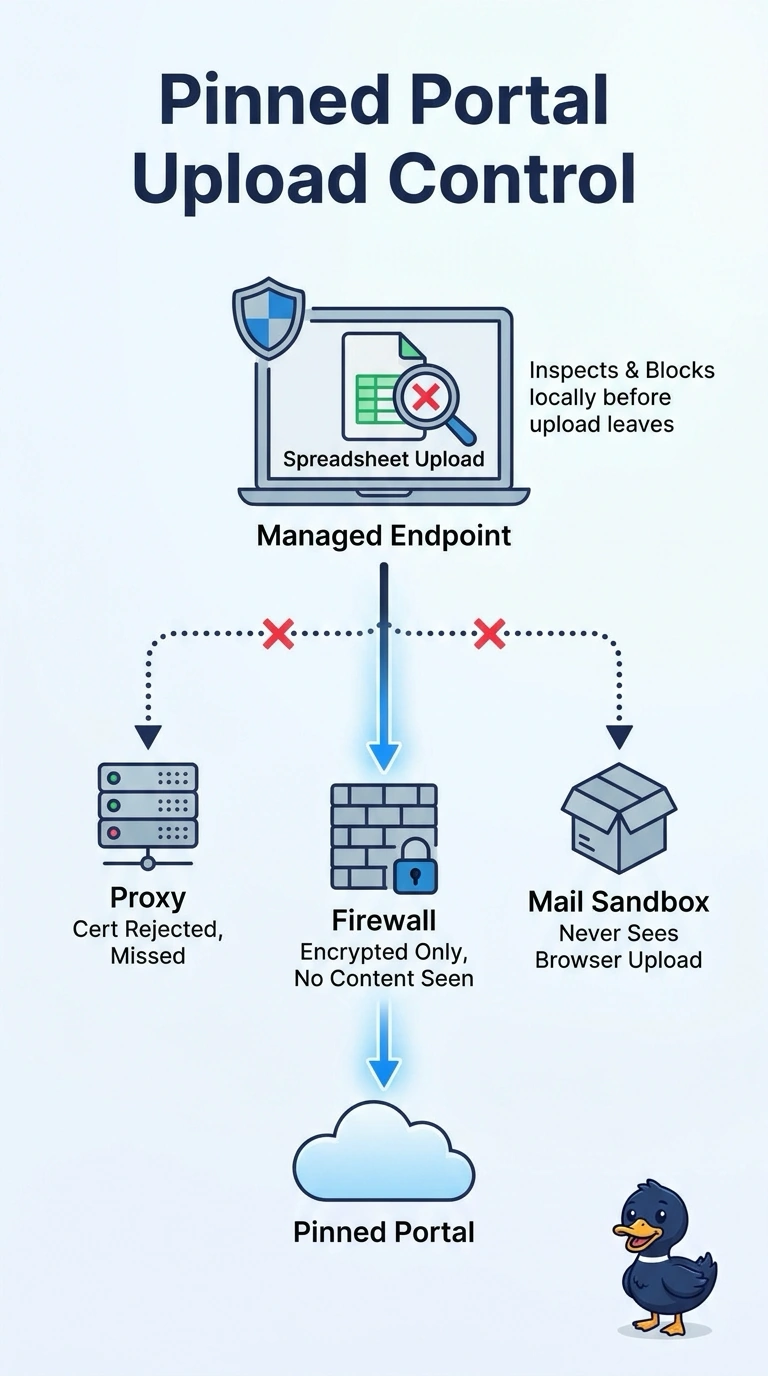
You can check the spreadsheet before it leaves the laptop, without breaking the portal’s pinned connection. Endpoint inspection catches the upload; decrypting the portal, allowing TCP 443 without reading the file, or inspecting only mail misses it.
Full Explanation
The bank can decrypt outbound HTTPS sessions only when the application permits inspection; certificate pinning prevents the proxy from presenting its substitute certificate, so decrypting this portal breaks the application nurses must use. The spreadsheet still needs inspection: Endpoint inspection can inspect the file locally even if the pinned TLS session is already established. It can block it before upload, meeting the requirement without breaking the portal. Inline decryption is wrong because accepting the portal’s fail-closed behavior leaves the required portal unusable. A firewall rule allowing TCP 443 is wrong because it permits the connection but does not read the spreadsheet or detect the data. A mail sandbox is wrong because it never sees a browser upload to the portal. Exam caveat: endpoint inspection covers bank laptops; an upload from an unmanaged home PC is outside this control and requires a different path. Practical check: from a lab laptop, upload a spreadsheet containing a test customer identifier to a pinned lab portal and confirm endpoint inspection blocks it, while the portal’s certificate pin still succeeds for a clean file.