
A photo studio runs an image-resize function that should read one inbound bucket and write one outbound bucket. The function is not attached to a virtual-machine network. Which segmentation fits it?
Select an answer to reveal the explanation.
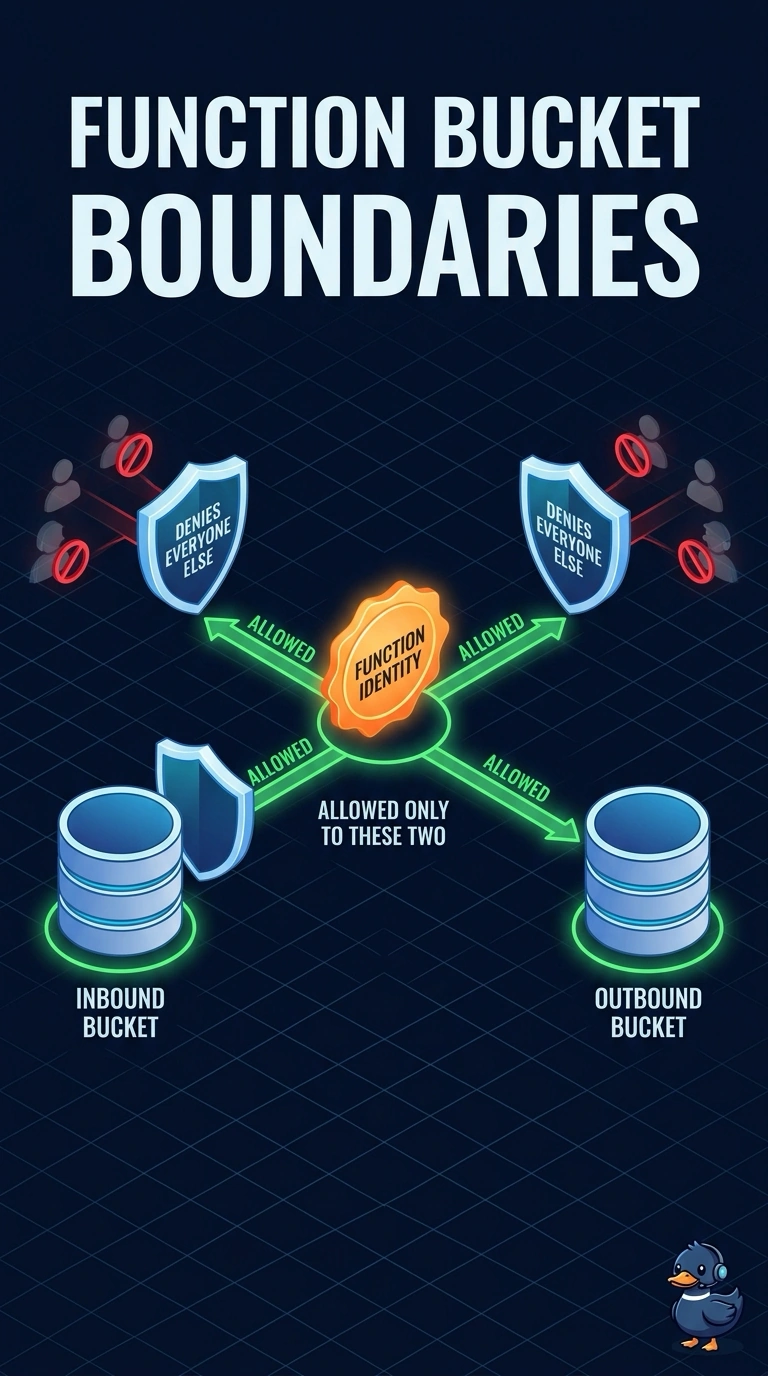
Short Explanation
This worker has a badge, not a desk in your hallway. You limit the badge to two buckets and you deny every other badge. A virtual-machine security group, a subnet list, or a host firewall in an image the platform never boots has nowhere to attach.
Full Explanation
Serverless segmentation follows the identity the platform assumes for the function and the resource policy on the data. Granting that identity read on the inbound bucket and write on the outbound bucket, and denying other identities, limits the blast radius even though there is no guest NIC to hang a security group on. Controls that presume a virtual machine never see the invocation. A function identity allowed only to those two buckets, with the buckets denying everyone else is the design that meets this requirement. A virtual-machine security group copied from the studio's web fleet is the wrong fit because a virtual-machine security group is enforced on a guest interface this function does not have. A subnet access list on a network the function never joins is the wrong fit because a subnet list never evaluates packets for a function that is not on that subnet. A host firewall package baked into an image the function platform does not run is the wrong fit because a host firewall in an image does nothing on a platform that does not boot that image. Exam caveat: If you later attach the function to a virtual network so it can reach a private database, that attachment needs its own path rules. It does not replace the bucket policy. Operational check: Invoke the function with its identity and confirm it can read and write only the two named buckets, then confirm a second function identity is denied.