
Engineers at a software firm paste proprietary source into a public chatbot whose terms allow the provider to train on prompts. Leadership wants the assistance and wants the source kept out of that training. Which design policy fits?
Select an answer to reveal the explanation.
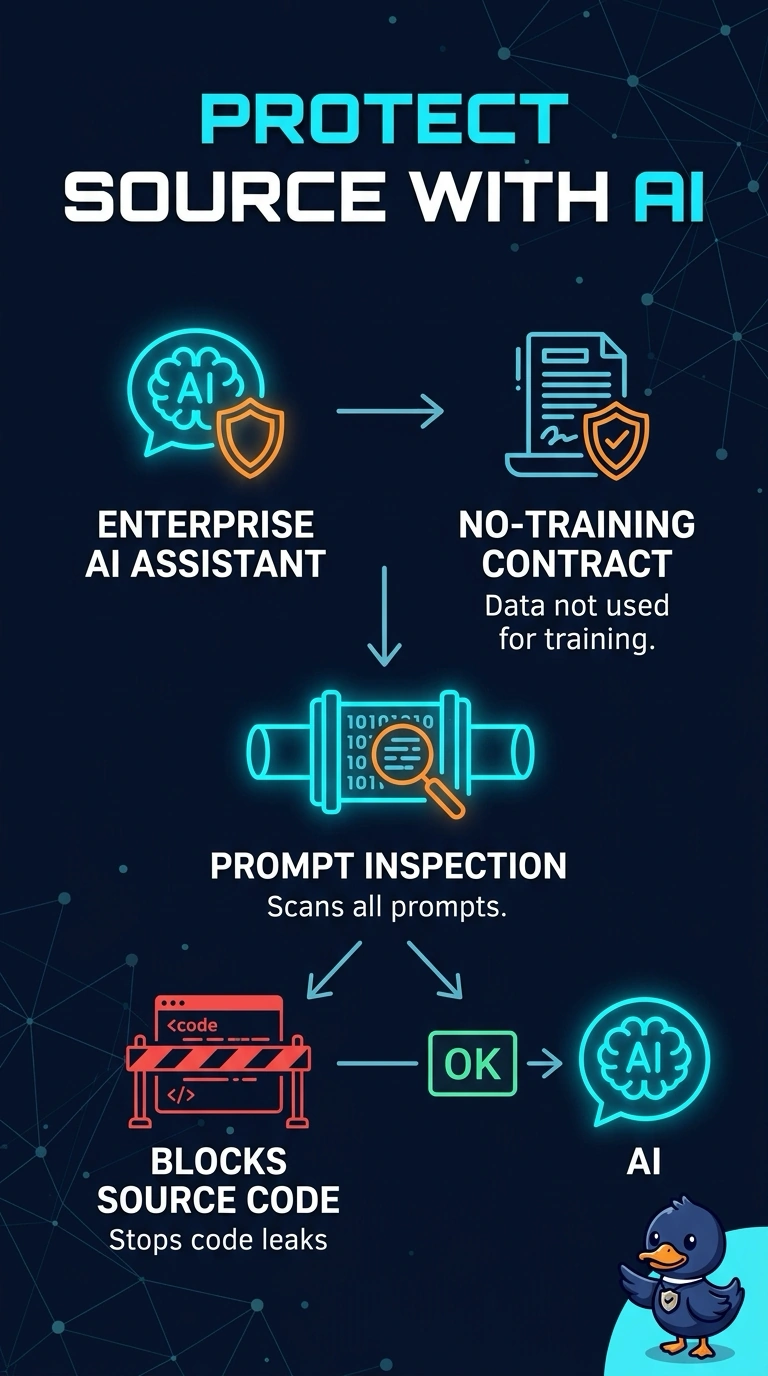
Short Explanation
People will use the helpful machine you leave plugged in, so give your engineers an enterprise assistant contractually barred from training on their prompts. Prompt inspection blocks source code on the prompt path, keeping it out of training in a way that a written request, a repository firewall, or disabling TLS cannot.
Full Explanation
The risk is that proprietary source leaves in a prompt to a public chatbot whose terms allow the provider to use prompts for training. An enterprise assistant under a no-training contract, with prompt inspection that blocks source code, addresses both parts of the requirement: the contract bars training on prompts sent to that assistant, and inspection prevents source from being submitted even there. A written policy asking engineers not to paste source leaves the public chatbot open and relies on compliance rather than a technical boundary. A web application firewall in front of the internal source repository does not inspect text pasted directly into a public chatbot. Disabling TLS on the corporate proxy exposes traffic in cleartext but does not prevent the public provider from training on submitted prompts. Exam caveat: A no-training contract applies to the covered enterprise assistant; it does not stop engineers from using the still-open public chatbot. Practical check: Submit a lab snippet matching the source-code pattern to the enterprise assistant and confirm it is blocked, then verify that the public chatbot hostname is denied from the engineering network.