
An insurer retrains a fraud model from files that claims staff drop in a shared bucket. A tester altered labels in that bucket and the next model started ignoring a real fraud pattern. Which design policy addresses the machine-learning impact?
Select an answer to reveal the explanation.
Short Explanation
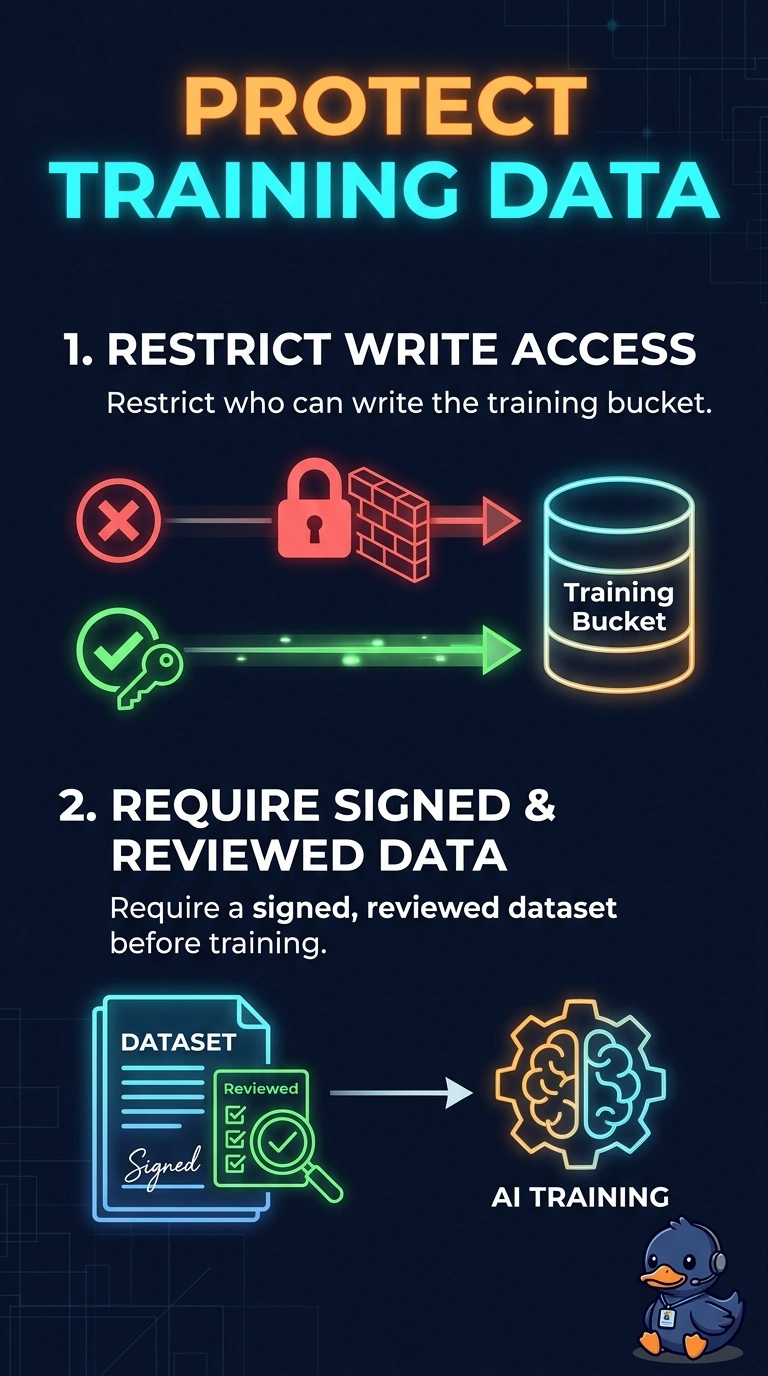
Someone salted the pantry, and the recipe tasted wrong the next morning. You lock who can write the training bucket and you train only from a signed set. A quote-site firewall, guest wireless, or a longer website certificate never guards that pantry.
Full Explanation
The impact was poisoned training data: untrusted writes changed labels, and the pipeline trusted the bucket. The design limits write access to the people who curate data and refuses to train until a dataset is signed and reviewed. Website controls and guest wireless sit on other flows and would not have stopped the altered file. Restrict who can write the training bucket and require a signed, reviewed dataset before training is the design that meets this requirement. A web application firewall in front of the insurer's public quote site is the wrong fit because the quote site was not the path that changed the training labels. A guest wireless network for visitors at headquarters is the wrong fit because visitor wireless does not control who writes the bucket the trainer reads. A longer TLS certificate lifetime on the public website is the wrong fit because certificate lifetime on the website does not protect the integrity of the training set. Exam caveat: A signed dataset does not prove the model is fair or accurate. Verifying a trusted signature checks the integrity and signer of the dataset artifact. Separately verify the training job used that verified artifact. Operational check: Attempt a label change with a staff account that should not write the bucket, confirm the write is denied, and confirm training refuses an unsigned drop.