
A blood bank's pipeline already gates policy, blocks secrets, and checks image signatures. A production load-balancer change was approved only by the engineer who wrote it. Policy requires a different approver. What is the next step?
Select an answer to reveal the explanation.
Short Explanation
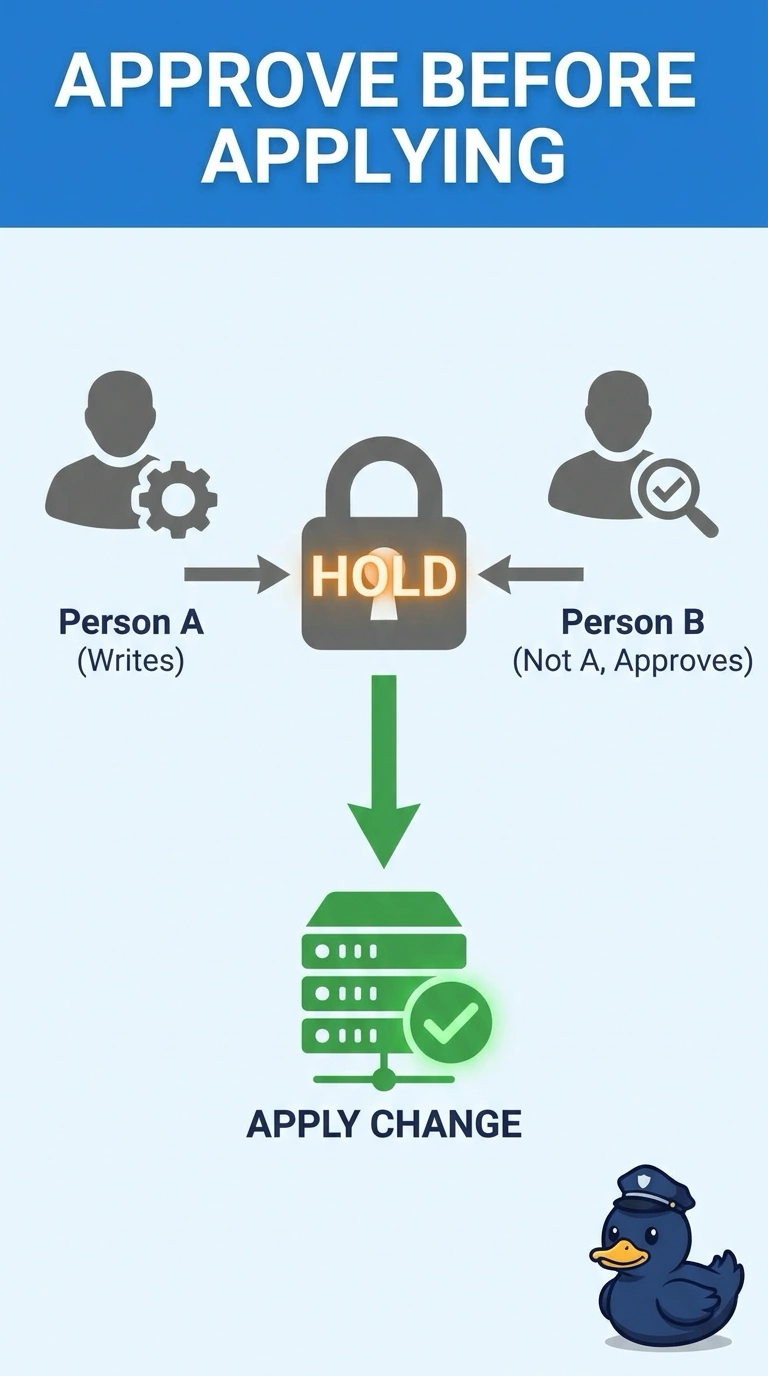
The paperwork is otherwise complete, and you still need a second set of eyes. You hold the load-balancer change for someone who did not write it. Another image scan, another secret rotation, or the author's own approval does not meet that rule.
Full Explanation
Policy, secret blocking, and signature checks have already succeeded, so the remaining gate is a different person approving the load-balancer change before apply. Another image scan and another secret rotation only revisit controls that already passed. Letting the author count as the second approver skips the control the policy requires on this production change. Hold the change until a second person who did not write it approves, and only then apply it is the design that meets this requirement. Scan the container images again after this pipeline has already scanned and signed them is the wrong fit because image scanning and signing already passed, and repeating them does not supply a different approver. Rotate application secrets after a clean secret scan and a change that contains no secret is the wrong fit because the secret control already passed and the change holds no secret, so rotation is not the hole in front of this apply. Apply now, treating the author's own approval as the required second approval is the wrong fit because the author's own approval cannot satisfy a rule that says the approver must be a different person. Exam caveat: The second person has to be able to read the actual change, and an approval from a shared account the author also uses is not a different approver. Operational check: Submit a lab change the author has approved, confirm apply stays blocked, then approve it as a different user and confirm apply proceeds and the record shows both identities.