
A newsroom builds two cloud regions by clicking in a console. Last month one region shipped without its logging bucket. Downtime alerts and CPU graphs already exist. Which element is missing?
Select an answer to reveal the explanation.
Short Explanation
Two kitchens cooked from memory will not plate the same meal. You define both regions as code and you review that definition. Another downtime page, an image scan, or an analyst playbook does not record what the region must contain.
Full Explanation
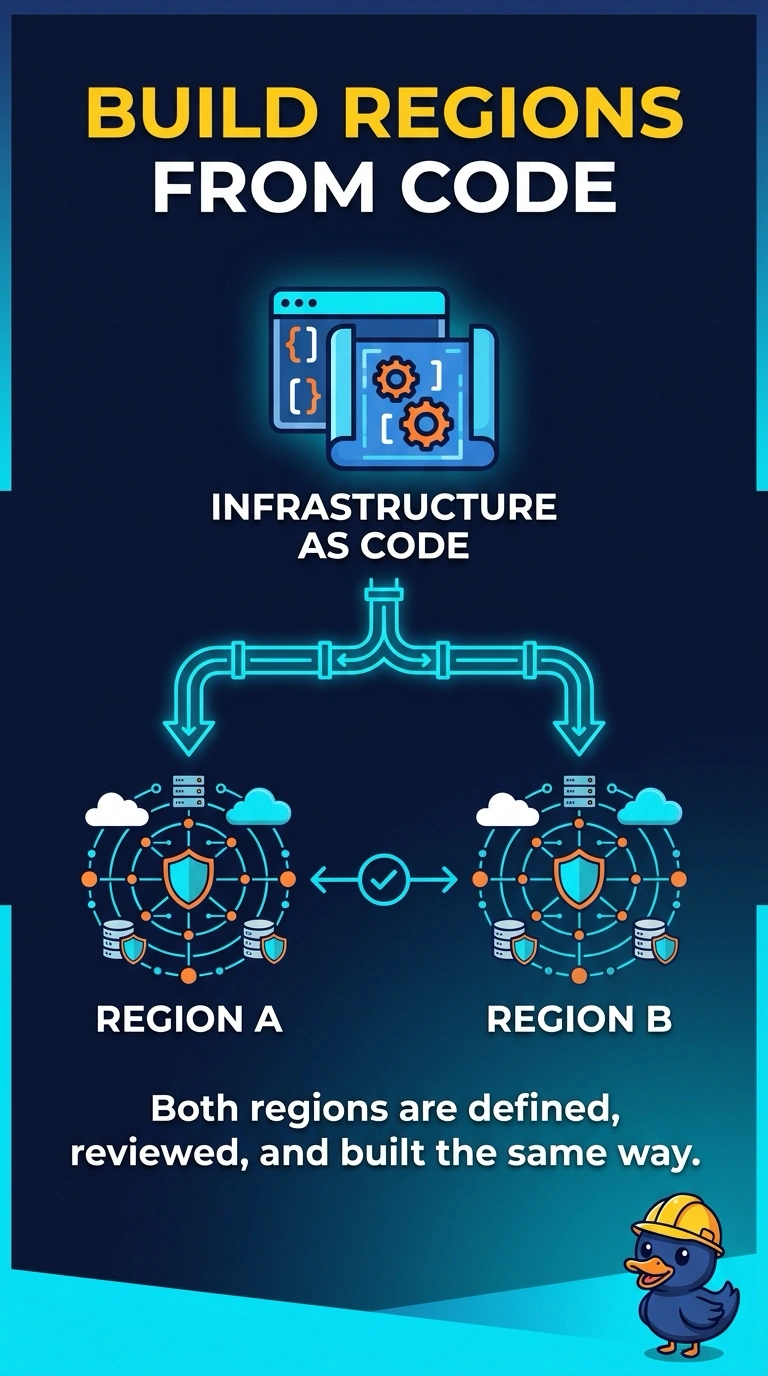
The regions differ because a person clicked them into existence, so the logging bucket was easy to forget in one of them. Graphs and downtime pages already tell the newsroom when a service falls over, yet they do not store a reviewed definition of the region. Infrastructure as code makes both regions a change you can read, repeat, and diff before the next build. Infrastructure as code so both regions are defined, reviewed, and built the same way is the design that meets this requirement. Another downtime alert, on top of the paging the newsroom already runs is the wrong fit because downtime alerts already exist, and another page does not make the two region definitions match. A container-image scan of a build artifact that was not the region that drifted is the wrong fit because image scanning judges a build artifact, while the hole is a region assembled by hand in the console. A case playbook for analysts that sequences work and does not define the region is the wrong fit because a case playbook sequences an investigation and does not declare the logging bucket the region must contain. Exam caveat: Code in source control still needs a human review before it is applied, because a stored file can repeat a bad public setting just as a console click can. Operational check: Build both regions from the same reviewed definition in a lab account and confirm the logging bucket exists in each before you call the drift closed.