
A map publisher's pipeline built a release image, the scan passed, and the change contains no secret. The cluster will still run whatever tag the registry holds. Which next step closes that hole?
Select an answer to reveal the explanation.
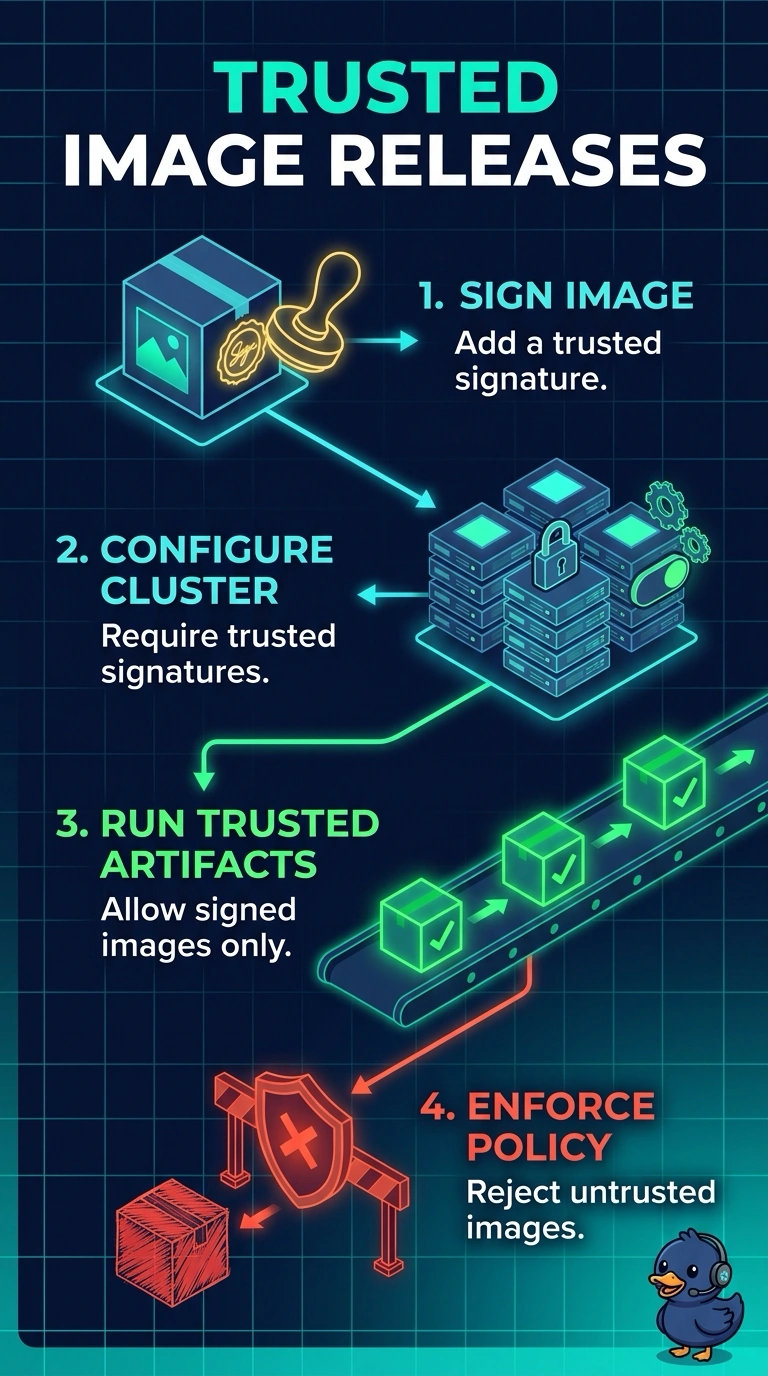
Short Explanation
A stamp on the crate is what tells the dock to refuse an unsigned box. You sign the image and you let the cluster run only artifacts with a trusted signature. Rotating an absent secret, gating an unrelated network plan, or scanning the same clean image does not bind the tag.
Full Explanation
The hole in front of the team is cluster admission: any tag in the registry can run, signed or not. Signing the image and telling the cluster to require a trusted signature binds the running workload to the artifact that was built. Secret rotation, a gate on a different plan, and a repeat of a scan that already passed each close a different pipeline hole. Sign the image and configure the cluster to run only artifacts that carry a trusted signature is the design that meets this requirement. Rotate a secret that does not appear in this change and block a merge the scan already passed is the wrong fit because there is no secret in the change to rotate, and blocking that merge does not constrain which tag can run. A policy gate on an unrelated network plan that this image release does not apply is the wrong fit because a gate on a network plan this release does not apply never looks at the image the cluster starts. A second scan of the same image that the pipeline has already marked as clean is the wrong fit because the scan already passed, and running it again does not stop the cluster from starting an unsigned tag. Exam caveat: Signing fails closed only if the cluster rejects missing signatures. A cluster that logs an unsigned tag and runs it anyway has not closed the hole. Operational check: Push an unsigned lab tag and confirm the cluster refuses to start it, then sign that same image and confirm only the signed tag is allowed to start.