
A toy maker's policy allows its model to revoke one named build token that was pasted into a ticket, and it forbids disabling users, deleting repositories, or changing routes. Which action fits the policy?
Select an answer to reveal the explanation.
Short Explanation
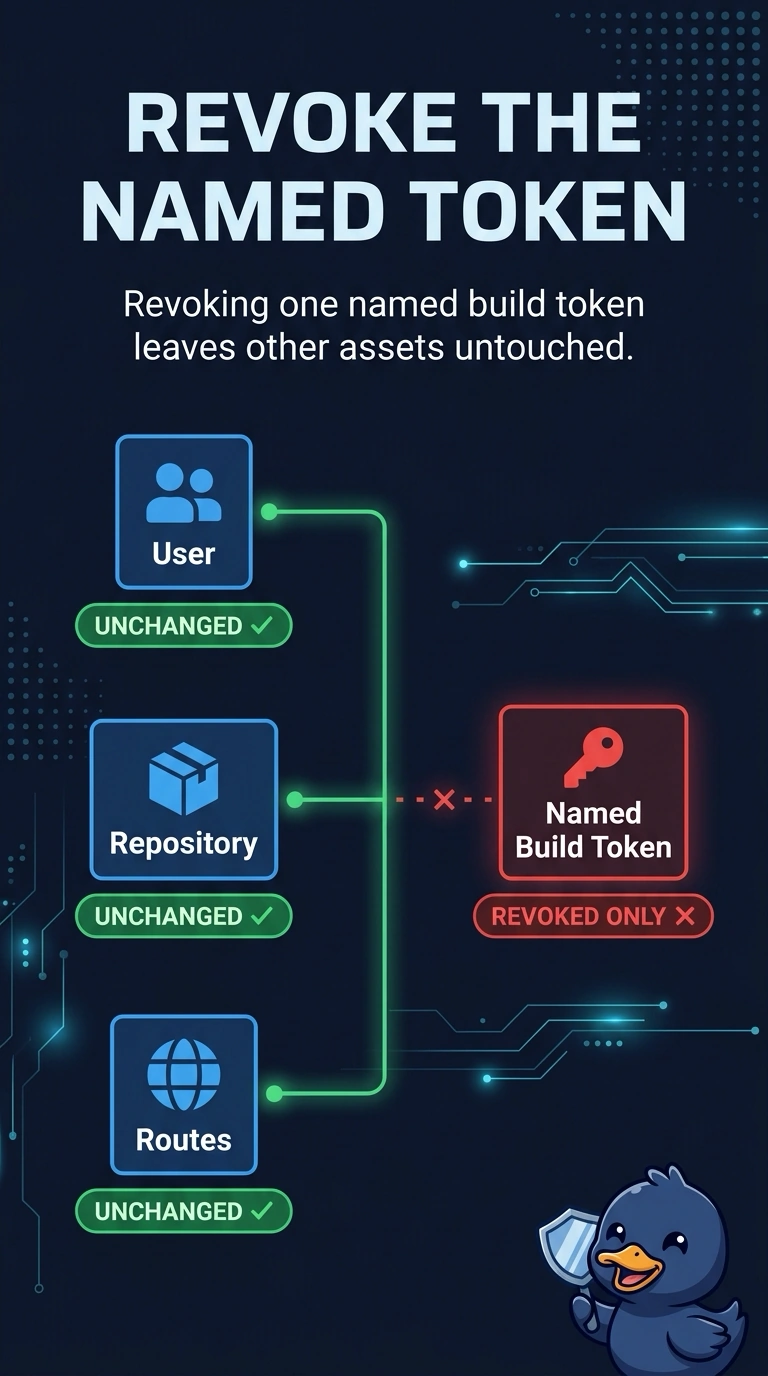
A spare key can be pulled without boarding up the shop. You let the model revoke the one named build token and you leave the person, the repository, and the routes alone. Disabling the engineer, deleting the repository, or pushing a discard route breaks the policy.
Full Explanation
The written policy names one bounded action, revoking the pasted build token, and that step limits the leaked credential without disabling a person, deleting a repository, or changing routes. The model stays inside the action the policy already allowed. The other three steps are disruptive changes the same policy forbids, so a confident score does not authorize them. Revoke only that named build token and leave the user, the repository, and the routes unchanged is the design that meets this requirement. Disable the engineer account that owns the leaked build token, beyond the one allowed step is the wrong fit because the policy allows one token to be revoked and forbids disabling user accounts, which is a broader destructive step. Delete the source repository the leaked build token was able to read and write is the wrong fit because deleting a repository removes source code the policy did not authorize the model to touch at all. Push a discard route toward addresses recorded in that build token's last use is the wrong fit because pushing a route is a network change the policy forbids, even if the log mentions those addresses. Exam caveat: The bounded revoke still belongs in the ticket history a person can audit, and any other token the policy did not name remains a decision for a person. Operational check: In a lab tenant, give the model a ticket that names one test token and confirm only that token is revoked, then confirm the user and the repository still exist.